Individual Details
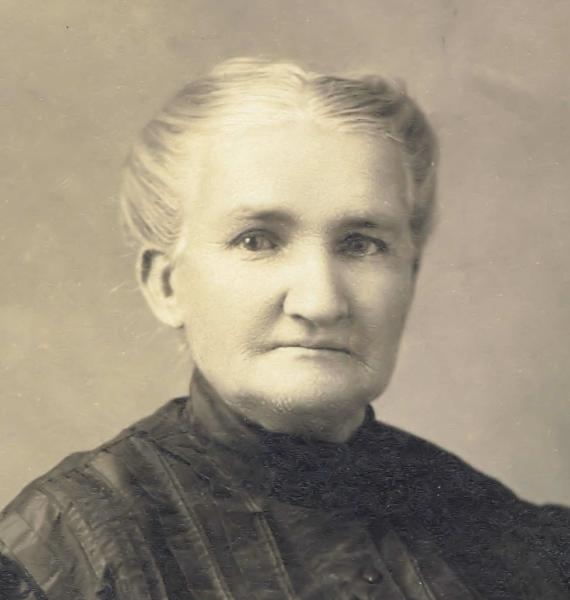
Matilda SWANSON
(Bet 18 Feb 1843 and 20 Feb 1843 - 17 Jun 1926)
1 Jun 1850, Putnam Co., IL, pg. 65, stamped pg. 33:
John Swanson, 38 (1811-12) born Indiana. Farmer, real estate owned $3, 000, can read and write
Hannah Swanson, 31 (1818-19), born Ohio, can read and write
Aaron Swanson, 10 (1839-40), born IL
Matilda Swanson, 7 (1842-43), born IL
Myron Swanson, 5 (1844-45), born IL
Rachel J. Swanson, 4/12 (abt Jan/Feb 1850)
Isaac Sherman, 25 (1824-25), born Ohio, farmer, real estate of $900.
1 Jun 1860, P.O. Visalia, Twp. 2, Tulare Co., CA, page 3, dwelling 21:
John Swanson, 40 (1819-20) born Indiana. Farmer, real estate $6, 000, personal property $2,500.
Anna Swanson, 41 (1818-19), born Ohio.
John Swanson, 23 (1836-37), born IL, farmer
Aaron Swanson, 21 (1838-39), born IL, farmer
Matilda Swanson, 17(1842-43), born IL
Miron Swanson, 15 (1844-45), born IL
Ruth Swanson, 4 (1855-56), born CA
Burton Swanson, 2 (1857-58), born CA
1 Jun 1880, Tule River Township, Tulare Co., CA, ED 102 pg 10B,
O.H.P. Duncan, 44 (1835-6) born IL, father born TN, mother born U.S. Farmer.
M. Duncan, wife, 37 (1842-43), born IL father born IN mother born OH.
J. W. Duncan, son, 18 (1861-62), born CA both parents born IL
O. K. Duncan, son, 16 (1863-64), born CA both parents born IL
C. V. Duncan, daughter, 13 (1866-67), born CA both parents born IL
May Duncan, daughter, 11 (1868-69), born CA both parents born IL
Pelham Duncan, son, 9 (1870-71), born CA both parents born IL
Ray Duncan, son, 7 (1872-73), born CA both parents born IL
Ada Duncan, daughter, 4 (1875-76), born CA both parents born IL
Hayne Duncan, son, 1 (1878-79), born CA both parents born IL
1 Jun 1900, Tule River Twp, Tulare Co., CA, ED 68 Sh 3B;
Matilda Duncan, 57, born Feb. 1843, head, widow. Married for 39 years. Mother of 9, 5 living. Born IL, father b. IN, mother b. OH. Farmer, owns mortgaged farm.
Pelham G. Duncan, son, born Mar 1871, 29, single, born CA both parents born IL, no occupation listed
Adah I. Duncan, daughter, born Aug 1878, 24, single, born CA both parents born IL, no occupation listed
Claude Duncan, son, born Jul 1884, 15, born CA both parents born IL, at school
Son John and his family are on the same page.
15 Apr 1910; Tule River Township, Tulare Co., CA, ED 203 Sh 16A;
Matilda Duncan, head, 67, (1842-43), widow, mother of 9, 3 living, born IL, father born IN, mother born OH; farmer. Owns mortgaged farm. Can read and write.
Son Claude next door and son Ray nearby on same page.
1 Jan 1920, Porterville Twp., Tulare Co., CA, ED 212 Sh 2B;
Claude Duncan, head, 35 (1884), born CA both parents born IL, farmer, owns with a mortgage
Nannie Duncan, wife, 35 (1884), born TN both parents born TN
Evelyn Duncan, daughter, 8 (1912), born CA father born CA mother born TN
Cornellia Duncan, daughter, 4 (1916), born CA father born CA mother born TN
Fanny M. Duncan, daughter, 2 (1918), born CA father born CA mother born TN
Matilda Duncan, mother, 75 (1845), widow, born IL, father born IL, mother born OH.
See note with father's information re bible. It gives her birth date as 20 Feb 1843. There are actually two stones for her in the Old Porterville Cemetery. One gives full dates - Feb 18, 1843 - June 17,1926, the other just has years and gives her middle initial as S.Don't know, though, if that stands for her middle name or maiden name.Office records at Cemetery also show birth date and death date. Burial says only June, 1926. She is in plot D 186-5.
"History of the State of California" 1905, by Prof. J. M. Guinn, on page 1636/37 has a bio of O.H.P. Duncan. The last paragraph is about Matilda and says:
"When Mrs. Duncan first came to Tulare county the Indians were very troublesome and had massacred many of the settlers. They were met at Kaweah Bridge and at Woodville by Indians, who told them not to cross.Her father traded and made friends with them, so they came on to Cameron creek. She learned the Indian language and for some years the Indians were her only playmates. In 1855, on one of her trips to the Indian camp all the squaws were gone, and shortly afterward an Indian girl came to see her and told her that the Indians were going to kill all the white people. In a panic the little white pioneer girl ran with the news to older people, and thus the settlers of that section escaped, the Tulare county Indian war following. She has witnessed great changes during her long residence in the west and has taken an active part, with her husband, in the progress and development of this section."
Porterville Recorder, 1923, had an article about Matilda. Ethel Brown had a copy of it in her scrapbook. The exact date of publication wasn't noted - only the year. It read:
"MRS. DUNCAN TELLS OF EARLY DAYS IN CALIFORNIA -
It is a far cry back to the days of the gold rush into California, but perhaps no pioneer of that period has a keener recollection of those strenuous times than Mrs. Matilda Duncan, of Success, who was a guest yesterday at luncheon at the home of Mr. and Mrs. B. F. Butts. Mrs.Duncan celebrated her 80th birthday anniversary in February.
Born in Illinois in 1843, Mrs. Duncan found herself at the age of eight years destined to the life of a pioneer, for in 1851 her father,John Swanson, brought his family to California by ox team in a train of forty wagons, which brought up in due season, after inevitable encounters with savage Indians, at Placerville in the days when men were coming in drove to search for gold in the new eldorado.
His efforts at Placerville were crowned with success, and Mr. Swanson came to Tulare county in 1854 and bought some large tracts of land,and since 1854 Mrs. Duncan has resided in this county, sharing in its pioneer life, and watching its development from a wild and untilled empire to one of the real garden spots under the sun.
Fortified with a keen memory and with a fondness for details, Mrs.Duncan often entertains friends with stories of the early days, and there are many interesting stories at her command, covering the long period from the days when Tulare county comprised all of the counties of Inyo, Kern, Kings and Tulare; when wild deer and antelope roamed the plains in bands of thousands; when bear were plentiful, when wild ducks and geese were present in great numbers and the streams overstocked with fish; when the whole valley was a garden of deep grasses and flowers, and the swamps dotted with immense patches of wild blackberries; when history was in the making, with the wild life of the prairie making a new civilization.
Mrs. Duncan recalls well the fact that Visalia, on her first visit, was a town of log cabins with one lone blacksmith shop and a two-story frame building to give it the distinction of a village. The earlier part of her 69 years of residence in Tulare county was spent in the upper Kaweah country, and since 1876 she has resided in this part of the county, residing now on an orange ranch in the Success district.
First hand information regarding the valley Indians may be gained in conversing with this pioneer woman. Not until after her father came to this country did the Indians discontinue the practice of hanging their dead tribesmen in the trees. Her father induced the chiefs to bury their dead, and the earlier Indian graves were always mounded up, with the trinkets of the dead buried with them."
Another article transcribed by Ethel Brown, with the transcription in her scrapbook, was in the Fresno Bee, also in 1923. It read:
"WOMAN IS VALLEY PIONEER"
"From an eminence among the orange trees, in the foothills beyond Porterville in Success Valley, Mrs. Matilda Duncan watches from the window of her cottage the "world go by". She has seen the San Joaquin Valley transformed from an antelope pasture into the greatest agricultural region in America.
The claim is not disputed that Mrs. Duncan has resided in the district that is now Tulare County, California, more years than any woman living, and it is still related how she saved her family and many more people from massacre by Indians in the days when the 50's of the previous century has just been turned. (1850 that is).
With eyes still bright and voice strong, Mrs. Duncan relates when in a reminiscent mood, many incidents and anecdotes of early valley history. Some of record and some heretofor unpublished.
BORN IN ILLINOIS:
Mrs. Duncan was born in Peru, Illinois on February 20, 1843 and came with her parents overland in covered wagon to California by way of Placerville in the year 1851. They skirted the foothills, pressing on down the San Joaquin Valley until they came to the river now named Kaweah, in 1854. The Swanson family camped near a place later named Woodville. They were halted by a tribe of Digger Indians, whose chief forbade them to go on.
Here the family remained for several days. With gifts of beads and trinkets, John Swanson, Mrs. Duncan's father, placated the Indians and gained from them a promise of immunity from attack, which it developed later, was to be ignored.
Herds of antelope then grazed over the valley. "I have seen more antelope together than I ever saw sheep", Mrs. Duncan said. There were fields of sunflowers more than head high, with pathways intersecting,pressed down by the feet of ambling bears.
The Swanson family moved on to Cameron Creek, 5 1/2 miles east of Visalia, where they lived comfortably off of the bountiful country,but in an atmosphere of uncertainty with fear of harm from the Indians.
INDIANS SKINNED MEN:
"There were many stories which added fuel to their fears. It was related how an old man named Wood, had barricaded himself within his cabin when the Indians came. Unable to force their way through the doors or windows, the Indians cut a hole through the roof and lassoed Mr. Wood, then skinned him while alive. The Swansons camped in the Wood cabin where blood stains on the wall still had a gruesome story to tell.
Then there was the tale of a group living in a dug-out on the banks of Cameron Creek. The indians came and of five persons within the home, only one, a small boy escaped.
LEARNED INDIAN LANGUAGE:
With these stories in their ears, the elders of the Swanson party did not fraternize with the Indians but maintained an attitude of armed aloofness. Little Matilda felt no fear of the Indian children so played with them at will. Thus, she soon picked up their language and learned to speak it fluently. A special chum of Matilda's was a nIndian girl about her own age named "Sally". It was a summer morning in 1856 when Sally came to the Swanson cabin crying bitterly. At first she would not answer fully Matilda's question as to what the trouble was, saying only: "They'll kill me if I tell". Matilda told her: "If you will only tell me, you can come and live with us and you will be protected".
It ws then that Sally told of a plan among her people to descend upon,and kill the Swanson party two nights later. The little Indian girl never returned to her tribe.
Matilda rushed to her parents with the story and the elders gathered together, barricaded the cabin and watch was maintained. As Sally had foretold, a raid was made on the second night following, but the Swanson watchers fired upon a scouting party of Indians, which retreated, taking their wounded with them, as a trail of blood attested.
Sally thereafter made her home with the Swanson family until she grew to womanhood and married an Indian boy who had detached himself from his people. She died not many years ago near Farmersville.
There were other skirmished with Indians, culminating in a battle with federal troops from Fort Millerton.
The San Joaquin Valley now safe from Indian raids, began to attract more and more settlers agriculturally inclined. Visalia, a trading station with a store and blacksmith shop when the Swansons came, now began to take on the proportions and conveniences of a town. Settlements began to dot the valley.
SCHOOL ESTABLISHED:
A school was established at Venice Cove and an educated ne'er do-well, with a love for liquor and a hatred for work, was employed. He was the only person available to instruct the children at that time. His pay came directly from the parents, part to be taken out in "boarding around". Sessions were held on days when the pedagogue felt so inclined, but often the pupils found the master snoring away on one of the benches, incapable of speech or gesture. This school master's regime came to an end when he was forced from the settlement by an accusation of theft of an important paper from an illiterate, but wealthy man. He had addended this man's documentary business. The charge later was proven false, when an examination of the strong box showed the paper in its proper place. The owner, being unable to read, had been unable to identify it. Later, with continued growth of the country, better schools came.
CHEAP LAND:
Land was cheap and John Swanson purchased from the federal government 1,800 acres of fertile valley land for $1.25 per acre. Seven hundred twenty of theses acres embrace the town that is now Lemon Cove and the land immediately adjacent. Mr. Swanson however, sold too soon to reap much profit from increased land values.
MRS. DUNCAN'S FAMILY:
Maturing to womanhood, Matilda Swanson married Oliver H. P. Duncan on December 13, 1860. He was called by death in 1889 as have six of the nine children born to this union. Mrs. Duncan is now in her eightieth year. The healthful, out-door life of a pioneer girl and rancher's wife, has brought her to this advanced mile-stone with faculties unimpaired. Her hearing is sharp and she reads without the aid of glasses.
Four years ago, a fall brought with it serious injury to her hip, but not until then Mrs. Duncan had never been confined to the house for any appreciable period and had never needed a dose of medicine, so she stated.
Regular reading has kept her abreast of the times and Mrs. Duncan became a subscriber of the Sacramento Bee in about 1876. When the Fresno Bee began publication in October, 1922, she enrolled as a charter member of the "Fresno Bee Club".
A full life and happy one has been her lot. Mrs. Duncan says she does not decry the present nor mourn the past.
FOOD WAS GOOD:
There were hardships in the early days, "but you don't know how good doughnuts are, until you have eaten them fried in bear oil; and as for meat, there is nothing to compare with antelope and deer steak".
Mrs. Duncan has been told that some of the young women of the present day smoke cigarettes. She does not approve of this, but finds it a habit that is not new. Recalling her school days, Mrs. Duncan mentioned by name four girls of excellent repute, who found pleasure and solace in chewing tobacco, smoking pipes and "dipping snuff".
Another article that was in the Porterville Recorder, date unknown,but about 1924 based on Matilda's age stated in the article, is copied and in Ethel Brown's scrapbook as well:
"OLDEST LIVING WHITE RESIDENT OF TULARE COUNTY RESIDES HERE"
" Mrs. Matilda Duncan, 81, is probably the oldest living resident of Tulare county, from a standpoint of being a real pioneer. She came to California when she was ten [sic] years old, in 1851, with her parents, Mrs. and Mrs. John Swanson. They came into Tulare county when there were but eighty white people in this section. Every one of those eighty white folks it is believed, are now dead, leaving Mrs. Duncan the very pioneer of all Tulare county.
Mrs. Duncan lives in the Success district on the same farm which she and her husband, O.H.P. Duncan, took in 1876. She is remarkable agile,has clear vision and hears perfectly. She this year raised a big garden and thinks nothing of the ordinary tasks of farm life.
Mrs. Duncan, when she grows reminiscent, is a most entertaining talker. She remembers every detail of her girlhood and those were times when exciting things were constantly happening. She tells with keen interest of the trip across the plains in 1851 from Piru [sic], Illinois in a train of forty wagons. The party was on the trail for five months and arrived at Hangtown, now named Placerville, in August.Her father and all the men of the party at once plunged into mining.Then her father established a store which did not do very well and they decided to go down into the valley. They tried the Delta region about what is now Suisun and didn't like it. Then in 1854 they came to Tulare county and settled.
GRIM SCENES
On the way south they came to Middleton, on the banks of the Kings river. There was a store there filled with goods, blankets, canned fruits, canned meats, nails, sage and all sorts of merchandise. But not a soul in sight. Over ten thousand bullet holes in the walls of the building told the story of the massacre by Indians of the storekeeper and his family. The little party, fearful and saddened by what they saw, came on south to the neighborhood of Woodville. There Mrs.Duncan's father set up a cabin but chose later to move to the Farmsville [sic - should be Farmersville] section. There they found the mosquitoes to be pesky and went to a location just east of where Visalia now stands.
INDIANS WERE HOSTILE
There were thousands of Indians in this section then. Some five hundred of them made a camp right near the Danean place. There they lived for two years while the Indian bucks hunted and the women did the home work. Mrs. Duncan, but a slip of a girl, learned how to talk Indian. She made friends of them and they showed her many favors. During the following years when the Indians were on the war path and the lives of settlers were not worth a penny each, she was always privileged to come and go in their camps without being molested in anyway. Not long ago Mrs. Duncan visited the Indians on the Tule reservation and found that in their legends and stores they had remembered her from the long ago.
During the early fifties the Indians were very hostile to white folks.They saw them coming over the mountains from the east, seeking gold, gold, gold. Then they saw them filtering down into their valleys and taking up their lands, bit by bit. Their hearts were hardened toward the invaders and several times they killed the first white person in sight.
SAVED WHOLE SETTLEMENT
After two years of ________[piece torn out of paper] subdued anger the Indians all of a sudden disappeared from their camps. Bag and baggage,ponies, men, women and children were gone between dark and daylight. Only one half breed Mexican, his wife and little girl remained of the five hundred Indians. This little girl came over to the Swanson place sobbing fearfully. She would tell nothing.
"They will kill me if a tell." she said in Indian talk.
But little Matilda Swanson put her arm about her shoulders and coaxed until she whispered the fearful news.
"Put all the boys and men on horses and tell them to fly to their white neighbors and them to arm and be ready for the Indians mean to kill every white person in two days" was the little half breed's fearful message.
Matilda told her father immediately and scouts were at once sent out to the settlement now called Porterville, to Deer Creek, Woodville and other points. The white men and their families gathered themselves together for protection.
The Indians had gone in to the mountains, put on their war paint, filled their quivers with arrows, but when they came down to kill all the white people they found them prepared to fight. Then the massacre was put off for a while.
In 1856 the government sent several detachments of soldiers to California and the Indian wars of that time ended with victory for the white men.
SHOULD BE PENSIONED
For this one act which saved possibly one hundred white people from death, Mrs. Duncan deserves a pension from the government. Although she has never made representations to Congressman Barbour of Senator Johnson it is entirely within the realm of possibility that a special bill will be introduced in congress to give Mrs. Duncan the belated recognition that is due her for this act. She alone got the information from the Indians because she was friendly with them and had it not been secured when it was another bloody chapter would have been written into the history of this section.
THREE SCORE AND TEN
Net year Mrs. Duncan will have lived in Tulare county seventy years. Her span of life is not nearly complete for she says she means to live to be one hundred. She has had rela-------[article apparently continues on another page that wasn't given to Ethel Brown.]
Obituary in Porterville Evening Recorder June 17, 1926, "Death Calls Pioneer Woman - Mrs. Duncan's Funeral Services to be Held on Sunday Morning -- Mrs. Matilda Duncan, 83, died early this morning at the home of her son, Claude Duncan, in the Success district. She recently was brought home in the ambulance from Los Angeles, where she had been undergoing treatment. She fell last winter and broke her leg and since had been ill.
Mrs. Duncan was a pioneer of California, having come to this state by covered wagon many years ago. Funeral services for her will be held at 10 o'clock Sunday morning in the Loyd Chapel.
The deceased is survived by two sons. Claude and Ray Duncan; a daughter, Mrs. Ada Pratt of Los Angeles."
According to a letter from Ethel to Sharon Riggan Joe, the correct birth date is Feb 20. She said that her mother made a mistake when she ordered the gravestone.
John Swanson, 38 (1811-12) born Indiana. Farmer, real estate owned $3, 000, can read and write
Hannah Swanson, 31 (1818-19), born Ohio, can read and write
Aaron Swanson, 10 (1839-40), born IL
Matilda Swanson, 7 (1842-43), born IL
Myron Swanson, 5 (1844-45), born IL
Rachel J. Swanson, 4/12 (abt Jan/Feb 1850)
Isaac Sherman, 25 (1824-25), born Ohio, farmer, real estate of $900.
1 Jun 1860, P.O. Visalia, Twp. 2, Tulare Co., CA, page 3, dwelling 21:
John Swanson, 40 (1819-20) born Indiana. Farmer, real estate $6, 000, personal property $2,500.
Anna Swanson, 41 (1818-19), born Ohio.
John Swanson, 23 (1836-37), born IL, farmer
Aaron Swanson, 21 (1838-39), born IL, farmer
Matilda Swanson, 17(1842-43), born IL
Miron Swanson, 15 (1844-45), born IL
Ruth Swanson, 4 (1855-56), born CA
Burton Swanson, 2 (1857-58), born CA
1 Jun 1880, Tule River Township, Tulare Co., CA, ED 102 pg 10B,
O.H.P. Duncan, 44 (1835-6) born IL, father born TN, mother born U.S. Farmer.
M. Duncan, wife, 37 (1842-43), born IL father born IN mother born OH.
J. W. Duncan, son, 18 (1861-62), born CA both parents born IL
O. K. Duncan, son, 16 (1863-64), born CA both parents born IL
C. V. Duncan, daughter, 13 (1866-67), born CA both parents born IL
May Duncan, daughter, 11 (1868-69), born CA both parents born IL
Pelham Duncan, son, 9 (1870-71), born CA both parents born IL
Ray Duncan, son, 7 (1872-73), born CA both parents born IL
Ada Duncan, daughter, 4 (1875-76), born CA both parents born IL
Hayne Duncan, son, 1 (1878-79), born CA both parents born IL
1 Jun 1900, Tule River Twp, Tulare Co., CA, ED 68 Sh 3B;
Matilda Duncan, 57, born Feb. 1843, head, widow. Married for 39 years. Mother of 9, 5 living. Born IL, father b. IN, mother b. OH. Farmer, owns mortgaged farm.
Pelham G. Duncan, son, born Mar 1871, 29, single, born CA both parents born IL, no occupation listed
Adah I. Duncan, daughter, born Aug 1878, 24, single, born CA both parents born IL, no occupation listed
Claude Duncan, son, born Jul 1884, 15, born CA both parents born IL, at school
Son John and his family are on the same page.
15 Apr 1910; Tule River Township, Tulare Co., CA, ED 203 Sh 16A;
Matilda Duncan, head, 67, (1842-43), widow, mother of 9, 3 living, born IL, father born IN, mother born OH; farmer. Owns mortgaged farm. Can read and write.
Son Claude next door and son Ray nearby on same page.
1 Jan 1920, Porterville Twp., Tulare Co., CA, ED 212 Sh 2B;
Claude Duncan, head, 35 (1884), born CA both parents born IL, farmer, owns with a mortgage
Nannie Duncan, wife, 35 (1884), born TN both parents born TN
Evelyn Duncan, daughter, 8 (1912), born CA father born CA mother born TN
Cornellia Duncan, daughter, 4 (1916), born CA father born CA mother born TN
Fanny M. Duncan, daughter, 2 (1918), born CA father born CA mother born TN
Matilda Duncan, mother, 75 (1845), widow, born IL, father born IL, mother born OH.
See note with father's information re bible. It gives her birth date as 20 Feb 1843. There are actually two stones for her in the Old Porterville Cemetery. One gives full dates - Feb 18, 1843 - June 17,1926, the other just has years and gives her middle initial as S.Don't know, though, if that stands for her middle name or maiden name.Office records at Cemetery also show birth date and death date. Burial says only June, 1926. She is in plot D 186-5.
"History of the State of California" 1905, by Prof. J. M. Guinn, on page 1636/37 has a bio of O.H.P. Duncan. The last paragraph is about Matilda and says:
"When Mrs. Duncan first came to Tulare county the Indians were very troublesome and had massacred many of the settlers. They were met at Kaweah Bridge and at Woodville by Indians, who told them not to cross.Her father traded and made friends with them, so they came on to Cameron creek. She learned the Indian language and for some years the Indians were her only playmates. In 1855, on one of her trips to the Indian camp all the squaws were gone, and shortly afterward an Indian girl came to see her and told her that the Indians were going to kill all the white people. In a panic the little white pioneer girl ran with the news to older people, and thus the settlers of that section escaped, the Tulare county Indian war following. She has witnessed great changes during her long residence in the west and has taken an active part, with her husband, in the progress and development of this section."
Porterville Recorder, 1923, had an article about Matilda. Ethel Brown had a copy of it in her scrapbook. The exact date of publication wasn't noted - only the year. It read:
"MRS. DUNCAN TELLS OF EARLY DAYS IN CALIFORNIA -
It is a far cry back to the days of the gold rush into California, but perhaps no pioneer of that period has a keener recollection of those strenuous times than Mrs. Matilda Duncan, of Success, who was a guest yesterday at luncheon at the home of Mr. and Mrs. B. F. Butts. Mrs.Duncan celebrated her 80th birthday anniversary in February.
Born in Illinois in 1843, Mrs. Duncan found herself at the age of eight years destined to the life of a pioneer, for in 1851 her father,John Swanson, brought his family to California by ox team in a train of forty wagons, which brought up in due season, after inevitable encounters with savage Indians, at Placerville in the days when men were coming in drove to search for gold in the new eldorado.
His efforts at Placerville were crowned with success, and Mr. Swanson came to Tulare county in 1854 and bought some large tracts of land,and since 1854 Mrs. Duncan has resided in this county, sharing in its pioneer life, and watching its development from a wild and untilled empire to one of the real garden spots under the sun.
Fortified with a keen memory and with a fondness for details, Mrs.Duncan often entertains friends with stories of the early days, and there are many interesting stories at her command, covering the long period from the days when Tulare county comprised all of the counties of Inyo, Kern, Kings and Tulare; when wild deer and antelope roamed the plains in bands of thousands; when bear were plentiful, when wild ducks and geese were present in great numbers and the streams overstocked with fish; when the whole valley was a garden of deep grasses and flowers, and the swamps dotted with immense patches of wild blackberries; when history was in the making, with the wild life of the prairie making a new civilization.
Mrs. Duncan recalls well the fact that Visalia, on her first visit, was a town of log cabins with one lone blacksmith shop and a two-story frame building to give it the distinction of a village. The earlier part of her 69 years of residence in Tulare county was spent in the upper Kaweah country, and since 1876 she has resided in this part of the county, residing now on an orange ranch in the Success district.
First hand information regarding the valley Indians may be gained in conversing with this pioneer woman. Not until after her father came to this country did the Indians discontinue the practice of hanging their dead tribesmen in the trees. Her father induced the chiefs to bury their dead, and the earlier Indian graves were always mounded up, with the trinkets of the dead buried with them."
Another article transcribed by Ethel Brown, with the transcription in her scrapbook, was in the Fresno Bee, also in 1923. It read:
"WOMAN IS VALLEY PIONEER"
"From an eminence among the orange trees, in the foothills beyond Porterville in Success Valley, Mrs. Matilda Duncan watches from the window of her cottage the "world go by". She has seen the San Joaquin Valley transformed from an antelope pasture into the greatest agricultural region in America.
The claim is not disputed that Mrs. Duncan has resided in the district that is now Tulare County, California, more years than any woman living, and it is still related how she saved her family and many more people from massacre by Indians in the days when the 50's of the previous century has just been turned. (1850 that is).
With eyes still bright and voice strong, Mrs. Duncan relates when in a reminiscent mood, many incidents and anecdotes of early valley history. Some of record and some heretofor unpublished.
BORN IN ILLINOIS:
Mrs. Duncan was born in Peru, Illinois on February 20, 1843 and came with her parents overland in covered wagon to California by way of Placerville in the year 1851. They skirted the foothills, pressing on down the San Joaquin Valley until they came to the river now named Kaweah, in 1854. The Swanson family camped near a place later named Woodville. They were halted by a tribe of Digger Indians, whose chief forbade them to go on.
Here the family remained for several days. With gifts of beads and trinkets, John Swanson, Mrs. Duncan's father, placated the Indians and gained from them a promise of immunity from attack, which it developed later, was to be ignored.
Herds of antelope then grazed over the valley. "I have seen more antelope together than I ever saw sheep", Mrs. Duncan said. There were fields of sunflowers more than head high, with pathways intersecting,pressed down by the feet of ambling bears.
The Swanson family moved on to Cameron Creek, 5 1/2 miles east of Visalia, where they lived comfortably off of the bountiful country,but in an atmosphere of uncertainty with fear of harm from the Indians.
INDIANS SKINNED MEN:
"There were many stories which added fuel to their fears. It was related how an old man named Wood, had barricaded himself within his cabin when the Indians came. Unable to force their way through the doors or windows, the Indians cut a hole through the roof and lassoed Mr. Wood, then skinned him while alive. The Swansons camped in the Wood cabin where blood stains on the wall still had a gruesome story to tell.
Then there was the tale of a group living in a dug-out on the banks of Cameron Creek. The indians came and of five persons within the home, only one, a small boy escaped.
LEARNED INDIAN LANGUAGE:
With these stories in their ears, the elders of the Swanson party did not fraternize with the Indians but maintained an attitude of armed aloofness. Little Matilda felt no fear of the Indian children so played with them at will. Thus, she soon picked up their language and learned to speak it fluently. A special chum of Matilda's was a nIndian girl about her own age named "Sally". It was a summer morning in 1856 when Sally came to the Swanson cabin crying bitterly. At first she would not answer fully Matilda's question as to what the trouble was, saying only: "They'll kill me if I tell". Matilda told her: "If you will only tell me, you can come and live with us and you will be protected".
It ws then that Sally told of a plan among her people to descend upon,and kill the Swanson party two nights later. The little Indian girl never returned to her tribe.
Matilda rushed to her parents with the story and the elders gathered together, barricaded the cabin and watch was maintained. As Sally had foretold, a raid was made on the second night following, but the Swanson watchers fired upon a scouting party of Indians, which retreated, taking their wounded with them, as a trail of blood attested.
Sally thereafter made her home with the Swanson family until she grew to womanhood and married an Indian boy who had detached himself from his people. She died not many years ago near Farmersville.
There were other skirmished with Indians, culminating in a battle with federal troops from Fort Millerton.
The San Joaquin Valley now safe from Indian raids, began to attract more and more settlers agriculturally inclined. Visalia, a trading station with a store and blacksmith shop when the Swansons came, now began to take on the proportions and conveniences of a town. Settlements began to dot the valley.
SCHOOL ESTABLISHED:
A school was established at Venice Cove and an educated ne'er do-well, with a love for liquor and a hatred for work, was employed. He was the only person available to instruct the children at that time. His pay came directly from the parents, part to be taken out in "boarding around". Sessions were held on days when the pedagogue felt so inclined, but often the pupils found the master snoring away on one of the benches, incapable of speech or gesture. This school master's regime came to an end when he was forced from the settlement by an accusation of theft of an important paper from an illiterate, but wealthy man. He had addended this man's documentary business. The charge later was proven false, when an examination of the strong box showed the paper in its proper place. The owner, being unable to read, had been unable to identify it. Later, with continued growth of the country, better schools came.
CHEAP LAND:
Land was cheap and John Swanson purchased from the federal government 1,800 acres of fertile valley land for $1.25 per acre. Seven hundred twenty of theses acres embrace the town that is now Lemon Cove and the land immediately adjacent. Mr. Swanson however, sold too soon to reap much profit from increased land values.
MRS. DUNCAN'S FAMILY:
Maturing to womanhood, Matilda Swanson married Oliver H. P. Duncan on December 13, 1860. He was called by death in 1889 as have six of the nine children born to this union. Mrs. Duncan is now in her eightieth year. The healthful, out-door life of a pioneer girl and rancher's wife, has brought her to this advanced mile-stone with faculties unimpaired. Her hearing is sharp and she reads without the aid of glasses.
Four years ago, a fall brought with it serious injury to her hip, but not until then Mrs. Duncan had never been confined to the house for any appreciable period and had never needed a dose of medicine, so she stated.
Regular reading has kept her abreast of the times and Mrs. Duncan became a subscriber of the Sacramento Bee in about 1876. When the Fresno Bee began publication in October, 1922, she enrolled as a charter member of the "Fresno Bee Club".
A full life and happy one has been her lot. Mrs. Duncan says she does not decry the present nor mourn the past.
FOOD WAS GOOD:
There were hardships in the early days, "but you don't know how good doughnuts are, until you have eaten them fried in bear oil; and as for meat, there is nothing to compare with antelope and deer steak".
Mrs. Duncan has been told that some of the young women of the present day smoke cigarettes. She does not approve of this, but finds it a habit that is not new. Recalling her school days, Mrs. Duncan mentioned by name four girls of excellent repute, who found pleasure and solace in chewing tobacco, smoking pipes and "dipping snuff".
Another article that was in the Porterville Recorder, date unknown,but about 1924 based on Matilda's age stated in the article, is copied and in Ethel Brown's scrapbook as well:
"OLDEST LIVING WHITE RESIDENT OF TULARE COUNTY RESIDES HERE"
" Mrs. Matilda Duncan, 81, is probably the oldest living resident of Tulare county, from a standpoint of being a real pioneer. She came to California when she was ten [sic] years old, in 1851, with her parents, Mrs. and Mrs. John Swanson. They came into Tulare county when there were but eighty white people in this section. Every one of those eighty white folks it is believed, are now dead, leaving Mrs. Duncan the very pioneer of all Tulare county.
Mrs. Duncan lives in the Success district on the same farm which she and her husband, O.H.P. Duncan, took in 1876. She is remarkable agile,has clear vision and hears perfectly. She this year raised a big garden and thinks nothing of the ordinary tasks of farm life.
Mrs. Duncan, when she grows reminiscent, is a most entertaining talker. She remembers every detail of her girlhood and those were times when exciting things were constantly happening. She tells with keen interest of the trip across the plains in 1851 from Piru [sic], Illinois in a train of forty wagons. The party was on the trail for five months and arrived at Hangtown, now named Placerville, in August.Her father and all the men of the party at once plunged into mining.Then her father established a store which did not do very well and they decided to go down into the valley. They tried the Delta region about what is now Suisun and didn't like it. Then in 1854 they came to Tulare county and settled.
GRIM SCENES
On the way south they came to Middleton, on the banks of the Kings river. There was a store there filled with goods, blankets, canned fruits, canned meats, nails, sage and all sorts of merchandise. But not a soul in sight. Over ten thousand bullet holes in the walls of the building told the story of the massacre by Indians of the storekeeper and his family. The little party, fearful and saddened by what they saw, came on south to the neighborhood of Woodville. There Mrs.Duncan's father set up a cabin but chose later to move to the Farmsville [sic - should be Farmersville] section. There they found the mosquitoes to be pesky and went to a location just east of where Visalia now stands.
INDIANS WERE HOSTILE
There were thousands of Indians in this section then. Some five hundred of them made a camp right near the Danean place. There they lived for two years while the Indian bucks hunted and the women did the home work. Mrs. Duncan, but a slip of a girl, learned how to talk Indian. She made friends of them and they showed her many favors. During the following years when the Indians were on the war path and the lives of settlers were not worth a penny each, she was always privileged to come and go in their camps without being molested in anyway. Not long ago Mrs. Duncan visited the Indians on the Tule reservation and found that in their legends and stores they had remembered her from the long ago.
During the early fifties the Indians were very hostile to white folks.They saw them coming over the mountains from the east, seeking gold, gold, gold. Then they saw them filtering down into their valleys and taking up their lands, bit by bit. Their hearts were hardened toward the invaders and several times they killed the first white person in sight.
SAVED WHOLE SETTLEMENT
After two years of ________[piece torn out of paper] subdued anger the Indians all of a sudden disappeared from their camps. Bag and baggage,ponies, men, women and children were gone between dark and daylight. Only one half breed Mexican, his wife and little girl remained of the five hundred Indians. This little girl came over to the Swanson place sobbing fearfully. She would tell nothing.
"They will kill me if a tell." she said in Indian talk.
But little Matilda Swanson put her arm about her shoulders and coaxed until she whispered the fearful news.
"Put all the boys and men on horses and tell them to fly to their white neighbors and them to arm and be ready for the Indians mean to kill every white person in two days" was the little half breed's fearful message.
Matilda told her father immediately and scouts were at once sent out to the settlement now called Porterville, to Deer Creek, Woodville and other points. The white men and their families gathered themselves together for protection.
The Indians had gone in to the mountains, put on their war paint, filled their quivers with arrows, but when they came down to kill all the white people they found them prepared to fight. Then the massacre was put off for a while.
In 1856 the government sent several detachments of soldiers to California and the Indian wars of that time ended with victory for the white men.
SHOULD BE PENSIONED
For this one act which saved possibly one hundred white people from death, Mrs. Duncan deserves a pension from the government. Although she has never made representations to Congressman Barbour of Senator Johnson it is entirely within the realm of possibility that a special bill will be introduced in congress to give Mrs. Duncan the belated recognition that is due her for this act. She alone got the information from the Indians because she was friendly with them and had it not been secured when it was another bloody chapter would have been written into the history of this section.
THREE SCORE AND TEN
Net year Mrs. Duncan will have lived in Tulare county seventy years. Her span of life is not nearly complete for she says she means to live to be one hundred. She has had rela-------[article apparently continues on another page that wasn't given to Ethel Brown.]
Obituary in Porterville Evening Recorder June 17, 1926, "Death Calls Pioneer Woman - Mrs. Duncan's Funeral Services to be Held on Sunday Morning -- Mrs. Matilda Duncan, 83, died early this morning at the home of her son, Claude Duncan, in the Success district. She recently was brought home in the ambulance from Los Angeles, where she had been undergoing treatment. She fell last winter and broke her leg and since had been ill.
Mrs. Duncan was a pioneer of California, having come to this state by covered wagon many years ago. Funeral services for her will be held at 10 o'clock Sunday morning in the Loyd Chapel.
The deceased is survived by two sons. Claude and Ray Duncan; a daughter, Mrs. Ada Pratt of Los Angeles."
According to a letter from Ethel to Sharon Riggan Joe, the correct birth date is Feb 20. She said that her mother made a mistake when she ordered the gravestone.
Events
| Birth | Bet 18 Feb 1843 and 20 Feb 1843 | Peru, La Salle Co., Illinois |  | ||
| Census | 1 Jun 1850 | Putnam Co., Illinois | |||
| Census | 1 Jun 1860 | Twp 2, Tulare Co., California | |||
| Marriage | 13 Dec 1860 | Visalia, Tulare Co., California - Oliver Hazard Perry DUNCAN | | ||
| Census | 1 Jun 1880 | Tule River Twp., Tulare Co., California | |||
| Property Sale | 3 May 1898 | Bk 87 page 49, Tulare County. Deed from Matilda to Claude Duncan for $10. West half of West half of S30 T21S R29E, MDB&M except land deeded to Pelham George Duncan (Lot 1 of NW qtr of S30 containing 20 13/100 acres. Total was 132 acres. - Tulare Co., California | |||
| Property Sale | 3 May 1898 | Bk 87 page 36, Tulare County. Deed from Matilda to Ray Myron Duncan for $10. 11.5 acres in S 30 T21S R29E and an additional Lot in same section of 5 70/100 acres, total 17 20/100 acres. - Tulare Co., California | |||
| Census | 1 Jun 1900 | Tule River Twp., Tulare Co., California | |||
| Census | 15 Apr 1910 | Tule River Twp., Tulare Co., California | |||
| Census | 1 Jan 1920 | Porterville Twp., Tulare Co., California | |||
| Death | 17 Jun 1926 | Porterville, Tulare Co., California | | ||
| Burial | 20 Jun 1926 | Porterville Cem, Tulare Co., CA | |||
| Reference No | 825 |
Families
| Spouse | Oliver Hazard Perry DUNCAN (1836 - 1889) |
| Child | John William DUNCAN (1861 - 1905) |
| Child | Oliver Knight DUNCAN (1863 - 1888) |
| Child | Clara Virginia DUNCAN (1866 - 1886) |
| Child | Matilda May DUNCAN (1868 - 1886) |
| Child | Pelham George DUNCAN (1871 - 1909) |
| Child | Ray Myron DUNCAN (1873 - 1929) |
| Child | Adah Irene DUNCAN (1875 - 1965) |
| Child | Hayne DUNCAN (1878 - 1894) |
| Child | Claude DUNCAN (1884 - 1946) |
| Father | John Henry SWANSON (1812 - 1863) |
| Mother | Hannah SHERMAN (1819 - 1877) |
| Sibling | John Henry SWANSON (1838 - 1897) |
| Sibling | Aaron SWANSON (1839 - 1915) |
| Sibling | Edward J. SWANSON (1841 - 1842) |
| Sibling | Myron SWANSON (1846 - 1873) |
| Sibling | William SWANSON (1846 - 1846) |
| Sibling | Rachel SWANSON (1850 - 1852) |
| Sibling | Rachel Jane SWANSON (1852 - ) |
| Sibling | Ruth SWANSON (1855 - 1898) |
| Sibling | Burton SWANSON (1858 - 1925) |
| Sibling | Oliver Perry SWANSON (1860 - 1926) |
Endnotes
1. Death Certificate.
2. Cemetery Records.
3. O.H.P. Duncan/Madilda Swanson Marriage Certificate, Bk A, pg 31, Tulare County Records.
4. Cemetery Records.
5. Obituary.
6. Death Certificate, #168, Tulare Co., CA.