Individual Details
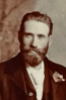
William John MURPHY
(1846 - 12 Feb 1932)
In July 1861, at the age of about 15, William began a two-year course at the Albert Agricultural College in Glasnevin, Dublin. During this time he lost his left hand in an agricultural machinery accident, which occurred when his brother John, who would have been three or four years old at the time, was visting William at the college and got caught in the machine. William helped to release him but lost his hand in the process. It is likely the accident occurred in January 1863 as Albert College records show that William left his studies on sick leave on 28 January 1963, returning on 28 February 1863.
Unable to pursue his career plans in horticulture with just one hand, William turned to teaching and was offered a position in the boys' section of the workhouse school in Clonmel, Co. Tipperary, where he taught for a number of years from about 1864. Given his farming qualification it is possible he gave instruction in this subject in the workhouse school. He certainly maintained a strong interest in agriculture throughout his life and was a prolific contributor of letters and articles to farming and gardening magazines, e.g., "The Irish Farm, Forest and Garden", "The Gardener's Chronicle", "The Garden", "Journal of Horticulture", "Farm and Home" and "The Gardening World". He always signed himself 'WJM Clonmel' and was still being published in 1916, when he was about 70. The March 2019 edition of "The Irish Garden" has an interesting article by Charles Nelson on William's gardening expertise, entitled "Who was 'WJM Clonmel'?".
William's success in having articles published may have led to his move from teaching into a career in journalism. He ended up running The Clonmel Nationalist newspaper, which was established in 1890 to communicate the views of the nationalist community in Tipperary. He is variously described as founder, manager, editor and publisher of the newspaper but I am unsure which role(s) actually applied to him. I have been told he owned the building in which the newspaper was printed. The paper is still in business and is now simply called The Nationalist.
At the time of his second marriage, to Mary, in 1896 William was living in Old Grange, Clonea, Co. Waterford. Later he and Mary lived at 71 Irishtown in Clonmel. In the early 1900s William was influential in getting the statue of "The '98 Man", commemorating those nationalists involved in the 1798 Rebellion, erected in Clonmel. The statue, in front of the town hall, was unveiled in 1904.
In March 1909 William was arrested at his home in Irishtown and charged with criminal conspiracy arising out of the intimidation of a landowner named Charles Neville Clarke who owned property in Graiguenoe, Holycross, Co. Tipperary. William and eight others were accused of threatening Mr. Clarke in order to force him sell the lands surrounding his Graiguenoe home to the Estates Commission so they could be divided among other local farmers. The intimidatory tactics cited in the "Holycross Conspiracy Charge", as it was known, included the publication in The Nationalist of allegedly inflammatory articles concerning Mr. Clarke. The case was widely reported on at the time, and the manner of William's arrest (the police came to his home before 6am, while William was still in bed, which was a departure from usual protocol when arresting prominent citizens) was raised in the House of Commons by John Redmond of the Irish Parliamentary Party and Hilaire Belloc of the Liberal Party. The case was heard in May 1910 and William was acquitted but the other eight accused, who were not known to William, were found guilty and served prison sentences.
Unable to pursue his career plans in horticulture with just one hand, William turned to teaching and was offered a position in the boys' section of the workhouse school in Clonmel, Co. Tipperary, where he taught for a number of years from about 1864. Given his farming qualification it is possible he gave instruction in this subject in the workhouse school. He certainly maintained a strong interest in agriculture throughout his life and was a prolific contributor of letters and articles to farming and gardening magazines, e.g., "The Irish Farm, Forest and Garden", "The Gardener's Chronicle", "The Garden", "Journal of Horticulture", "Farm and Home" and "The Gardening World". He always signed himself 'WJM Clonmel' and was still being published in 1916, when he was about 70. The March 2019 edition of "The Irish Garden" has an interesting article by Charles Nelson on William's gardening expertise, entitled "Who was 'WJM Clonmel'?".
William's success in having articles published may have led to his move from teaching into a career in journalism. He ended up running The Clonmel Nationalist newspaper, which was established in 1890 to communicate the views of the nationalist community in Tipperary. He is variously described as founder, manager, editor and publisher of the newspaper but I am unsure which role(s) actually applied to him. I have been told he owned the building in which the newspaper was printed. The paper is still in business and is now simply called The Nationalist.
At the time of his second marriage, to Mary, in 1896 William was living in Old Grange, Clonea, Co. Waterford. Later he and Mary lived at 71 Irishtown in Clonmel. In the early 1900s William was influential in getting the statue of "The '98 Man", commemorating those nationalists involved in the 1798 Rebellion, erected in Clonmel. The statue, in front of the town hall, was unveiled in 1904.
In March 1909 William was arrested at his home in Irishtown and charged with criminal conspiracy arising out of the intimidation of a landowner named Charles Neville Clarke who owned property in Graiguenoe, Holycross, Co. Tipperary. William and eight others were accused of threatening Mr. Clarke in order to force him sell the lands surrounding his Graiguenoe home to the Estates Commission so they could be divided among other local farmers. The intimidatory tactics cited in the "Holycross Conspiracy Charge", as it was known, included the publication in The Nationalist of allegedly inflammatory articles concerning Mr. Clarke. The case was widely reported on at the time, and the manner of William's arrest (the police came to his home before 6am, while William was still in bed, which was a departure from usual protocol when arresting prominent citizens) was raised in the House of Commons by John Redmond of the Irish Parliamentary Party and Hilaire Belloc of the Liberal Party. The case was heard in May 1910 and William was acquitted but the other eight accused, who were not known to William, were found guilty and served prison sentences.
Events
| Birth | 1846 | probably Knocklonogad, Garryhill, Co. Carlow | |||
| Marriage | 1890 | Ann MCCARTHY | |||
| Marriage | 6 Oct 1896 | Carrick-on-Suir, Co. Waterford - Mary Margaret CHEASTY | |||
| Death | 12 Feb 1932 | 71 Irishtown, Clonmel, Co. Tipperary | |||
| Burial | St. Patrick's Cemetery, Clonmel, Co. Tipperary |
Families
| Spouse | Mary Margaret CHEASTY (1867 - 1933) |
| Child | Marion Delia MURPHY (1898 - 1983) |
| Child | Patrick (Paddy) Joseph MURPHY (1900 - 1984) |
| Child | Margaret (Pearlie) M. J. MURPHY (1902 - 2004) |
| Child | Alice MURPHY (1905 - 1964) |
| Child | Georgina (Ena) Mary MURPHY (1907 - 1974) |
| Child | John William MURPHY (1911 - 2006) |
| Spouse | Ann MCCARTHY ( - 1896) |
| Father | John William MURPHY (1811 - 1887) |
| Mother | Mary MCDONALD (1820 - 1894) |
| Sibling | Thomas MURPHY (1847 - 1883) |
| Sibling | Patrick MURPHY (1849 - 1936) |
| Sibling | James MURPHY (1851 - 1910) |
| Sibling | Bridget MURPHY (1853 - 1926) |
| Sibling | Michael McDonald MURPHY (1855 - 1932) |
| Sibling | Mary MURPHY (1857 - 1932) |
| Sibling | John MURPHY (1859 - 1929) |
| Sibling | Margaret MURPHY (1862 - ) |