Individual Details
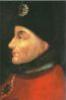
Jean "the Fearless" Duc de Bourgogne
(28 May 1371 - 10 Sep 1419)
Son of Philippe 'the Bold', duke of Burgundy, and Margaretha of Flanders and Brabant, Jean was born on 28 May 1371 in the ducal castle at Rouvres, Dijon, where he spent the greater part of his childhood. On 12 April 1385 at Cambrai he married Margaretha of Bavaria, daughter of Albrecht, count of Holland, Zeeland and Hainault, and Margarethe von Schlesien-Brieg. They had eight children of whom their son Philippe and daughters Marie and Anne would have progeny. By Margarethe van Borselen he fathered three children of whom a son Philippe would have progeny, and by Agnes de Cro˙ he fathered a son Jean who would become bishop of Kamerijk, and later archbishop of Trier.
In the decade following his marriage, Jean's father initiated him into the arts of government and warfare, though he was not given any post of responsibility. Even in 1396, at 24 when he became leader of the Burgundian crusade against the Ottoman Turks in defence of Hungary, his leadership was only nominal. The actual conduct of the expedition, which ended in the disastrous defeat of the crusaders on the battlefield of Nicopolis and the capture of Jean by the Turks (an adventure that earned him the epithet 'the Fearless'), was entrusted to a group of councillors and military advisers appointed by Philippe 'the Bold'. Jean evidently benefited from the blunders of these commanders, for his subsequent career showed that he was the only one of the Valois rulers of Burgundy who knew how to handle an army.
When Jean at last succeeded his father in 1404 as duke of Burgundy and count of Burgundy, Flanders and Artois, he was 33 years old. Jean 'the Fearless' spent most of his time and his considerable political and military energies in France, Paris being his normal place of residence and seat of government. His only significant personal participation as duke of Burgundy in major events outside France took place in 1408, when he led a Burgundian army to aid his beleaguered brother-in-law, the bishop of Ličge, Jean of Bavaria, against the citizens of Ličge, who were in open revolt. On the field of Othée, on 23 September 1408, the men of Ličge were decisively defeated, and Burgundian influence was extended over the city and over the bishopric of Ličge.
From the start, Jean found himself involved in French affairs, and he was in part responsible for provoking a civil war in France with a rival house, headed by his first cousin, the King's younger brother Louis, duc d'Orléans. Each man sought control of the mad king Charles VI and his queen and of the capital Paris. While the notorious murder by Jean of his cousin using hired assassins in 1407 enabled him to subdue Paris and the crown, the opposition to the Burgundians by Louis' followers and heirs continued. Their faction was named after its main supporter, Bernard VII, comte d'Armagnac.
During the five years between 1413 and 1418, in which the Armagnacs succeeded in driving the Burgundians out of Paris, the internal situation in France was further complicated by a new English invasion led by the ambitious king, Henry V. Jean was one of those French princes who, while pretending to do his best to reach the battlefield of Agincourt to give battle to the English in 1415, was unaccountably delayed on the way.
His intermittent negotiations with King Henry V did not, however, lead to a firm Anglo-Burgundian alliance, and in the autumn of 1419 Jean turned instead to the Armagnacs, in the hopes of arranging a truce or even making a firm peace settlement with their youthful leader, the dauphin Charles (the future Charles VII), in an alliance against the English. The two princes, each with 10 companions, met on the bridge of Montereau, some 50 miles south east of Paris. As the diplomatic parley began, Jean 'the Fearless' was struck down and killed during a dispute started by the Armagnacs, a political assassination that contemporary evidence shows was almost certain carefully premeditated.
Jean pursued aims similar to those of the other rulers of his day: the consolidation and extension of his own and his family's power. In spite of his lapses into violence, his love of intrigue, his hypocrisy, and his rashness, he was a successful diplomat and military leader; he was more dynamic and more of a reformer than his son Philippe 'the Good' and more cunning, though less scrupulous, than his father. Yet he has received less attention from historians than either of them. In the eye of history, especially French history, he has long been regarded as a traitor and assassin. There was, perhaps, a dark and sinister element in his character, but he lived in an age when vice, tyranny, and murder were the common properties of every ruler. If he wrought destruction in France, he also brought peace and prosperity to his own Burgundian lands.
Source: Leo van de Pas
In the decade following his marriage, Jean's father initiated him into the arts of government and warfare, though he was not given any post of responsibility. Even in 1396, at 24 when he became leader of the Burgundian crusade against the Ottoman Turks in defence of Hungary, his leadership was only nominal. The actual conduct of the expedition, which ended in the disastrous defeat of the crusaders on the battlefield of Nicopolis and the capture of Jean by the Turks (an adventure that earned him the epithet 'the Fearless'), was entrusted to a group of councillors and military advisers appointed by Philippe 'the Bold'. Jean evidently benefited from the blunders of these commanders, for his subsequent career showed that he was the only one of the Valois rulers of Burgundy who knew how to handle an army.
When Jean at last succeeded his father in 1404 as duke of Burgundy and count of Burgundy, Flanders and Artois, he was 33 years old. Jean 'the Fearless' spent most of his time and his considerable political and military energies in France, Paris being his normal place of residence and seat of government. His only significant personal participation as duke of Burgundy in major events outside France took place in 1408, when he led a Burgundian army to aid his beleaguered brother-in-law, the bishop of Ličge, Jean of Bavaria, against the citizens of Ličge, who were in open revolt. On the field of Othée, on 23 September 1408, the men of Ličge were decisively defeated, and Burgundian influence was extended over the city and over the bishopric of Ličge.
From the start, Jean found himself involved in French affairs, and he was in part responsible for provoking a civil war in France with a rival house, headed by his first cousin, the King's younger brother Louis, duc d'Orléans. Each man sought control of the mad king Charles VI and his queen and of the capital Paris. While the notorious murder by Jean of his cousin using hired assassins in 1407 enabled him to subdue Paris and the crown, the opposition to the Burgundians by Louis' followers and heirs continued. Their faction was named after its main supporter, Bernard VII, comte d'Armagnac.
During the five years between 1413 and 1418, in which the Armagnacs succeeded in driving the Burgundians out of Paris, the internal situation in France was further complicated by a new English invasion led by the ambitious king, Henry V. Jean was one of those French princes who, while pretending to do his best to reach the battlefield of Agincourt to give battle to the English in 1415, was unaccountably delayed on the way.
His intermittent negotiations with King Henry V did not, however, lead to a firm Anglo-Burgundian alliance, and in the autumn of 1419 Jean turned instead to the Armagnacs, in the hopes of arranging a truce or even making a firm peace settlement with their youthful leader, the dauphin Charles (the future Charles VII), in an alliance against the English. The two princes, each with 10 companions, met on the bridge of Montereau, some 50 miles south east of Paris. As the diplomatic parley began, Jean 'the Fearless' was struck down and killed during a dispute started by the Armagnacs, a political assassination that contemporary evidence shows was almost certain carefully premeditated.
Jean pursued aims similar to those of the other rulers of his day: the consolidation and extension of his own and his family's power. In spite of his lapses into violence, his love of intrigue, his hypocrisy, and his rashness, he was a successful diplomat and military leader; he was more dynamic and more of a reformer than his son Philippe 'the Good' and more cunning, though less scrupulous, than his father. Yet he has received less attention from historians than either of them. In the eye of history, especially French history, he has long been regarded as a traitor and assassin. There was, perhaps, a dark and sinister element in his character, but he lived in an age when vice, tyranny, and murder were the common properties of every ruler. If he wrought destruction in France, he also brought peace and prosperity to his own Burgundian lands.
Source: Leo van de Pas
Events
| Birth | 28 May 1371 | Dijon | |||
| Marriage | 12 Apr 1385 | Margaretha of Bavaria | |||
| Death | 10 Sep 1419 | Montereau |
Families
| Spouse | Margaretha of Bavaria (1363 - 1424) |
| Child | Philippe "the Good" Duc de Bourgogne (1396 - 1467) |
| Father | Philippe "the Bold" Duc de Bourgogne (1342 - 1404) |
| Mother | Margarethe of Flandre et Brabant (1350 - 1405) |