Individual Details
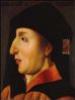
Philippe "the Bold" Duc de Bourgogne
(17 Jan 1342 - 27 Apr 1404)
Philippe was born on 17 January 1342, the youngest son of Jean II, king of France and Judith of Bohemia. He was one of the most powerful men of his day in France. He was for a time regent for his nephew Charles VI, and when Charles became insane Philippe became virtual ruler of France.
Jean II's grant of the duchy of Burgundy to Philippe in September 1363 did not become effective until June 1364, when the new king, Philippe's brother Charles V, confirmed it. Philippe and Charles supported each other's policies. On 19 June 1369 in Ghent Philippe married Margarethe of Flanders and Brabant, daughter of Louis III 'de Mâle', count of Flanders and Rethel, and Margaretha of Brabant. They had nine children of whom three sons and two daughters would have progeny. This marriage was arranged by Charles to prevent Margarethe from marrying an English prince. In 1384 Philippe and his wife inherited Flanders, Artois, Réthel, Nevers, Franche-Comté, and some lands in Champagne on her father's death. By purchase and skilful alliance he also secured several holdings in The Netherlands. In 1386 his domains had become so extensive that he arranged separate administrations at Lille and Dijon for his northern and southern territories.
During the minority of their nephew Charles VI, Philippe and his brothers shared the government of France and the spoils of power. Philippe did not hesitate to involve the government in the furtherance of his own aims. Because of the location of his domain, these were shaped by the necessity of friendly relations with Germany and England. In November 1388, Charles rejected the tutelage of his uncles; but when Charles became insane in 1392, Philippe regained his pre-eminence and imposed his own policies on the French government: an alliance with England in 1396, and in relation to the papal Western Schism the withdrawal in 1398 of support for the Avignon pope Benedict XIII, since Philippe's Flemish subjects adhered to the Roman pope Boniface IX. He also diverted huge sums from the royal treasury, thereby coming into conflict with his chief rival for power, Charles VI's brother Louis, duke of Orléans.
Philippe was a patron of the arts. He collected illuminated books and manuscripts, purchased jewellery and precious cloth, and encouraged artists. He fell heavily into debt, chiefly from financing his son Jean's crusade against the Ottoman Turks in 1396. Philippe died on 27 April 1404 in Halle. He was succeeded by his son Jean.
Source: Leo van de Pas
Jean II's grant of the duchy of Burgundy to Philippe in September 1363 did not become effective until June 1364, when the new king, Philippe's brother Charles V, confirmed it. Philippe and Charles supported each other's policies. On 19 June 1369 in Ghent Philippe married Margarethe of Flanders and Brabant, daughter of Louis III 'de Mâle', count of Flanders and Rethel, and Margaretha of Brabant. They had nine children of whom three sons and two daughters would have progeny. This marriage was arranged by Charles to prevent Margarethe from marrying an English prince. In 1384 Philippe and his wife inherited Flanders, Artois, Réthel, Nevers, Franche-Comté, and some lands in Champagne on her father's death. By purchase and skilful alliance he also secured several holdings in The Netherlands. In 1386 his domains had become so extensive that he arranged separate administrations at Lille and Dijon for his northern and southern territories.
During the minority of their nephew Charles VI, Philippe and his brothers shared the government of France and the spoils of power. Philippe did not hesitate to involve the government in the furtherance of his own aims. Because of the location of his domain, these were shaped by the necessity of friendly relations with Germany and England. In November 1388, Charles rejected the tutelage of his uncles; but when Charles became insane in 1392, Philippe regained his pre-eminence and imposed his own policies on the French government: an alliance with England in 1396, and in relation to the papal Western Schism the withdrawal in 1398 of support for the Avignon pope Benedict XIII, since Philippe's Flemish subjects adhered to the Roman pope Boniface IX. He also diverted huge sums from the royal treasury, thereby coming into conflict with his chief rival for power, Charles VI's brother Louis, duke of Orléans.
Philippe was a patron of the arts. He collected illuminated books and manuscripts, purchased jewellery and precious cloth, and encouraged artists. He fell heavily into debt, chiefly from financing his son Jean's crusade against the Ottoman Turks in 1396. Philippe died on 27 April 1404 in Halle. He was succeeded by his son Jean.
Source: Leo van de Pas
Events
| Birth | 17 Jan 1342 | Pontoise | |||
| Marriage | 19 Jun 1369 | Margarethe of Flandre et Brabant | |||
| Death | 27 Apr 1404 | Halle |
Families
| Spouse | Margarethe of Flandre et Brabant (1350 - 1405) |
| Child | Jean "the Fearless" Duc de Bourgogne (1371 - 1419) |
| Father | Jean II "the Good" King of France (1319 - 1364) |
| Mother | Judith of Bohemia (1315 - 1349) |