Individual Details
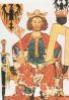
Henrich VI Emperor of the Holy Roman Empire
(Nov 1165 - 28 Sep 1197)
Heinrich was born in November 1165, the son of Emperor Friedrich I Barbarossa and his second wife Beatrice de Bourgogne. On 27 January 1186 in Milan Heinrich married Costanza of Sicily, the daughter of Roger II, king of Sicily, and his second wife Béatrice de Vitry-Réthel. The marriage was intended to seal the peace between the Holy Roman Empire and Sicily. The pope did not approve of the marriage and rumours were circulated that Costanza was a nun and had been made to forswear her vows. She had indeed lived in a convent in Palermo and was religious, but she was not a nun. She was also heiress to her childless nephew Guglielmo II, king of Sicily.
Heinrich VI was eleven years younger than his bride of about thirty-one years, and he was regarded as 'not affable or benevolent with the peoples'. Costanza, who was tall and fair as well as wealthy, dutifully married him, and they were crowned with the historic crown of Lombardy.
The pope placed the officiating patriarch of Aquileia under the church's interdict, so Heinrich marched on Rome. However news came that Jerusalem had fallen to Saladin and then that the pope had died. Heinrich's father, the aged Emperor Friedrich I Barbarossa went on crusade, but drowned in Asia Minor in 1190.
In 1189 Guglielmo II had died, making Costanza queen of Sicily and Heinrich king of Sicily in her right. Now that his father had died, Heinrich became emperor as well. However, the Sicilians wanted Tancred, an illegitimate member of the Sicilian royal family, as their king. The new pope wanted Sicily to be separated from the Holy Roman Empire.
In the spring of 1191, Heinrich and Costanza came to Rome for their coronation. In May, Heinrich besieged Naples. The city of Salerno asked Costanza to visit. When she did, the people came to realise what kind of man Heinrich was, so they handed her over to Tancred. He received her with honour and after several months sent her back to her husband.
Three years later, after Tancred's death, Heinrich resumed his attack on Sicily. He succeeded and with promises of a general amnesty he was invested with the royal regalia on 26 December 1194. The celebrations were barely ended when the Sicilian nobles and clergy still present were seized by Heinrich. Claiming that a conspiracy on behalf of Tancred's young son had been detected, he had the child blinded and castrated while all those nobles present at Tancred's coronation were burnt alive.
What Heinrich did not know was that, also on 26 December 1194, his forty-year-old wife had at last given birth to a child, the future Emperor Friedrich II. Costanza, hoping to give birth in Sicily, was on her way from Germany. However in Jesi near Ancona it became obvious that her time had come. To prevent rumours that she was not the mother (after all, at forty she was regarded to be too old to give birth to a first child) she had a tent erected in the market place and requested the matrons of the town to attend the birth.
Costanza then went to Sicily where she and Heinrich underwent another coronation, after which Heinrich set out for Germany, leaving Costanza as head of a regency council. The main reason for his journey was to have his baby son elected as his imperial successor. In this he succeeded, but his cruelty had left a difficult legacy for his wife in Sicily. When a rebellion broke out, Heinrich returned with an army he had raised for his crusade, and put it down. Again hostages were blinded while the rebellion's leaders were tortured in the presence of both Heinrich and Costanza.
Convinced that there would be no further rebellions, Heinrich was ready to sail for the Holy Land. However, the nobles did rise against him once more. This time he adopted a more conciliatory attitude and succeeded in regaining control. However, suspecting that his wife had played a part in this last revolt, he had her confined in the palace of Palermo. He may have considered even further cruelties, but suddenly, after a short illness, he died at Messina on 28 September 1197, aged only thirty-one.
Source: Leo van de Pas
Heinrich VI was eleven years younger than his bride of about thirty-one years, and he was regarded as 'not affable or benevolent with the peoples'. Costanza, who was tall and fair as well as wealthy, dutifully married him, and they were crowned with the historic crown of Lombardy.
The pope placed the officiating patriarch of Aquileia under the church's interdict, so Heinrich marched on Rome. However news came that Jerusalem had fallen to Saladin and then that the pope had died. Heinrich's father, the aged Emperor Friedrich I Barbarossa went on crusade, but drowned in Asia Minor in 1190.
In 1189 Guglielmo II had died, making Costanza queen of Sicily and Heinrich king of Sicily in her right. Now that his father had died, Heinrich became emperor as well. However, the Sicilians wanted Tancred, an illegitimate member of the Sicilian royal family, as their king. The new pope wanted Sicily to be separated from the Holy Roman Empire.
In the spring of 1191, Heinrich and Costanza came to Rome for their coronation. In May, Heinrich besieged Naples. The city of Salerno asked Costanza to visit. When she did, the people came to realise what kind of man Heinrich was, so they handed her over to Tancred. He received her with honour and after several months sent her back to her husband.
Three years later, after Tancred's death, Heinrich resumed his attack on Sicily. He succeeded and with promises of a general amnesty he was invested with the royal regalia on 26 December 1194. The celebrations were barely ended when the Sicilian nobles and clergy still present were seized by Heinrich. Claiming that a conspiracy on behalf of Tancred's young son had been detected, he had the child blinded and castrated while all those nobles present at Tancred's coronation were burnt alive.
What Heinrich did not know was that, also on 26 December 1194, his forty-year-old wife had at last given birth to a child, the future Emperor Friedrich II. Costanza, hoping to give birth in Sicily, was on her way from Germany. However in Jesi near Ancona it became obvious that her time had come. To prevent rumours that she was not the mother (after all, at forty she was regarded to be too old to give birth to a first child) she had a tent erected in the market place and requested the matrons of the town to attend the birth.
Costanza then went to Sicily where she and Heinrich underwent another coronation, after which Heinrich set out for Germany, leaving Costanza as head of a regency council. The main reason for his journey was to have his baby son elected as his imperial successor. In this he succeeded, but his cruelty had left a difficult legacy for his wife in Sicily. When a rebellion broke out, Heinrich returned with an army he had raised for his crusade, and put it down. Again hostages were blinded while the rebellion's leaders were tortured in the presence of both Heinrich and Costanza.
Convinced that there would be no further rebellions, Heinrich was ready to sail for the Holy Land. However, the nobles did rise against him once more. This time he adopted a more conciliatory attitude and succeeded in regaining control. However, suspecting that his wife had played a part in this last revolt, he had her confined in the palace of Palermo. He may have considered even further cruelties, but suddenly, after a short illness, he died at Messina on 28 September 1197, aged only thirty-one.
Source: Leo van de Pas
Events
| Birth | Nov 1165 | ||||
| Marriage | 27 Jan 1186 | Milano - Constanza of Sicily | |||
| Death | 28 Sep 1197 | Messina |
Families
| Spouse | Constanza of Sicily (1154 - 1198) |
| Child | Friedrich II Emperor of the Holy Roman Empire (1194 - 1250) |
| Father | Friedrich I, "Barbarosa" Emperor of the Holy Roman Empire Emperor of the Holy Roman Empire (1123 - 1190) |
| Mother | Beatrix I of Bourgogne (1145 - 1184) |
| Sibling | Philipp von Hohenstaufen, Duke of Schwaben, German King (1176 - 1208) |
| Sibling | Otto II von Hohenstaufen, Count Palatine of Burgundy (1167 - 1200) |