Individual Details
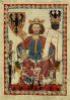
Friedrich I, "Barbarosa" Emperor of the Holy Roman Empire Emperor of the Holy Roman Empire
(1123 - 1190)
Friedrich was born about 1122, the son of Friedrich II von Hohenstaufen, Herzog von Schwaben, and his first wife Judith of Bavaria. In 1147 he married his first wife Adelheid von Vohburg, daughter of Diepold III, Markgraf von Vohburg. They were divorced without progeny in 1153.
Succeeding his uncle Konrad III, Friedrich was elected King of the Romans in 1152. He became the ruler of a very much divided and fragmented empire, threatened from within as well as from outside. Danes, Vikings, Poles and Magyars were invading while rival dukes fought each other instead of the invaders. A further cause for disharmony was the rivalry with the House of Saxony, which had already supplied three German emperors. Complicating matters even further was the fight for supreme power with the Church. In Friedrich's view his power was derived directly from God and merely confirmed, not conferred, by the pope. He needed to secure his power and influence in northern Italy to prevent these Italians from intriguing with the pope. To achieve this he required peace in Germany, so after his election he made a truce with his kinsman, Heinrich 'the Lion', by restoring to him Bavaria, which had been taken by Konrad III.
In 1154 he toured the Rhineland and the Palatinate, suppressing feuds and executing every peace-breaker he captured. After this he subdued Boleslav of Poland who had tried to become independent from the Empire.
Friedrich Barbarossa, accompanied by a thousand knights, then set out to Italy for his coronation by the English pope, Hadrian IV. First he had to liberate Hadrian from the Roman mob. When Hadrian proclaimed that he had 'conferred' the imperial crown, Friedrich Barbarossa proclaimed throughout the Empire that he had received the crown from God alone.
On 10 June 1156 at Würzburg Friedrich married Beatrice de Bourgogne, the only daughter of Renaud III, comte de Macon, comte de Bourgogne, and Agathe de Lorraine. They had twelve children of whom three sons would have progeny. By this marriage Friedrich obtained control over the vast county of Burgundy.
Fearing that the northern Italians might ally themselves with the pope, Friedrich appeared in Verona in June 1158 with an army of fifty thousand. Then he besieged Milan and, after he had taken the city, made it pay dues to him. Hadrian IV died and was replaced by Pope Alexander III, as resolute and intelligent as Friedrich Barbarossa. When Friedrich appointed an antipope Victor IV, Alexander III excommunicated the emperor and Milan revolted. This time the population was starved out and the city razed to the ground. Encouraged by Alexander III who had fled to France, the Lombards rebelled against the harsh German administration. Victor IV died and was replaced by another antipope, Paschal III. Friedrich Barbarossa waited three years and then attacked Rome with a large army. Alexander III, having returned from France, this time fled to Sicily. After Friedrich had secured Paschal III in Rome, the plague struck his army and Friedrich was forced to retreat to Germany, crossing the Alps disguised as a servant.
In 1176 he returned to Italy to reassert his authority, but was heavily defeated at Legnano; in 1177, Friedrich made peace with Alexander III. Nine years later he arranged the marriage of his son to Constance, heiress presumptive of Sicily. Even though in the beginning of his reign he had tried to befriend Heinrich the Lion, Heinrich had refused to assist in Italy and tried to make his Saxon territory semi-independent within the empire. Enemies of Heinrich complained to Friedrich. When Heinrich ignored the imperial summons, Friedrich occupied and divided Saxony in a lightning campaign, and banished Heinrich to France.
During Friedrich's reign Germany prospered; roads were built and new trade routes were opened. Between 1150 and 1175 the number of German towns doubled, a unified coinage was introduced and literature flourished. Nearly seventy years old, Friedrich set out on crusade. A large army was collected and went overland towards the Bosphorus while Richard the Lionheart and the French King Philippe went by sea. All went well at first; but when Friedrich Barbarossa reached Byzantine territory his army was attacked and robbed at night. Also food was scarce, as the population had fled, taking everything with them. However the army sent by the Byzantine Emperor to attack Friedrich's force was defeated, after which Friedrich received Byzantine support.
Friedrich's army was a year on the road before arriving in Asia Minor, where it was attacked by hostile horsemen. The army marched through the mountains where again there was no food. Half starved they continued, now reduced to six hundred knights. Nevertheless they attacked and conquered Iconium, which had been defended by a much stronger army. Later, with food aplenty, they recovered to continue their way to the Holy Land.
There had been a prophecy that Friedrich would die by drowning, another that he would win his empire like a fox, preserve it like a lion, but die like a dog.
On 10 June 1190 the army was in Cilicia, part of today's Anatolia, in the intense heat of June when it crossed a fast flowing river. Resting in the burning sun, Friedrich had some food, then decided to bathe in the river. Against advice he went in and his men saw him disappear. When his body was found much later, his knights decided to return home.
According to myth, he never died but is simply asleep, one day to return and save Germany from its enemies.
Source: Leo van de Pas
Succeeding his uncle Konrad III, Friedrich was elected King of the Romans in 1152. He became the ruler of a very much divided and fragmented empire, threatened from within as well as from outside. Danes, Vikings, Poles and Magyars were invading while rival dukes fought each other instead of the invaders. A further cause for disharmony was the rivalry with the House of Saxony, which had already supplied three German emperors. Complicating matters even further was the fight for supreme power with the Church. In Friedrich's view his power was derived directly from God and merely confirmed, not conferred, by the pope. He needed to secure his power and influence in northern Italy to prevent these Italians from intriguing with the pope. To achieve this he required peace in Germany, so after his election he made a truce with his kinsman, Heinrich 'the Lion', by restoring to him Bavaria, which had been taken by Konrad III.
In 1154 he toured the Rhineland and the Palatinate, suppressing feuds and executing every peace-breaker he captured. After this he subdued Boleslav of Poland who had tried to become independent from the Empire.
Friedrich Barbarossa, accompanied by a thousand knights, then set out to Italy for his coronation by the English pope, Hadrian IV. First he had to liberate Hadrian from the Roman mob. When Hadrian proclaimed that he had 'conferred' the imperial crown, Friedrich Barbarossa proclaimed throughout the Empire that he had received the crown from God alone.
On 10 June 1156 at Würzburg Friedrich married Beatrice de Bourgogne, the only daughter of Renaud III, comte de Macon, comte de Bourgogne, and Agathe de Lorraine. They had twelve children of whom three sons would have progeny. By this marriage Friedrich obtained control over the vast county of Burgundy.
Fearing that the northern Italians might ally themselves with the pope, Friedrich appeared in Verona in June 1158 with an army of fifty thousand. Then he besieged Milan and, after he had taken the city, made it pay dues to him. Hadrian IV died and was replaced by Pope Alexander III, as resolute and intelligent as Friedrich Barbarossa. When Friedrich appointed an antipope Victor IV, Alexander III excommunicated the emperor and Milan revolted. This time the population was starved out and the city razed to the ground. Encouraged by Alexander III who had fled to France, the Lombards rebelled against the harsh German administration. Victor IV died and was replaced by another antipope, Paschal III. Friedrich Barbarossa waited three years and then attacked Rome with a large army. Alexander III, having returned from France, this time fled to Sicily. After Friedrich had secured Paschal III in Rome, the plague struck his army and Friedrich was forced to retreat to Germany, crossing the Alps disguised as a servant.
In 1176 he returned to Italy to reassert his authority, but was heavily defeated at Legnano; in 1177, Friedrich made peace with Alexander III. Nine years later he arranged the marriage of his son to Constance, heiress presumptive of Sicily. Even though in the beginning of his reign he had tried to befriend Heinrich the Lion, Heinrich had refused to assist in Italy and tried to make his Saxon territory semi-independent within the empire. Enemies of Heinrich complained to Friedrich. When Heinrich ignored the imperial summons, Friedrich occupied and divided Saxony in a lightning campaign, and banished Heinrich to France.
During Friedrich's reign Germany prospered; roads were built and new trade routes were opened. Between 1150 and 1175 the number of German towns doubled, a unified coinage was introduced and literature flourished. Nearly seventy years old, Friedrich set out on crusade. A large army was collected and went overland towards the Bosphorus while Richard the Lionheart and the French King Philippe went by sea. All went well at first; but when Friedrich Barbarossa reached Byzantine territory his army was attacked and robbed at night. Also food was scarce, as the population had fled, taking everything with them. However the army sent by the Byzantine Emperor to attack Friedrich's force was defeated, after which Friedrich received Byzantine support.
Friedrich's army was a year on the road before arriving in Asia Minor, where it was attacked by hostile horsemen. The army marched through the mountains where again there was no food. Half starved they continued, now reduced to six hundred knights. Nevertheless they attacked and conquered Iconium, which had been defended by a much stronger army. Later, with food aplenty, they recovered to continue their way to the Holy Land.
There had been a prophecy that Friedrich would die by drowning, another that he would win his empire like a fox, preserve it like a lion, but die like a dog.
On 10 June 1190 the army was in Cilicia, part of today's Anatolia, in the intense heat of June when it crossed a fast flowing river. Resting in the burning sun, Friedrich had some food, then decided to bathe in the river. Against advice he went in and his men saw him disappear. When his body was found much later, his knights decided to return home.
According to myth, he never died but is simply asleep, one day to return and save Germany from its enemies.
Source: Leo van de Pas
Events
| Birth | 1123 | ||||
| Death | 1190 | ||||
| Marriage | Beatrix I of Bourgogne |
Families
| Spouse | Beatrix I of Bourgogne (1145 - 1184) |
| Child | Philipp von Hohenstaufen, Duke of Schwaben, German King (1176 - 1208) |
| Child | Henrich VI Emperor of the Holy Roman Empire (1165 - 1197) |
| Child | Otto II von Hohenstaufen, Count Palatine of Burgundy (1167 - 1200) |
| Father | Friedrich II von Hohenstaufen, Duke of Schwaben (1090 - 1147) |
| Mother | Judith of Bavaria ( - 1130) |