Individual Details
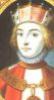
Duke Filippo de Savoia, Count de Bresse
(5 Feb 1438 - 7 Nov 1497)
Events
| Birth | 5 Feb 1438 | Chambéry | |||
| Marriage | 6 Apr 1472 | Marguerite de Bourbon | |||
| Marriage | 11 Nov 1485 | Claudine de Brosse | |||
| Death | 7 Nov 1497 | Lemens | |||
| Biography |  |  |
Families
| Spouse | Claudine de Brosse ( - 1513) |
| Child | Filiberta de Savoia (1498 - 1524) |
| Spouse | Marguerite de Bourbon (1438 - 1483) |
Notes
Biography
Philippe I, known as 'Senza Terra' (the Landless), was born at Chambery on 5 February 1438, the fourth of eighteen children of Louis, duke of Savoy and Anne de Lusignan. In 1468 Philippe became a knight of the Order of the Golden Fleece.On 6 April 1472 he married Marguerite de Bourbon, daughter of Charles I, duc de Bourbon, and Agnes de Bourgogne. They had two children, Philibert and Louise. Philibert, known as 'il Bello' (the Handsome) would succeed his father as duke of Savoy but did not have children, and the dukedom would pass to his half-brother Charles III, eldest son of Philippe with his second wife Claude de Brosse, daughter of Jean II de Brosse, seigneur de Boussac, de Sainte-Severe, and Nicole de Châtillon de Blois, comtesse de Penthièvre, vicomtesse de Limoges. Louise, the daughter of Philippe's first marriage, would marry Charles d'Orléans, comte d'Angoulême, and became the mother of the future François I, king of France.
Philippe was the uncle of his three predecessor dukes of Savoy: two sons of his brother Amadeo IX 'the Happy', namely Philibert I and Charles I, and Charles II, the 6 year old young son of Charles I, whom Philippe unexpectedly succeeded as duke. In relation to his predecessors, Philippe was described as 'at times resisting, at times intriguing, at times protecting, and more an enemy than an ally'. Philippe was born in a principality suffering from great political difficulties, caught between the overprotective influence of his French cousin, expansionism of the dukes of Burgundy and his own inclination towards Geneva and the duchy of Milan. As only a minor prince, Philippe long played only a limited role in the internal affairs of the Savoy states. It was not until 1460 that he received an appanage. This was the lordship of Bresse, which he proceeded to rule largely autonomously despite recurring financial problems. However, his efforts, both numerous and violent, to become the ruler of the duchy (assassination of senior officials, kidnappings of young dukes, nominations as governor general or regent) proved unfruitful for a long time. His life and actions resembled rather those of a princely adventurer, hence the sobriquet 'Senza Terra' which was attached to him in the 15th century. Behaving like a grand aristocrat, Philippe endeavoured to dispense, to the highest bidder, pensions and lordships, administrative positions and offices at court.
In this context of great political instability, it suited Philippe to adjust his alliances between France and Burgundy. He was close to Louis XI in 1458, but Louis finished by imprisoning him in the château of Loches in 1464. Freed in 1466, he turned towards Charles 'the Bold', following a long Savoy habit. This explains his elevation, on 24 June 1468, as a knight of the Order of the Golden Fleece (10 years later his brother Jacques would also be made a knight of the order). It also explains his appointment as governor of the two Burgundies, and his presence at Péronne at the side of the duke for the conference with Louis XI. From then until the death of Charles 'the Bold', Philippe manoeuvred between France (as exemplified by his first marriage to Marguerite de Bourbon) and Burgundy. The accession of Charles VIII to the throne in 1483 reinforced his French ties; from then he became one of the closest and most devoted royal counsellors, took part in the expedition against Naples, and his second marriage was to Claude de Brosse, pretender to the duchy of Brittany.
Only 15 months before his death his old ambitions in Savoy were fulfilled; in April 1496 he succeeded his young grand-nephew Charles II at last to become duke of Savoy, to be followed later by two of his sons, Philiberte and Charles. By the time Philippe succeeded Charles as head of the Savoy dynasty, it had also received the titles of the kingdoms of Cyprus, Jerusalem and Armenia. However, Philippe was not the heir-general of the deceased Charles, only the heir-male. Jerusalem, Cyprus and certain other claims and possessions could go to a different heir, and they did in principle. However, Philippe was not ready to relinquish them, and he took these titles to his own titulary, staking a claim to them. Philippe died on 7 November 1497 at Lemens.
Endnotes
1. Genealogics.org, Leo van de Pas online [http://www.genealogics.org/index.php], accessed 2008 on, http://www.genealogics.org/getperson.php?personID=I00005009&tree=LEO.