Individual Details
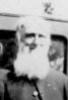
Enos Woods BOWERS
(24 Feb 1855 - 25 May 1931)
#3 Woods family “ There were several families who left Stark Co for Hancock Co OH ... the pioneering spirit of going west. There was a Woods family – my grandfather’s name was Enos Woods Bowers – the Woods family was a strain of Quakerdom that got into the Brethren Bowers’. ...”
Events
| Birth | 24 Feb 1855 | Hancock County, Ohio |  | ||
| Residence | Bet 1860 and 1880 | Hancock County, Ohio, United States | | ||
| Marriage | 21 Feb 1878 | Mary Jane BUSHONG |  | | |
| Residence (family) | 1880 | in the home of Jacob Bower, her father-in-law - Wood County OH - Mary Jane BUSHONG | | ||
| Residence | 1900 | Jenera Village, Hancock, Ohio, United States | | ||
| Death | 25 May 1931 | Hancock County, Ohio, United States | | ||
| Miscellaneous | after wife's death, 1896, | raised his family alone, - Hancock County, Ohio | | |
Families
| Spouse | Mary Jane BUSHONG (1860 - 1896) |
| Child | Harvey Sylvester BOWERS (1879 - 1966) |
| Child | Jacob Wesley BOWERS (1881 - 1962) |
| Child | Mary MALINDA BOWERS (1883 - 1944) |
| Child | Lydia Ann BOWERS (1886 - 1964) |
| Child | Estella Florence BOWERS (1889 - 1947) |
| Child | Jesse Virden BOWERS (1891 - 1973) |
| Child | John Irvin BOWERS (1893 - 1965) |
| Child | Carrie Elizabeth BOWERS (1896 - 1896) |
| Father | Jacob BOWER (1822 - 1895) |
| Mother | Lydia WOODS (1821 - 1876) |
| Sibling | Mary (Polly) BOWERS (1849 - ) |
| Sibling | Sue BOWERS ( - ) |
Notes
Marriage
Remembrances of Vinna (Bowers) Helstern, tape-recorded 1989 by Bob Gross#3 Bushong family "Floy found very little information. Grandpa [Enos Woods]and Grandma [Mary Jane Bushong] Bowers seem to have met in Hancock Co....
My father [Harvey] was the oldest [of Mary Jane Bushong and Enos Bowers’ 7 children]; when he was 17 his mother died, not in childbirth as we thought for a good many years, but of malaria. The territory south of Toledo was once swampland, and gradually it changed. We weren’t surprised, then, that she died of malaria. Somehow the baby was kept alive for about a month but died later"
He never re-married after his wife died, leaving him alone to raise 7 children. He turned the farming over to his 2 oldest sons and became full-time homemaker, baking bread for his family and sewing all their clothes. He got the women of the church to make the buttonholes. When his daughters became young adults, he sent them out to live with church families so they could learn how to cook and keep house properly.
Miscellaneous
Remembrances of Vinna (Bowers) Helstern, tape-recorded 1989 by Bob GrossEnos Woods Bowers “[Vinna’s grandfather] must have been a most unusual person. My father [Harvey] was the oldest; when he was 17 his mother died, not in childbirth as we thought for a good many years, but of malaria. The territory south of Toledo was once swampland, and gradually it changed. We weren’t surprised, then, that she died of malaria. Somehow the baby was kept alive for about a month but died later. Grandpa geared in to keep his family [of 7] together ... not a particularly productive farm and had to turn all the farming over to his 2 teen aged boys and he became housekeeper. He baked the family bread, kept a sewing machine, made his sons’ work shirts (but the women of the Eagle Creek Church would do the button holes for him).... He wanted his girls to learn how to keep house right; so, when they reached an appropriate age, he would ask some farmer’s wife in the community if one of his girls could come and live with them for awhile so they could learn how to cook and keep house like she should....he seemed to see ahead of his time.... Grandpa was a deacon and Uncle Jess and Uncle John would have been about 2 and 4. In those days there was church at night as well as in the morning and I have heard stories of how he would gather his little boys up, one under each arm, and take them to church with him. He would toss a heavy comfort down on the floor near the pot-bellied stove and put the boys down to sleep while he was at church....He loved to sing ... he was a handsome fellow, but never remarried... He and his 2 youngest boys left the farm in Hancock Co and ended up in N. Liberty IN in St. Joe CO. My memory picks up there. He became a carpenter...worked closely with the man who owned the lumberyard... would take on jobs nobody else wanted to do...Both sons eventually married ... Grandpa kept one room in somebody’s home in N. Liberty; I don’t know how he lived there; one room, dark, full of everything imaginable.... He bought a 40 acre plot just south of my folks; bought a house and had it moved up there [on log rollers] pulled by horses, around 1920 (about time I finished high school). Grandpa would take off and walk to town for a loaf of bread... didn’t want to bother anyone... Got a Model T roadster; never really came to terms with that car. Martha and Walter declare that he met them at school one day and brought them home and when he got to the corner, he pulled on the steering wheel and said ‘Whoa!’... I know it worried me to death to ride with Grandpa. I had started driving my Dad’s car when I was 14 and I knew how to do it! But who am I to look down on Grandpa’s ignorance of Model T’s.... He lived there the rest of his life, and, I think, enjoyed it. It must have been lonely tho’; didn’t even have a radio. He liked to read; and probably went to bed at dark.
One thing I do remember, tho, is his coffee pot. It was always on the back of the cook stove. Every meal he’d add a tablespoonful of ground coffee. I’d say ‘Grandpa, when do you empty it?’ He’d say, ‘Oh, when it gets a third full. Then I empty it and start over.’ It must have been the most horrible tasting coffee you can ever imagine. He had developed, over the years, an aversion to milk and milk products, so he used that stuff , with sugar, on his cornflakes....
Had a stroke when he was in his 70's. He was determined he was going to walk again. He did, kinda shuffling. The use of his right hand was lost but, nobody was going to help him, he taught himself to eat with his left hand... but eventually he died. He had a good life, I’m sure he would say. The independence of that man. He would often eat dinner with us after church on Sunday but if Mother didn’t give him a specific invitation, he wouldn’t come.
#2B Enos Bowers He used to come on the train to Wakarusa. He lived at N. Liberty and the train went thru N. Liberty thru Wakarusa and on east. Pretty often he’d just show up at the front door. I still remember the night Mother went to the door and [he was] hiding behind the door, [and said] ‘Could you give a tramp something to eat?’ It was Grandpa. But there was a neighbor who would watch for him and she might call [and say] ‘Better put an extra plate on the table. I think I just saw Enos go past.’ Then there were the rare occasions when Grandpa would call from the depot. But that meant that he brought the gramaphone along and a big container of records. Those records were hilarious; they were picked by his teenage sons... Then my Dad would go in and get him....
He was a very unusual man. He was left a widower at about 45 or 50 years of age. My father at 17 was the oldest. And Grandpa [Enos] kept his family intact. [He had] a sewing machine. He said, ‘Well, sure. I made the boys’ everyday shirts. The women at church made the buttonholes.’ Baked his own bread and kept his family together.
After he got older, he moved into a little house down the road from my folks. He bought an old house [and had it moved] next to my folks. I can still vaguely remember seeing the heavy treads that moved it down the middle of the road. It wasn’t good living. Very good physically [but] it was an old house and loose, but good in every other way.
I can still remember, just before I left for college, he invited me to have supper with him. I did. I wasn’t drinking coffee in those days. His coffee was the most abominable brew I can imagine!... We were almost ready to go to the table. He had put the loaf of bread on the table; he was buying it in those days. All at once, [he said] ‘Nope, I’ve got company. I’ve got to get my $300 bread plate.’ Remember, this was 1923. He turned around and went to a dish cupboard that was in the kitchen. He took out a plate. It was one of these...a plate that probably had the Lord’s Prayer on it. The kind of plate that good businesses gave as souvenirs at Christmas to their good customers... It was some years until I found out the story of [his] $300 plate. That plate had been given to Grandpa by a lumber company in N. Liberty. But through the years I had heard just enough conversation between Grandpa and my Dad to know that the man who owned the lumber company had gone bankrupt. At one point in time, Grandpa had gone security for a loan of $300. When the other fellow went bankrupt, Grandpa had to pay it....
I can not remember ever hearing him complain about his life. For a few years he owned a Model T Ford roadster. He shouldn’t [have]. My brother Walter declares that one time Grandpa was bringing him home from school and when he got to the corner, he yelled ‘Whoa!’ and yanked on the steering wheel. He didn’t keep the car very long.
I never heard him complain, and nobody ever pitied him because he didn’t pity himself. That’s kind of a heritage worth having these days when you have to blame somebody else for everything that goes wrong.”
Endnotes
1. "Bowers Family Tree", on-line, bonjowers, Ancestry.com ( : on-line Ancestry.com; Family trees), Enos W. BOWERS data; undocumented and unnamed family tree submitted by bonjowers.
2. Cynthia HARROFF Karn, "1860 & 1880 Federal census data re Enos W. Bowers," e-mail from (, Elkhart IN), to MarySue HELSTERN Rosenberger, 2011.
3. Tape-recorded memories, Vinna Helstern memories, Tape #3.
4. 1880 U.S. Census, Wood County, Ohio; Jacob Bower household, pg. ?, , on-line citation, Ancestry.com, line #40 to 42, on-line citation referenced; original in U.S. Census office?, U.S. Census Office archives?.
5. Cynthia HARROFF Karn, "1900 Federal census data re Enos W. Bowers," e-mail from (, Elkhart IN), to MarySue HELSTERN Rosenberger, 2011.
6. "Bowers Family Tree", on-line, bonjowers, Ancestry.com ( : on-line 14 May 2011), Enos W. BOWERS data; undocumented and unnamed family tree submitted by bonjowers.
7. The Church of Jesus Christ of Latter-day Saints , "International Genealogical Index," database, access directly or through Ancestry.com (Find-a-Grave : accessed 11 October 2013), burial location of Enos Woods Bowers; citing FHL microfilm .
8. Memories of Vinna BOWERS Helstern as shared with family, tape #2B and #3.