Individual Details
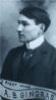
Antoine Blaire Alexandre "Tony" GINGRAS
(20 Oct 1876 - 27 Apr 1937)
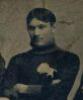
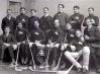
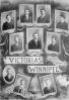
"There were over thirty hockey teams in Winnipeg and St. Boniface. Teams travelled to Eastern Canada to compete as early as 1892. "Tony" Gingras, playing right wing, was a top scorer for the Winnipeg Victorias. In 1901, the Vics won the Stanley Cup and the national championship against the Montreal Shamrocks in a best of three series. Gingras was an exceedingly agile player. The enthusiasm generated by this French-speaking Métis is believed to have contributed to the creation of the Montreal Canadiens hockey team. He was also credited with an innovative new hockey stick of a much more modern design.
"After his playing days were over, "Tony" Gingras dedicated himself to coaching minor league teams at the Union Canadienne of St. Boniface as well as at St. Boniface College. He also became a scout for the Montreal Canadiens."
1899 Stanley Cup fiasco -- The "Gingras Affair":by Bruce Cherney (part 1)
Winnipeg captain and forward Donald “Dan” Bain, the Victorias’ best player, was already out of the series due to an eye injury, when Antoine “Tony” Gingras was helped from the ice, the alleged victim of a deliberate attempt to maim by Montréal forward Bob McDougall.
Arguably, the “Gingras affair” erupted into the most controversial incident in Stanley Cup history. At the time, Winnipeg newspapers were so incensed by what happened on and off the ice that headlines referred to the incident as a “fiasco.”
The Vics could not afford to lose another key player in their bid to reclaim the Stanley Cup they had lost three years earlier to another Montreal team. Gingras, a Métis who had grown up in St. Boniface, was the player the team relied upon to lead them to victory after the untimely injury to Bain.
Jack Armytage, the spare Winnipeg forward designated the team’s captain after Bain’s injury, called referee J.A. “Bill” Findlay over to examine Gingras’ leg. Findlay had already blown his whistle to signal that a two-minute penalty was assessed to McDougall (other times spelled Macdougall) for taking out Gingras. However, Armytage insisted that the stick-swinging incident was intentional and warranted the Montréal player’s removal from the game.
By the time the Gingras incident occurred, the Montréal team, also named the Victorias, had erased a two-goal deficit and went ahead of Winnipeg on a goal by McDougall, putting the home team ahead 3-2.
When the referee refused to send McDougall off for the duration, the Winnipeg team headed for their dressing room with about 12 minutes left to play in the game (some reports say 13 minutes).
After being examined by a physician, it was found that Gingras had suffered a 1 1/2-inch abrasion to the outer side of his right knee. The physician told the visiting Victorias that Gingras would not be able to continue playing.
Meanwhile, Findlay said he was insulted by the action taken by the Winnipeg players and refused to resume the game. In fact, he soon went home in a huff, although he was later persuaded to return to the arena.
Meanwhile, 8,000 hockey fans at the Montréal Arena (also known as the Westmont Hockey Rink), St. Catherines Street and Wood Avenue — a new artificial ice rink with a 10,000-person capacity — waited fruitlessly for the February 18, 1899, game to resume.According to a statement later issued by Armytage and Winnipeg Victorias club president A. Code to the trustees of the Stanley Cup, McDougall came to the visitors’ dressing room and told the team he had deliberately fouled Gingras.
“I made a vicious swipe (with my stick),” he told them, “I lost my temper and I am sorry for it.”
Apparently, McDougall also told referee Findlay that the foul he had committed was deliberate.
McDougall’s apology was accepted by the Victorias, both Armytage and Code warned Findlay that they would not resume play until a game misconduct was given to McDougall. In their statement, the Winnipeg officials said Findlay had told them four days earlier at the Windsor Hotel that any deliberate foul involving a player raising his stick to do bodily harm or knock another player out of the game would result in the offending player being ruled off the ice for the duration of the game.
Twenty minutes later, Findlay entered the visitors’ dressing room and said the Winnipeg team had to agree to another referee or he would place the entire matter into the hands of the Stanley Cup trustees.
“We accepted his ruling to the latter,” Code and Armytage said, “and at once told the players that the game would be placed in the hands of the trustees. The players immediately dressed.”
Thirty minutes after the Winnipeg players had put on their street clothes and some had left the arena, Findlay returned to the dressing room and said the players had 15 minutes to return to the ice.
“We told him he had already given his decision, and we were acting on it.”“I must have a decision from the ice tonight (that is, the game had to be completed),” insisted Findlay.
“We then asked him why he could change his decision regarding the foul play of McDougall, when he acknowledged to our team he had made a mistake and was sorry for it.“
From the start of the match until the players left the ice not one of our team was ever warned by the referee for any infringement of the rules of the game. On the other hand, several of our opponents were.
”In their statement, Armytage and Code said they regretted the result of the Saturday night game, and felt deeply sorry for Findlay.
“No matter what your decision may be in this matter, we shall be unable to play another game this season for the Stanley Cup, as Captain Bain and Gingras, two of our best men are disabled. Bain will never be able to play again and Gingras not for weeks.”In a report following the game, the Manitoba Morning Free Press said Bain was briefly knocked unconscious after being struck above his eye.
Bain (1874-1962) had played centre on the Winnipeg Victorias team that claimed Western Canada’s first Stanley Cup in 1896. Born on February 14, 1874, in Belleville, Ontario, Bain was six years old when his family moved to Manitoba. By age 13, he was Manitoba’s Three Mile Roller Skating Champion. At 17, he was the province’s all-around gymnastics champion, a title he held for three consecutive years.
Bain was named Canada’s greatest all-around athlete for the last half of the 19th century (Canadian Sports Hall of Fame). Besides hockey, Bain also competed in speed-skating, bicycle racing, snowshoeing, lacrosse and golf. His skating prowess is evident by his dozen figure skating titles, including pairs, fours and dance categories. Bain was also the Canadian trapshooting champion in 1903. He was an early inductee into the Hockey Hall of Fame in Toronto. Not only was Bain an athlete, but a successful businessman, who owned the Donald H. Bain Building “the Brokerage,” 115 Bannatyne Ave., built in 1899 and now a municipally-designated heritage site.
Gingras was born on October 20, 1875, in St. Boniface. He started playing hockey in 1888 while attending St. Boniface College. To play, Gingras made a hockey stick from a small tree and took a slice from a lacrosse ball to make a puck. Since hockey during his playing days could not provide a full-time living, Gingras worked as an immigration inspector with the Canadian government. During his later years, he was a minor league coach in St. Boniface and a scout for the Montréal Canadiens. He died in April 1937 and is buried in the St. Boniface Cathedral cemetery.Gingras played a key role in bringing the Stanley Cup to Winnipeg in 1901. He and Bain provided the “one-two” punch that defeated the Montréal Shamrocks to win the cup and later helped defend the cup when the Vics beat the Toronto Wellingtons. Gingras is refe rred to in the hockey history books as the first “French-Canadian” to win a Stanley Cup. While Gingras was a newcomer to the Winnipeg Victorias, Bain had played on the 1896 Stanley Cup championship team.
According to newspaper reports, on February 14, 1896, the Vics confounded and surprised the Montréal team and fans, using a strong defence and then rushes to take the play into the Montréal zone during the first half (games in those days consisted of two 30-minute halves). The Vics won 2-0 at the Victoria rink in Montréal to claim the cup.
At the time, the Montréal Herald said, “the Winnipeg team is without doubt the best team in all of Canada.”In 1899, the Stanley Cup was decided for the first time by a best-of- three series.There were 200 fans on-hand to cheer the players at the CPR station on February 11, 1899, prior to their departure for Montréal that day. “All of them were surrounded by well wishing friends, who as they bade farewell extorted them to be of good cheer and bring back ‘that mug,’” reported the Free Press on February 13.The first game on February 15 “was the hardest and fastest that has ever been witnessed on Montréal ice and the four thousand spectators who turned out to witness the match had every reason to be satisfied,” according to a February 16, 1899, report in the Winnipeg Morning Telegram.Winnipeg controlled most of the play in the first half. The game’s initial goal was scored after Bain, Gingras and line mate A.T. Howard moved the puck into the Montréal zone. Bain received the puck from Howard and took a shot at Montréal goaltender Lewis. The goalie stopped Bain’s attempt, but Gingras picked up the rebound and “by a quick shot scored for Winnipeg.”The first half of the game ended 1-0 in favour of Winnipeg. When Winnipeg star and captain Bain was struck over the eye, he was replaced by spare Armytage, who played on the victorious 1896 Stanley Cup team but by this time had effectively hung up his skates. The fact that he had to come into the game was a surprise to Armytage as well as the team. Chippy play continued in the second half “and Gingras, (Montréal players) McDougall and Bowie were ruled off in quick succession for tripping, Grant, who knocked Bain out, then had to be reprimanded for rough checking and a little later (Charles W.) Johnstone (of Winnipeg, who had earlier received a puck in the eye) got into a scrimmage from which he emerged badly cut up,” reported the Telegram.Winnipeg held onto its slim one goal lead into the final two minutes of the game. But McDougall and then Graham Drinkwater scored for Montréal, giving the Eastern Victorias a 2-1 win.Winnipeg’s late-game collapse was attributed to being unnerved by Bain’s injury and over-confidence. Apparently, until the last two minutes of the game, the Vics wrongly believed they could coast to victory.After the defeat, Winnipeg players and supporters took up the call “Wait until Saturday.” They felt Winnipeg had the best of the first game’s play and were poised for a resurgence and victory in game two of the Stanley Cup series.“It may be egotistical for the citizens of Winnipeg to say that the game played last night gave evidence of the great probability that the Winnipeg Victorias would bring back the cup, but it is nevertheless the prevailing impression that, had it not been for the sad accident whereby Bain was knocked out, the score would have been reversed,” according to a special report written by Winnipeg Victoria’s president Code for the Telegram.“The game was, apparently, the swiftest and the most skilful representation of superior hockey, that has ever been seen in Canada, and that fortune of the game was against the Winnipeggers is by no means a criticism of their efforts, but is nevertheless a great compliment to the Montreal boys, in whom the champions of the West have met their match.”Still, Code claimed that the Winnipeg team was “better than theirs ... and ought to win Saturday’s game.”Code assured Winnipeg fans the outcome of the second game would be different since Bain was not seriously injured and would be able to play in game two. The fans’ euphoria ended when Bain didn’t dress for the second game and was observed to have a bandage over his eye — it was a serious injury. In fact, the team doctor believed Bain’s playing days had ended. Conditions for the second game —mild weather made the ice soft and covered it in pools of water — reputedly hampered the superior skating skills of the Winnipeg Victorias, although Winnipeg took an early 2-0 lead with goals by Armytage and Howard. However, Montréal roared back in the second half and scored two goals. It was a repetition of the previous game with Winnipeg squandering its lead and Montréal emerging with another win.In a description of the last 30 seconds, which led to the winning Montréal goal, the Telegram reported, the home team’s point (defenceman) Drinkwater “went down the rink at a pace which bade fair to send him through the front door and land him in the street. There was no passing. To Drinkwater belongs the story. “No one could stop him nor get within a stick’s length of the puck. In far less time than it takes to tell of it, the puck had gone by (George “Whitey”) Merritt again. It passed between the posts. And Montréal had won (3-2).”Merritt had been in goal when Winnipeg won its first Stanley Cup in 1896. Despite his failure to stop the Montréal onslaught, Merritt has been called the first great goaltender in Canadian hockey history, who introduced the goal stick and initiated the useof cricket pads for protection.At the time, Montréal Rules were in effect, which prohibited goaltenders “during play, (to) lie, kneel, or sit upon the ice, but must maintain a standing position.” The butterfly style used today, flopping on the ice or stacking pads to stop the puck were not allowed. The restriction, keeping goalies standing during play, was not changed until 1924 when the professional National Hockey League, Pacific Coast League and Western Hockey League implemented new rules (Encyclopedia of World Sport, Manitoba historian Morris Mott article).Other innovations introduced by Manitoba players and readily adopted across Canada were the wrist shot — then called a ‘scoop” shot — tube skates and a lacrosse-style face-off still used today.Another significant difference from today’s game saw seven players on the ice instead of six (during the first years of organized hockey, there had been nine players). The additional player was called the rover, whom, as the name applies, roamed the ice surface during play. The seven players remained on the ice for the entire game. One substitution was allowed in the event a player could not continue. For example, Armytage replaced Bain who left in the first game due to his eye injury.According to the 1899 Montréal Rules listed in Hockey Canada’s Royal Game, by Arthur Farrell of the Montréal Shamrock’s Hockey Club, one substitution for an injured player was allowed only in the first half of a game. If a player was injured in the second half, the opposing team captain had the option of dropping a player from his side. In the event of any dispute between the captains about the extent of an injury, “the matter should be decided by the referee” — exactly what happened in the 1899 game.There is no indication — and highly unlikely give the extent of gambling on Stanley Cup games — that the Montréal captain was willing to drop a player from his side. If the game had proceeded and McDougall returned to the ice after serving his penalty, Montréal would have had an extremely unfair 10-minute power play advantage.Given the extent of Bain’s and Gingras’ injuries, it’s not surprising they asked the Stanley Cup trustees for a ruling on game two that would have removed McDougall from the game and even up the two sides. With the absence of both Bain and Gingras from the line-up, Winnipeg only had six players available: goaltender Merritt, defencemen (point Robert) Benson and (cover point) “Charlie” Johnstone, as well as forwards Armytage, T.A. “Attie” Howard and C.J. “Tote” Campbell. Following the second game, the Montréal team met “and decided to have nothing to do with the Winnipeg team, and would not extend them any further hospitalities,” reported the Telegram.“It was quite unnecessary for them to do so, as the Winnipegs had long before decided not to accept any if proferred. The Montréalers said they would not play the match over again, even if told to do so.”Team president Code vowed that the Winnipeg players would be back a year later to challenge the Montréal Victorias if the Eastern team still held the cup.In the meantime, referee Findlay went to Ottawa to give his version of game two to the Stanley Cup trustees.(Next week; part 2)
by Bruce Cherney (part 2 of 2)
According to Referee J.A. “Bill” Findlay’s statement issued two days after what became known as the Stanley Cup “fiasco” in Winnipeg newspapers, player Antoine “Tony” Gingras and Montréal’s Bob McDougall went after the puck against the boards and “both were checking heavily. Finally McDougall lost his temper and made a swipe at Gingra’s leg.”Following the slash, Gingras dropped to the ice, resulting in the Winnipeg Victorias losing another key player that seriously jeopardized their bid to reclaim the Stanley Cup they had lost three years earlier to another Montréal team. The Vics had already lost captain Donald “Don” Bain, who was a star of the Winnipeg squad, to an eye injury during the first game of the 1899 three-game series for the cup in Montréal.Gingras’ injury in the February 18 game and his inability to continue meant that, under the existing rules, the Vics would be a man short for the 12 minutes remaining in the game (other accounts say 13 minutes, including Findlay’s). At the time, one substitute to the seven-man squad was only allowed in the first half of a two 30-minute period game (there was a 10-minute interval between the two periods) in the event of an injury. In the case of an injury in the second half, the captain of the opposition side had to agree that his team would play without one of their players. It wasn’t a mandatory requirement, and the Montréal Victorias gave no initial indication they would take this action. As it turned out, they refused to drop a player from their squad and gladly accepted the Stanley Cup by default.Findlay could have ordered Montréal to drop a player, but there was chaos on the ice, and he had effectively lost control of the situation. In the wake of the crippling slash delivered to Gingras, Winnipeg team officials demanded a game misconduct be given by Findlay to McDougall which would have evened up the two sides. Instead, Findlay gave a minor penalty to McDougall, which meant the Winnipeg team would be playing a man short for 10 minutes. At the time, Winnipeg was down a goal (3-2) and without McDougall’s removal from the ice, the Montréal team would have in effect benefitted from what amounted to a power play for the rest of the game. Under such circumstances, it would have been virtually impossible for Winnipeg to score a tying goal.Incensed by the on-ice ruling, the Winnipeg team walked off the ice, refusing to return until Findlay reversed his call and assessed McDougall a game misconduct.Findlay said in his version of the incident that he called a penalty to McDougall, the duration of which was to be determined by the extent of Gingras’ injury. This was in keeping with the rules of the game as contained in the first book on hockey by Arthur Farrell, Hockey: Canada’s Royal Game, published in 1899 (only four copies are known to exist with one in the Library and Archives of Canada). Farrell was a player on the Montréal Shamrock hockey club. In his book, Farrell said that in the event of “foul play,” a referee was to “deal out his punishment to an offender commensurately with the grievousness of the foul.”Findlay asked Gingras where he was hurt, and “found the alleged blow was below the knee. I asked him to show me his knee there on the ice, but he did not seem, to my mind, anxious to do so. I did not hear anyone ask me to go into the (dressing) room to look at his injury until after my decision had been given. I then came to the conclusion that the injury was not severe.”A this stage, the Vics walked off the ice, and shortly after called Findlay into their dressing room to assess the extent of Gingras’ injury. Findlay said he saw a one-inch long break in the skin below the knee, but it wasn’t deep, “nor did I think it would necessitate the retirement of Gingras.”On the other hand, Dr. Neilson of Winnipeg, who also examined Gingras, said the injury to the player’s right leg wouldn’t allow him to continue playing. Unfortunately, the physician was absent when Findlay visited the Winnipeg dressing room.Findlay insisted that his call was correct and that the Winnipeg squad had no justification to refuse to continue the game.Findlay went to Ottawa to give his version of the game two incident to the Stanley Cup trustees. Apparently, his version of events closely coincided with the statement issued by A. Code, the president of the Winnipeg Victorias club, and Jack Armytage, the spare Winnipeg forward who was designated team captain after the injury to Bain. Armytage, then only a team official, didn’t even expect to play, but his participation became necessary following the injury to Bain and the fact that there was no one else available as a substitute.“I got rattled and lost my head,” Findlay confessed. “I went into the Winnipeg dressing room to see how Gingras was hurt, and everybody started at me for not ruling McDougall off for good. (Goaltender George “Whitey”) Merritt said I had been unfair all along and they could not get justice.“I said: ‘Captain Armytage, have you been satisfied with me until now. He said, ‘Yes,’ then I said: ‘Then your men have no right to talk as they do. Get another referee’ and off I went. That is where I went wrong, and no one feels it more than I do.”Findlay proposed that the game restart with one of the timekeepers taking over as referee, but the Winnipeg players refused, which resulted in Findlay saying he would take the matter up with the Stanley Cup trustees. “Then I went home. A few minutes after I reached home, Messrs, Howard Wilson, with Mr. Barlow and P. Spanjaardt, the latter of the (Montréal) Star, drove to the door and urged me to go back, as things were at a standstill and the audience all waiting for something to be done ... I went back to the rink and had another unsatisfactory conversation with the Winnipegs (another nickname for the Victorias who were sometimes simply referred to as the Pegs), and then put on my skates.”At the rink, Findlay said he gave the Winnipeg players ample time — 15 minutes — to return to the ice, but they still refused.“As regards McDougall’s blow on Gingras’ leg, I still think it was not given with any intention of putting Gingras out of the game. The leg is not a likely place for a man to aim for with such intentions. Mr. McDougall assures me that although he swiped at Gingras, that, as a matter of fact, he missed him ...”This contradicts an earlier visit by McDougall to the Winnipeg dressing room, when the Montréal player apologized for inflicting the injury to Gingras and admitted he “made a vicious swipe,” according to the Winnipeg team. Photos of the Victorias from the era show they played without the benefit of much by way of protection. In the photos, leather shin pads under leggings were scanty at best (some players didn’t even bother wearing shin pads) and so-called hockey pants did not cover much of the lower body, so a heavy stick blow to a knee could easily take a player out of a game.“I consider that I was still in power when I ordered the Winnipegs on the ice and that the award to the Victorias (forfeiture of the game by Winnipeg because the team refused to continue play) was within my jurisdiction.”At the time, Findlay was reported to be one of the best referees in Canada, so it is surprising that he had become rattled when his call was criticized.In the end, the trustees ruled not to do anything about the incident.Stanley Cup trustee Philip Dansken “P.D.” Ross said the trustees “declined to call the contest off,” citing betting on the game as a factor in the ruling by the trustees, although the trustees “had nothing to do with the betting.”“If Winnipeg had asked for more play” said Ross, “we would have ruled whether or not they should have more play. They did not ask that: in fact, they say they are not in a position to play further. Our concerns stop there. Betting men can get out of their own troubles.”Ross implied that the Winnipeg team’s motive for wanting the entire Stanley Cup series replayed at a later date was that Winnipeggers had bet heavily on the game, and since the game was forfeited as a result of Findlay’s ruling, Winnipeg bettors looked to the trustees to help them recover the money they lost on wagers. At the time, the Stanley Cup was a challenge trophy involving amateur teams (professional players began vying for the cup in 1910, but it didn’t become the cup for professional leagues, the National Hockey Association and the Pacific Coast Hockey Association, until 1915), but the outcome of each game involved heavy betting by professional and amateur gamblers. Gambling wasn’t restricted to hockey game, as it was a problem plaguing virtually every sporting event of the era from athletics to rowing.“It came, therefore, as a painful surprise when it was learned that these ‘trustees’ had not only declined to make any action, but had gone out of their way to deliberately insist the Winnipeg men, by imputing to them as the motive prompting the request made in their statement that they merely wished to save the money that had been bet on their team,” according to a February 21, Manitoba Morning Free Press article.The newspaper called it an “indignation” and “insult” to Winnipeg, adding to the “brutal treatment” received by the local hockey team.“The net result of the most unsportsman like action of the Montréal men has been to make Winnipeggers feel proud that in the west at least, the morale of the sport has not reached so low an ebb that ‘victory at any cost’ is made the governing principle of the game.” The Free Press claimed betting by Winnipeggers, locally and in Montréal by those who went east to cheer on the team, was light, “and it is felt here that the excuse given by the trustees is a miserable pretext for evading what they clearly perceived to be their proper course.”The Montréal Gazette on February 20 declared the “behaviour of the Winnipeg men is not a matter for congratulation, and they will return from whence they came with diminished instead of increased laurels. They have nothing to complain of.“Judging from the style of play in the second half the story can be summed up in a few words: ‘The Montréal Victorias would have won anyhow.”Following the controversial game, McDougall issued a statement in which he insisted he had only apologized for swinging his stick at Gingras. He claimed his stick missed the Winnipeg player. On February 26, a number of the players, including Bain, Gingras, Robert Benson, Charles W. Johnstone and club president Code returned to Winnipeg to a warm welcome.“Mr. Code stated most emphatically that the fiasco at Montréal had done as much to show the superiority of the West over the East in hockey, as though the boys had brought back the cup, and furthermore stated that in his opinion the same was the general feeling in Montreal.”After the Free Press published its February 21 article headlined, An Insult to Winnipeg, the Ottawa Journel (February 23), which was owned by Ross, responded with: “The Free Press is evidently a little warm on the subject and when it gets back to the normal temperature it would probably see that the Winnipeg team was not insulted. There is no doubt that the Winnipeggers had no thought of bettors when they made their request that the contest be called off, but nevertheless, the action of this kind on the part of the trustees would undoubtedly have been interpreted to mean that bets were off. The trustees simply pointed this out and declined to call the game either on or off.”In response, the Free Press claimed the article was penned by Stanley Cup trustee Ross “of the Journal,” and his statement that “bets were off” could also be applied to Montréal bettors, “and by a policy of inactivity (by the Stanley Cup trustees), save money for those who had won by the skin of their teeth, and by means that even in the east was strongly condemned.”When the Winnipeg fans greeted the returning team at the CPR depot on Higgins Avenue on February 26, they saw that Bain was “in capital spirits” despite his “eyesight being badly injured” (Morning Telegram, February 27),Bain vowed that he would recover in a month or so, and be ready to play when another Stanley Cup challenge was issued.Gingras, who was reported to be badly limping, “spoke nicely of the courtesy extended to them in Montréal, and though he described the Montréal Victoria play as being decidedly dirty ... the sympathy of the Montréalers was largely in favour of the visitors.”The Free Press on February 27 reported: “From conversations held with different members of the team, a Free Press representative learned that ... in Montréal there is a widespread suspicion that the press is heaping abuse on the western team in order to counteract the openly expressed sympathy with them shown by all who saw the second of the two matches played. They all said that the immense crowd which was present at that match accorded them perfectly fair play and the storm of hisses which greeted Macdougall’s (sic) exploit in maiming Gingras was conclusive evidence that the spectators at least strongly disapproved of the tactics of which the home team thought necessary to adopt, in order to ensure victory.”Bain said his injury would soon heal and he was eager to replay Montréal to show them Winnipeg was the better team.“The boys state individually and collectively that they are not daunted by their failure this year, but are determined at all hazards to bring the much-prized trophy to Winnipeg on the next possible opportunity,” reported the Morning Telegram.A resident of Winnipeg formerly from Montréal suggested that when the Vics next go east to play hockey, they should wear under their sweaters pistols and cartridge belts and carry bowie knives. “then when they go on the ice, they could, with great effect, announce that they have come to play hockey, but if any other game had to be played — why, they would offer no objection” (Free Press, February 21).A year later, the Winnipeg Victorias issued another challenge for the Stanley Cup, taking the Montréal Shamrocks to a third and deciding game, in which the Montréal side eked out a 5-4 victory.In 1901, Bain and Gingras were with the Victorias when the Winnipeg team reclaimed the Stanley Cup. In the first game of the three-game series in Montréal on January 29, 1901, left winger Burke Wood scored two goals, while Bain and Gingras each scored a goal in a 4-3 Winnipeg win. In the second game, the score was tied 1-1 after regulation time sending the game into overtime. Besides netting the first overtime goal in Stanley Cup history, Bain also scored Winnipeg’s only goal in regulation time.On January 21 and 23, 1902, the Victorias hosted challengers Toronto Wellingtons and beat the Eastern team 5-3 and 5-3 to retain the cup. Two months later on March 13, 15 and 17, the Victorias lost the cup to the Montréal AAA. The Vics took the first game 1-0, but Montréal won the next two games by scores of 5-0 and 2-1. It was the last time a Winnipeg-based team held the title of Stanley Cup champions. Ironically later in 1899, the Montréal Victorias lost the Stanley Cup to the Montréal Shamrocks without a challenge being issued. The Shamrocks were the Canadian Amateur Hockey League champions and the cup was anπ award to the best amateur hockey team in Canada (although Lord Preston of Stanley insisted it should always be a challenge trophy so it was initially inscribed as the Dominion Hockey Challenge Cup). The Shamrocks finished the league schedule with seven wins and one loss, while the Victorias had a 6-2 record. Actually, the March 1, 1899, final league game of the regular season, which the Shamrocks won 1-0, over the Victorias was considered the Stanley Cup game.Fittingly, a hockey stick from the controversial February 18, 1899, Stanley Cup game is now in the Hockey Hall of Fame in Toronto. It is inscribed, “Fizzy the Referee went home.”
Events
| Birth | 20 Oct 1876 | Saint Boniface, Manitoba, Canada |  | ||
| Marriage | 30 Oct 1900 | Saint Boniface, Manitoba, Canada - Alice BERTRAND | | ||
| Residence (family) | 1901 | Saint Boniface, Provencher, Manitoba, Canada - Alice BERTRAND |  | | |
| Stanley Cup Championship | 1901 | Played right wing for the Winnipeg Victorias | |||
| Stanley Cup Championship | 1902 | Played right wing for the Winnipeg Victorias | |||
| Residence (family) | Jul 1906 | Saint Boniface, Provencher, Manitoba, Canada - Alice BERTRAND | | | |
| Residence (family) | 1911 | 109 Dermondine, Saint Boniface, Provencher, Manitoba, Canada - Alice BERTRAND | | | |
| Residence (family) | 1916 | 109 Dermondine, Saint Boniface, Provencher, Manitoba, Canada - Alice BERTRAND | | | |
| Residence (family) | 1 Jun 1921 | Lot 61, St. Anne's Road, St. Vital, Winnipeg South, Manitoba, Canada - Alice BERTRAND | | | |
| Death | 27 Apr 1937 | St. Vital, Manitoba, Canada | | ||
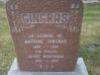
| Burial | Saint Boniface Catholic Cemetery, Winnipeg, Manitoba, Canada | |
Families
| Spouse | Alice BERTRAND (1878 - 1957) |
| Child | Armande GINGRAS (1902 - 1985) |
| Child | Marie Jeanne Antoinette GINGRAS (1903 - ) |
| Child | Annette Gabrielle Desmoude GINGRAS (1905 - ) |
| Child | Gabrielle GINGRAS (1906 - ) |
| Child | Alice GINGRAS (1908 - 1908) |
| Child | Francois Arthur Guy GINGRAS (1909 - 1993) |
| Child | Living |
| Child | Louis GINGRAS (1912 - 1977) |
| Child | Living |
| Child | Denise GINGRAS (1915 - 1988) |
| Child | Rolande Louise Simone GINGRAS (1918 - ) |
| Child | Lucille GINGRAS (1921 - 2010) |
| Father | François GINGRAS ( - ) |
| Mother | Anne MCMURRAY ( - ) |
Notes
Residence (family)
Alice was listed twice on this census! She was also listed with the family of her parents.Enumerated with this family were Antoine Gingras, age 24 (born 20 Oct 1876); his wife, Alice Gingras, age 22 (born 15 Nov 1878); and Jean A. Gingras, age 21 (born 27 Nov 1879). The relationship of Jean to Antoine is not identified.
http://interactive.ancestry.com/8826/z000018777?backurl=http%3a%2f%2fsearch.ancestry.com%2fsearch%2fdb.aspx%3fdbid%3d8826%26path%3d&ssrc=&backlabel=ReturnBrowsing#?imageId=z000018793
Residence (family)
Enumerated with this family were Antoine Gingras, age 30; his wife, Alice Gingras, age 26; and children: Armande Gingras, age 4; and Marie J. Gingras, age 2.http://interactive.ancestry.com/8827/e001204512?backurl=http%3a%2f%2fsearch.ancestry.com%2fsearch%2fdb.aspx%3fdbid%3d8827%26path%3d&ssrc=&backlabel=ReturnBrowsing#?imageId=e001204523
Residence (family)
Enumerated with this family were Tony Gingras, age 35; his wife, Alice Gingras, age 32; and children: Armande (f), age 8; Jeanne, age 7; Gabrielle, age 5; Guy, age 2; and Paul, age 3 months.http://interactive.ancestry.com/8947/e079_e001950741?backurl=http%3a%2f%2fsearch.ancestry.com%2fsearch%2fdb.aspx%3fdbid%3d8947%26path%3d&ssrc=&backlabel=ReturnBrowsing#?imageId=e079_e001950746
Residence (family)
Enumerated with this family were Antoine B. Gingras, age 39; his wife, Alice Gingras, age 36; and children: Amanda, age 13; Jeanne, age 12; Gabrielle, age 9; Guy, age 7; Paul Émile, age 5; Louis, Age 4; Marcel, age 2; and Denise, age 2 months.http://interactive.ancestry.com/1556/31228_4363968-00392?backurl=http%3a%2f%2fsearch.ancestry.com%2fsearch%2fdb.aspx%3fdbid%3d1556%26path%3d&ssrc=&backlabel=ReturnBrowsing#?imageId=31228_4363968-00410
Residence (family)
Enumerated with this family were Antoine Gingras, (age and occupation obliterated by scribbling); his wife, Alice, age 42; and children: Armande (f), age 19; Jeanne, age 17; Gabrielle, age 14, Guy, age 11; Paul, age 10; Louis, age 9; Marcel, age 7; Denise, age 5; Rolande (f), age 3; and Lucille, age 2 months. The enumerator for this census record was Armande Gingras.http://interactive.ancestry.com/8991/1921_032-e002893447?backurl=http%3a%2f%2fsearch.ancestry.com%2fsearch%2fdb.aspx%3fdbid%3d8991%26path%3d&ssrc=&backlabel=ReturnBrowsing#?imageId=1921_032-e002893466
Endnotes
1. 1901 Census of Canada Ancestry.com (database and images online), Manitoba, Provencher (Dist. 10), Saint Boniface, p. 5, dwelling 57, family 57, line 47.
2. , Find A Grave, photographs and extracted information (findagrave.com : accessed 11 August 2016), Antoine Gingras; memorial #153392367.
3. Manitoba, Canada Manitoba Consumer and Corporate Affairs, "Vital Statistics Agency," database online, (http://vitalstats.gov.mb.ca/Query.php : accessed 14 October 2013), Antoine Blaire Alexandre Gingras and Alice Bertrand.
4. 1901 Census of Canada, Manitoba, population, Provencher, Saint Boniface (Town/Ville), image 24, dwelling 36, family 36, lines 18-27, Theophane Bertrand and family ; digital images, Ancestry.com Operations, Inc., Ancestry.com ( : accessed 13 October 2013); Library and Archives Canada.
5. 1901 Census of Canada, Manitoba, population, Provencher, Saint Boniface (Town/Ville), image 15, dwelling 51, family 51, lines 47-49, Antoine Gingras and family ; digital images, Ancestry.com Operations, Inc., Ancestry.com ( : accessed 14 October 2013); Library and Archives Canada.
6. 1906 Census of Manitoba, Saskatchewan, and Alberta, , population, Manitoba, Provencher, Sub-District 19A, page 21, image 21, household 297, Antoine Gingras and family ; digital images, Ancestry.com Operations, Inc., Ancestry ( : accessed 14 October 2013); Library and Archives Canada.
7. 1911 Census of Canada, , Population, Manitoba, Provencher, Sub-District 44, Saint Boniface, image 6, dwelling 36, family 40, Tony Gingras and family ; online images, Ancestry Operations, Inc., Ancestry.com ( : accessed 14 October 2013); Library and Archives Canada.
8. 1916 Canada Census of Manitoba, Saskatchewan, and Alberta, , Manitoba, Springfield, Sub-district 09b, City of St. Boniface, page 19, image 19, dwelling 148, family 165, lines 28-37, Antoine B. Gingras and family ; digital images, Ancestry.com Operations and Church of Jesus Christ of Latter-day Saints, Ancestry.com ( : accessed 14 October 2013); Library and Archives Canada, Ottawa.
9. 1921 Census of Canada, , population, Manitoba, Winnipeg South, Sub-District 45-St. Vital, page 19, image 20, dwelling 222, lines 16-27, Antoine Gingras and family ; digital images, Ancestry.com (http://search.ancestry.com/search/db.aspx?dbid=8991 : accessed 28 February 2014); Library and Archives Canada.
10. , Billion Graves, online images and memorials (billiongraves.com : accessed 14 October 2013), Antoine Gingras and his wife, Alice Bertrand.
11. Manitoba, Canada Manitoba Consumer and Corporate Affairs, "Vital Statistics Agency," database online, (http://vitalstats.gov.mb.ca/Query.php : accessed 21 October 2013), Gingras.
12. CanadaGenWeb, Cemetery Project, digital images and memorials (http://cemetery.canadagenweb.org/ : accessed 23 July 2014), Antoine Gingras, 1875-1937.
13. , Find A Grave, photographs and extracted information (findagrave.com : accessed 11 August 2016), Antoine Gingras; memorial #153392367.
14. , Billion Graves, online images and memorials (billiongraves.com : accessed 14 October 2013), Antoine Gingras and his wife, Alice Bertrand.
15. , Billion Graves, online images and memorials (billiongraves.com : accessed 14 October 2013), Antoine Gingras and his wife, Alice Bertrand.
16. CanadaGenWeb, Cemetery Project, digital images and memorials (http://cemetery.canadagenweb.org/ : accessed 23 July 2014), Antoine Gingras, 1875-1937.
17. , Find A Grave, photographs and extracted information (findagrave.com : accessed 11 August 2016), Antoine Gingras; memorial #153392367.