Individual Details
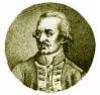
Antal I. Lipthay de Kisfalud et Lubelle
(1745 - 17 Feb 1800)
Dates of Life
Born: Szécseny / Com. Neograd (Nógrád) / Hungary 1745
Died: WIA Verona / Venetia, 26.03.1799 ŕ Padua / Venetia, 17.02.1800
Promotions
Major: 1788
Oberstleutnant: 1789
Oberst: 1793
Generalmajor: 01.05.1795 (w.r.f. 05.04.1794)
Feldmarschalleutnant: 02.10.1799 (w.r.f. 06.09.1799)
Orders, Awards, Honorary Appointments (Austria)
Military Maria Theresian Order – KC: 15.11.1788
Biographical Essay (by Digby Smith)
Antal Lipthay de Kisfalud et Lubelle was born in 1745 in Hungary. With age of 50 he reached the rank of Generalmajor (1 May 1795).
1796 he served in Italy, initially as brigade commander in Mercy d'Argenteau's division. He fought at Voltri on 10 April and Montenotti on the next two days. After the disaster of Mondovi, Piedmont was evacuated by the Austrians and on 2 May they fell back over the Po at Valenza. Napoleon crossed the river – unopposed, but observed by two squadrons of Lipthay's cavalry – at Piacenza on 7 May. The French advance caught Beaulieu's unconcentrated forces by surprise; on 8 May Lipthay was attacked and thrown back at Fombio, loosing 600 men. His corps dissolved in the following chase.
Lipthay's next task was to bring the Venetian fortress of Peschiera, at the southern end of Lake Garda, under his control, which he did by a surprise raid. He then took post there with 4,500 men. When the Mincio River line was broken at Borghetto on 30 May, he withdrew up into the Tyrol. He took part in Wurmser's main column in the first attempt to relieve Mantua and was defeated by general Augereau's division at Castiglione on 3 August. Two days later he was wounded fighting in the battle of Castiglione. Wurmser withdrew up the Etsch to Ala.
In the autumn Lipthay was part of the Corps of the Friaul. He fought in Wurmser's second relief attempt at Mantua (at Castiglioni) on 5 August, but did not go with the army's main body into the fortress. He also took part in Alvinczy's third attempt to relieve Mantua, and fought at the victory at Bassano over the French under Napoleon on 6 November. He also fought in the victory at Caldiero on 12 November and in the defeat at Arcole of 15-17 November. Lipthay commanded an assault column at Rivoli on 14-15 January 1797 in Alvinczy's final attempt to relieve Mantua. On 14, his column threw the French back at Monte Baldo, but at 10 a.m., Napoleon led Massena's division in a counter attack which stabilised the French line.
Serving again on the Italian theatre-of-war in 1799 Lipthay received his promotion to Feldmarschalleutnant on 2 October that year. In the clash at Verona on 26 March 1799 he was mortally wounded and died on 17 February 1800 in Padua.
Printed Sources
Hirtenfeld 1, p.243f. | MD 7, p.174 | Megerle, p.297 | MilSchem | Wurzbach, 15, p.235f.
Internet Sources
Jewison/Steiner
Schmidt-Brentano, Generale
Born: Szécseny / Com. Neograd (Nógrád) / Hungary 1745
Died: WIA Verona / Venetia, 26.03.1799 ŕ Padua / Venetia, 17.02.1800
Promotions
Major: 1788
Oberstleutnant: 1789
Oberst: 1793
Generalmajor: 01.05.1795 (w.r.f. 05.04.1794)
Feldmarschalleutnant: 02.10.1799 (w.r.f. 06.09.1799)
Orders, Awards, Honorary Appointments (Austria)
Military Maria Theresian Order – KC: 15.11.1788
Biographical Essay (by Digby Smith)
Antal Lipthay de Kisfalud et Lubelle was born in 1745 in Hungary. With age of 50 he reached the rank of Generalmajor (1 May 1795).
1796 he served in Italy, initially as brigade commander in Mercy d'Argenteau's division. He fought at Voltri on 10 April and Montenotti on the next two days. After the disaster of Mondovi, Piedmont was evacuated by the Austrians and on 2 May they fell back over the Po at Valenza. Napoleon crossed the river – unopposed, but observed by two squadrons of Lipthay's cavalry – at Piacenza on 7 May. The French advance caught Beaulieu's unconcentrated forces by surprise; on 8 May Lipthay was attacked and thrown back at Fombio, loosing 600 men. His corps dissolved in the following chase.
Lipthay's next task was to bring the Venetian fortress of Peschiera, at the southern end of Lake Garda, under his control, which he did by a surprise raid. He then took post there with 4,500 men. When the Mincio River line was broken at Borghetto on 30 May, he withdrew up into the Tyrol. He took part in Wurmser's main column in the first attempt to relieve Mantua and was defeated by general Augereau's division at Castiglione on 3 August. Two days later he was wounded fighting in the battle of Castiglione. Wurmser withdrew up the Etsch to Ala.
In the autumn Lipthay was part of the Corps of the Friaul. He fought in Wurmser's second relief attempt at Mantua (at Castiglioni) on 5 August, but did not go with the army's main body into the fortress. He also took part in Alvinczy's third attempt to relieve Mantua, and fought at the victory at Bassano over the French under Napoleon on 6 November. He also fought in the victory at Caldiero on 12 November and in the defeat at Arcole of 15-17 November. Lipthay commanded an assault column at Rivoli on 14-15 January 1797 in Alvinczy's final attempt to relieve Mantua. On 14, his column threw the French back at Monte Baldo, but at 10 a.m., Napoleon led Massena's division in a counter attack which stabilised the French line.
Serving again on the Italian theatre-of-war in 1799 Lipthay received his promotion to Feldmarschalleutnant on 2 October that year. In the clash at Verona on 26 March 1799 he was mortally wounded and died on 17 February 1800 in Padua.
Printed Sources
Hirtenfeld 1, p.243f. | MD 7, p.174 | Megerle, p.297 | MilSchem | Wurzbach, 15, p.235f.
Internet Sources
Jewison/Steiner
Schmidt-Brentano, Generale
Events
| Birth | 1745 | Szécsény, Hungary | |||
| Honor | 15 Nov 1788 | Knight of the Maria Theresia Military Order | |||
| Death | 17 Feb 1800 | Padova, Italy | |||
| Burial | 19 Feb 1800 | Chiesanova, Padova, Italy | |||
| Marriage | Antonia von Obell | ||||
| Biography | Biography |  |
Families
| Spouse | Antonia von Obell (1757 - 1812) |
| Child | Anna Lipthay de Kisfalud et Lubelle (1776 - 1858) |
| Child | Ernesztina Lipthay de Kisfalud et Lubelle ( - 1836) |
| Child | Baron Frigyes Lipthay de Kisfalud et Lubelle (1785 - 1875) |
| Father | Sándor II Lipthay de Kisfalud et Lubelle (1714 - 1765) |
| Mother | Erzsébet-Teréz Tapolcsányi de Kistapolcsány ( - ) |
| Sibling | Adalbert Lipthay de Kisfalud et Lubelle ( - 1779) |
| Sibling | Pál Lipthay de Kisfalud et Lubelle ( - 1784) |
| Sibling | Teréz Lipthay de Kisfalud et Lubelle ( - ) |
Notes
Biography
Antal Lipthay de Kisfalud et Lubelle. Fieldmarshall-Lieutenant, Knight of the Order of Maria Theresa. Descended of an old Hungarian family, whose line goes back to the 13th century, born in 1745 in Szécsény, Hungary, was son of Alexander Lipthay from his marriage to Therese Tapolcsányi.In 1764 Lipthay, aged 19, joined the newly established Hungarian Guard as a second lieutenant, and in 1768 he was transferred to IR Pálffy with the same rank. At the beginning of the War of the Bavarian Succession, in 1778, Lipthay was a captain and at the beginning of the Turkish wars in 1788, a major.
After the surrender of the veteran Höhle, Lipthay received orders to occupy the fieldwork at Uj Palanka and oppose the landing and crossing of the mountains by the enemy. Lipthay undertook the task, led two batteries outside the fieldwork to a range of 2,000 paces, with which he received the enemy and thwarted their intentions. Later he defended the fieldwork at Szoska long and courageously, till he received orders to follow Fieldmarschall-Lieutenant Brechainville to Bersecz. On 19 October, General Major Harrach began his attack on the entrenchments of Uj Palanka. Lipthay, who knew the area well, expressed the view that due to the low level of the water at that time, the enemy would have had to moor their flat-bottomed boats. Lipthay therefor received orders to drive away these flat-bottomed boats, and marched off with 500 men to carry out his task. He was not mistaken, and managed his approach so fortunately that the Janissaries who were on the punts were cut off from a redoubt, in which the Spahis had thrown themselves. Lipthay now decided to attack the redoubt. He led the guns forward and placed himself at the head of the attack squad. He renewed the attack on the redoubt with his men three times without taking it. Lipthay wished to make a fourth attack with a new squad, when the enemy asked to capitulate. Lipthay carried out further surprise attacks with skill and courage in the next few days. On 31 October, he took a flat-bottomed boat with two guns, and in the night of 5/6 November, he undertook a large foraging operation as far as Gradisca, with some 300 men, from which he returned with a considerable quantity of cattle, sheep, salt and foodstuffs.
In the following year, 1789, Lipthay had already been promoted to lieutenant-colonel, and with his battalion defended Uj Palanka, then Gladowa, and on 6 January 1790 offered the Turks the brilliant action at Negotin. With 2,500 men he put twice the number of enemy to flight, the result of which was that the provisioning of Orlova was thwarted, and Krajina, which had been occupied by the enemy, was cleared of them again, and reoccupied by the Austrians. For these last feats of arms, Emperor Joseph who was with the army at that time, promoted Lipthay to colonel. He had already earlier, in the 15th promotion (of 15 November 1788), been awarded the Kinght's Cross of the Order of Maria Theresa, for the courage of which he had so often given proof.
In 1793 Lipthay was appointed colonel of IR Reisky, no.13. In May 1795 he was promoted General-Major. He was then given a brigade in Italy, with which he gave new proofs of his courage, and was seriously wounded at Castiglione (5 August 1796). After his recovery, he distinguished himself in the actions on the Brenta (3 November 1796), and in the battle of Monte Baldo (12 January 1797). He then received the command of the Tyrol Corps and its contingents, but had to give up the command in March 1797 because of illness. In the campaign of 1799, Lipthay who had been promoted Fieldmarschall-Lieutenant in September 1798, was with the army in Italy once more, and commanded a division.
In the action at Verona (25 March 1799) he was again rendered unfit for action by a serious wound. Though he was taken to Padova to recover, he died on 17 February 1800 from the effects of his wound after long suffering, at the age of 55 years. He was created a Baron for his outstanding military merits. The title was forwarded to his son Frigyes in 1830.