Individual Details
St. Carlo Borromeo Cardinal Archbishop of Milano
(2 Oct 1538 - 3 Nov 1584)
St. Charles Borromeo
St. Charles Borromeo — Archbishop of Milan, Cardinal-Priest of the Title of St. Prassede, Papal Secretary of State under Pius IV, and one of the chieffactors in the Catholic Counter-Reformation — was born in the Castle of Arona,a town on the southern shore of the Lago Maggiore in northern Italy, 2 October,1538; died at Milan, 3 November, 1584. His emblem is the word humilitas crowned, which is a portion ofthe Borromeo shield. He is usually represented in art in his cardinal's robes,barefoot, carrying the cross as archbishop; a rope round his neck, one handraised in blessing, thus recalling his work during the plague. His feast iskept on 4 November.
His father was Count Giberto Borromeo, who, about 1530, marriedMargherita de Medici. Her younger brother was Giovanni Angelo, Cardinal de'Medici, who became pope in 1559 under the title of Pius IV. Charles was thesecond son, and the third of six children, of Giberto and Margherita. Charles'mother died about the year 1547, and his father married again.
His early years were passed partly in the Castleof Arona, and partly in the PalazzoBorromeo at Milan.At the age of twelve his father allowed him to receive the tonsure, and, uponthe resignation of his uncle, Julius Caesar Borromeo, he became titular Abbotof Sts. Gratinian and Felinus at Arona.
When he received the tonsure he was sent by his father to Milan, where he studiedLatin under J.J. Merla. In October, 1552, he left Arona for the University of Pavia, where he had as his tutor Francesco Alciato, afterwards cardinal. His correspondence shows that he was allowed a small sum by his father, and that often he was in straitened circumstances, which caused him considerable inconvenience. It was not only that he himself suffered, but that his retinue also were not suitably clothed.Charles evidently felt bitterly his humiliation, but he does not seem to haveshown impatience. Leaving Pavia to meet hisuncle, Cardinal de' Medici, at Milan, he was,within a few weeks called upon to attend the funeral of his father, who diedearly in August, 1558, and was buried in the church of Santa Maria delle Grazie, Milan.
Fresh responsibilities at once came to Charles, for though he was notthe elder son, yet, at the request of his family, including even his brother, he assumed charge of all the family business. The question of possession of the Castle of Arona was one of great difficulty, as it was claimed by both France and Spain. Charles conducted the negotiations with great energy and diplomatic skill, and as a consequence ofthe Peace of Cambrai (3 April, 1559) the castle was handed over to Count Francesco Borromeo, in the name of his nephew, Federigo Borromeo, to be held by him for the King of Spain. He also did much to restore to their ancient monastic discipline the religious of his Abbey of Sts. Gratinian and Felinus.Though his studies were so often interrupted, yet his seriousness and attention enabled him to complete them with success, and in 1559 he maintained his thesis for the doctorate of civil and canon law.
In the summer of 1559, Paul IV died, and the conclave for the electionof his successor, which began on 9 September, was not concluded till December,when Cardinal Giovanni Angelo de' Medici was elected and took the name of Pius IV. On the 3rd of January, 1560, Charles received a message by a courier from the pope, asking him to proceed at once to Rome. He started immediately for the Eternal City, but though he travelled rapidly he was not in time for the pope's coronation (6 January). On 22 January he wrote to Count Guido Borromeo that the pope had given him the charge of the administration of all the Papal States. On 31January he was created cardinal-deacon, together with Giovanni de' Medici, son of the Duke of Florence, and Gianantonio Serbellone, cousin of the pope.Charles was given the title of Sts. Vitus and Modestus, which was in the August following changed to that of St. Martino-ai-Monti. He wished for no rejoicings at Milan; allthe celebration was to be at Arona, where were to be said ten Masses de Spiritu Sancto. At this time Cardinal Ippolito d'Este, of Ferrara,resigned the Archbishopric of Milan, and on 8 February the pope named Charles as administrator of the vacant see. In succession he was named Legate of Bologna, Romagna, and the March of Ancona. He was named Protector of the Kingdom of Portugal, of Lower Germany, and the Catholic cantons of Switzerland.Under his protection were placed the orders of St. Francis, the Carmelites, the Humiliati, the Canons Regular of the Holy Cross of Coimbra, the Knights of Jerusalem (or Malta), and those of the Holy Cross of Christ in Portugal. By a motu proprio (22 January, 1561) Pius IV gave him an annual income of 1000 golden crowns from the episcopal mensa of Ferrara.
Charles' office of secretary of state and his care for the business ofthe family did not prevent him from giving time to study, and even to recreations in the form of playing the lute and violoncello, and a game of ball. He lived at first at the Vatican,but in July, 1562, removed to the Palazzo Colonna, Piazza Sancti Apostoli. Soon after his arrival in Rome he founded at the Vatican an academy, which was a way of providing, by literary work, a distraction frommore serious occupations. The members, whether ecclesiastics or laymen, metnearly every evening, and many of their contributions are amongst the works of Charles as "Noctes Vaticanae". Charles was very soon occupied as secretary of state in using his influence to bring about the re-assembling of the Council of Trent, which had been suspended since 1552. The state of Europe was appalling from an ecclesiastical point of view. Many were the difficulties that had to be overcome — with the emperor,with Philip II of Spain,and, greatest of all, with France, where the demand was made for a national council. Still, in spite of obstacles,the work went on with the view of re-assembling the council, and for the mostpart it was Charles' patience and devotion that accomplished the object.
It was not until 18 January, 1562, that the council resumed at Trent, with two cardinals, 106 bishops, 4 mitred abbots, and 4 generals of religious orders present. The correspondence which passed between Charles and the cardinal legates at Trent is enormous, and the questions which arose many times threatened to bring about the breaking-up of the council. Difficulties with the emperor, the national principles put forward on behalf of France by the Cardinal Charles of Lorraine,Archbishop of Reims, required from Charles constant attention and the greatest delicacy and skill in treatment. The twenty-fifth, and last, session of the council was held 3 and 4 December, 1563; at it were present 255 Fathers. At aconsistory on the 26th of January, 1564, Pius IV confirmed the decrees of the council, and later appointed a congregation of eight cardinals to see to the execution of these decrees. During the sitting of the re-assembled council Charles' elder brother, Count Federigo, had died (28 November, 1562). This event had a very determining result as to Charles, for he immediately resolved to give himself with greater strictness to spiritual matters, and he looked upon his brother's death as a warning to him to give up all worldly things. His resolution was well needed, for, as he was now head of the family, great pressure was brought to bear upon him to give up the ecclesiastical state and to marry.This view was even suggested to him by the pope at the instance of other relatives. Some months passed in these efforts to influence Charles, but finally he resolved to definitely fix himself in the ecclesiastical state by being secretly ordained priest. The ordination took place, by the hands of Cardinal Federigo Cesa, in Santa Maria Maggiore, on the 4th of September, 1563.He writes that he celebrated his first Mass on the Assumption, in St. Peter's,at the altar of the Confession. He said his second Mass at his house, attached to the Gesu, in an oratory where St. Ignatius had been accustomed to celebrate.Charles at this time had as his confessor Father Giovanni Battista Ribera, S.J.On the 7th of December, 1563, the feast of St. Ambrose, he was consecrated bishop in the Sistine Chapel; on the 23rd of March, 1564, he received the pallium, and was preconized on the 12th of May. In the following June his titlewas changed to that of Santa Prassede.
Meanwhile Charles had provided for the spiritual wants of his diocese.Antonio Roberti, in May, 1560, has, as his vicar, taken possession of his archbishopric, and Charles sent Monsignor Donato, Bishop of Bobbio, as his deputy for episcopal functions. Monsignor Donato soon died, and in his place,Charles commissioned Monsignor Girolamo Ferragato, O.S.A., one of his suffragans, to visit the diocese, and to report on its needs. Ferragato enteredMilan, 23 April, 1562; on 24 June of the same year Charles sent to Milan Fathers Palmioand Carvagial, S.J., with the object of preparing the faithful of the diocese,both clergy and laity, for the carrying out of the reforms prescribed by the Council of Trent. While anxious for the spiritual welfare of his flock, he was no less solicitous for his own. There came to him the thought of what was the will of God concerning him, and whether he was to continue as the spiritual father of his diocese or retire to a monastery. It happened in the autumn of 1563, between the sessions of the Council of Trent, that the Cardinal of Lorraine went to Rome, accompanied by Ven. Bartholomew of the Martyrs, O.P., Archbishop of Braga, in Portugal.Bartholomew had already shown himself to be of a like spirit to Charles, and when Pius IV introduced them, and suggested that he should begin the reform of the cardinals in the person of Charles, Bartholomew answered that if the princesof the Church had all been like Cardinal Borromeo, he would have proposed themas models for the reform of the rest of the clergy. In a private interview,Charles opened his heart to Bartholomew and told him of his thought of retiring to a monastery. Bartholomew applauded his desire, but at the same time declared his opinion that it was God's will that he should not abandon his position.Charles was now assured that it was his duty to remain in the world; but all the more he felt he ought to visit his diocese, though the pope always opposed his departure. Bartholomew counselled patience, and represented the assistance he could give to the pope and the whole Church by remaining in Rome. Charles was satisfied, and stayed on,doing the great work necessary by sending zealous deputies. After the Council of Trent he was much occupied with the production of the catechism embodying the teaching of the council, the revision of the Missal and Breviary. He also was a member of a commission for the reform of church music, and chose Palestrinato compose three masses; one of these is the "Missa Papae Marcelli".
Pastoral solicitude, which is the characteristic chosen for mention in the collect of his feast, made him ever anxious to have the most suitable representatives in Milan.He heard of the excellent qualities of Monsignor Nicolò Ormaneto, of the diocese of Verona, and succeeded in obtaining the consent of his bishop to his transference to Milan. Ormaneto had been in the household of Cardinal Pole, and also the principal assistant of the Bishop of Verona. On the 1st ofJuly, 1564, Ormaneto reached Milan,and at once carried out Charles' instructions by calling together a diocesan synod for the promulgation of the decrees of the Council of Trent. There were1200 priests at the Synod. It was with the clergy that Charles began the reform, and the many abuses needed skilful and tactful treatment. Father Palmio contributed much in bringing the clergy to a sense of the necessity for reform.The synod was followed by a visitation of the diocese by Ormaneto. In September Charles sent thirty Jesuit Fathers to assist his vicar; three of these were placed over the seminary, which was opened on the 11th of November (feast of St.Martin of Tours). Charles was constantly directing the work of restoration of ecclesiastical discipline, and the education of the young, even down to minute details, was foremost in his thoughts. The manner of preaching, repression of avaricious priests,ecclesiastical ceremonies, and church music are some of the subjects on which Charles wrote many letters. The revival of strict observance of rule in the convents of nuns was another matter to which Charles urged Ormaneto's attention; the setting up of grilles in the convent parlours was ordered, and, to remove material difficulties, Charles ordered his agent, Albonese, to pay the cost ofthis where the convents, through poverty, were unable to bear the expense. Thisorder brought difficulties with his own relations. Two of his aunts, sisters of Pius IV, had entered the Order of St. Dominic; they resented the setting up ofthe grilles as casting a slur on their convent. Charles, in a letter (28th ofApril, 1565) displaying much thought and great tact, strove to bring his auntsto see the good purpose of the order, but without success, and the pope wroteon the 26th of May, 1565, telling them that he had given general orders for thesetting up of the grilles, and that it would be pleasing to him that thoseunited to him by ties of blood and affection should set a good example to other convents.
Notwithstanding the support which Charles gave, Ormaneto was discouraged by the checks with which he met, and wished to return to his own diocese. Charles pressed the pope to allow him to leave Rome, and at the same time encouraged Ormaneto to remain. At last the pope gave his consent to Charles visiting his flock and summoning a provincial council; but, desiring his stay to be shortone, he created Charles legate a latere for all Italy.Charles prepared to start, chose canonists to help the council, and wrote to the Court of Spain and Philip II. He left Rome 1 September, and, passing through Florence, Bologna, Modena, and Parma, he made his solemn entry into Milan on Sunday, 23 September, 1565. His arrival was the occasion of great rejoicings, and the people did their utmost to welcome the first resident archbishop for eighty years. On the following Sunday he preached in the Duomo, on the words: "With desire I have desired to eat this pasch with you" (Luke 22:15).
On the 15th of October the first provincial council met. It was attended by ten out of the fifteen bishops of the province, those absent being represented by their procurators. Three of these prelates were cardinals, and one, Nicolò Sfondrato of Cremona,was afterwards pope with the title of Gregory XIV. Charles announced that thereform must begin with the prelates: "We ought to walk in front, and ourspiritual subjects will follow us more easily." He commenced by fulfillingall things required in himself, and his wonderful clergy astonished the prelates.The council was finished on the 3rd of November, and Charles sent a minutereport to the pope. On the 6th of November he went to Trent as legate, to meet the ArchduchessesGiovanna and Barbara, who were to be married to the Prince of Florence and theDuke of Ferrara. Charles conducted Barbara to Ferraraand Giovanna to Tuscany,where at Fiorenzuola, he received the news of the pope's serious illness. Hereached Rome tofind that the pope's condition was hopeless, and he at once bade the HolyFather turn all his thoughts to his heavenly home. On the 10th of December PiusIV died, assisted by two saints, Charles and Philip Neri. On the 7th ofJanuary, 1566, the conclave for the election of his successor was concluded bythe election of Cardinal Michele Ghislieri, O.P., of Alessandria, Bishop of Mondovì, who, at therequest of Charles, took the name of Pius V. It had been maintained thatCharles at first favoured Cardinal Morone, but his letter to the King of Spain(Sylvain, I,309) seems to prove that he did his utmost to secure the electionof Cardinal Ghislieri. Pius V wished to keep Charles to assist him in Rome; but though Charles delayed his departure for sometime, in the end his earnest representations obtained permission for him toreturn to Milan,at least for the summer. He returned to his see, 5 April, 1566, having made adetour to visit the sanctuary of Our Lady of Loreto. Charles showed admirablyhow the Church had the power to reform from within, and, though the task he hadto do was gigantic, he set about its execution with great calmness andconfidence. He began with his household, gave up much of his property to the poor,and insisted that in all that concerned him personally the greatest economyshould be used; for his position as archbishop and cardinal he required duerespect. He practised great mortification, and whatever the Council of Trent orhis own provincial council had laid down for the life of the bishops he carriedout, not only in the letter, but also in the spirit.
The rules for the management of his household, both in spiritual andtemporal affairs, are to be found in the "Acta EcclesiaeMediolanensis". The result of the care that was taken of his household wasseen in the many members of it who became distinguished bishops and prelates.More than twenty were chosen while members of the cardinal's household; one ofthese was Dr. Owen Lewis, fellow of New College, Oxford, who taught at Oxfordand Douai, and after being vicar-general to St. Charles was made Bishop ofCassano in Calabria.
The administration of the diocese needed to be perfected; he thereforechose a vicar-general of exemplary life, learned in law and ecclesiasticaldiscipline. He also appointed two other vicars, one for civil and the other forcriminal causes. He associated with them other officials, all chosen for theirintegrity, and took care that they should be well paid, so as to preclude allsuspicion of venality. Corruption in such matters was specially distasteful tohim. Whilst providing for upright officials, the needs of the prisoners werenot forgotten, and in time his court was known as the holy tribunal. He soorganized his administration that by means of reports and conferences with thevisitors and the vicars forane, his pastoral visits were productive of greatfruit. The canons of his cathedral chapter were in turn the object of hisreforming care. He put before them his plan of giving them definite work in theologyand in connexion with the Sacrament of Penance. They welcomed his reforms, ashe wrote to Monsignor Bonome: "The result of the way I have taken is verydifferent to that in vogue today" (27 April, 1566). Pius V congratulatedCharles on his success and exhorted him to continue the work.
Another great work which was begun at this time was that of the Confraternityof Christian Doctrine, in order that the children might be carefully andsystematically instructed. This work was really the beginning of what is nowknown as the Sunday school, and there is a remarkable testimony to this in aninscription under a statue outside the EssexUnitarian Church,Kensington, London,where Cardinal Borromeo is mentioned in connexion with the work. The visitationof his flock was steadily carried out and various pious foundations were madeto succour the needy and sinners. In 1567 opposition began to be made to his jurisdiction.The officials of the King of Spain announced that they would inflict severepenalties on the archbishop's officers if they imprisoned more laymen, orcarried arms. The matter was referred to the king, and finally to the pope, whocounselled the Senate of Milan to support the ecclesiastical authority. Peacewas not restored; and the bargello,or sheriff, of the archbishop was imprisoned. The archbishop announced sentenceof excommunication on the captain of justice and several other officials. Muchtrouble followed, and again the matter was laid before the pope, who decided infavour of the archbishop.
In October, 1567, Charles started to visit three Swiss valleys,Levantina, Bregno, and La Riviera.In most parts, indeed, there was much to reform. The clergy especially were in manycases so lax and careless, and even living scandalous lives, that the peoplehad grown to be equally negligent and sinful. The hardships of this journeywere great; Charles travelled on a mule, but sometimes on foot, over mostdifficult and even dangerous ground. His labours bore great fruit, and a newspirit was put into both clergy and laity. In August, 1568, the second diocesansynod was held, and it was followed in April, 1569, by the second provincialcouncil. In August, 1569, matters came to a head in connexion with thecollegiate church of Santa Maria della Scala. This church had been declared by ClementVII, in 1531, exempt from the jurisdiction of the Archbishop of Milan, providedthat the consent of the archbishop was obtained; but this consent had neverbeen obtained, and consequently the exemption did not take effect. Now thegovernor, the Duke of Albuquerque, had been induced by the opponents of the archbishopto issue an edict declaring that all who violated the king's jurisdictionshould receive severe punishment. The canons of La Scala claimed exemption fromthe archbishop and relied on the secular power to support them. Charlesannounced his intention of making his visitation in accordance with the wishesof the pope, by sending Monsignor Luigi Moneta to the canons. He was met withopposition and open insult. Early in September Charles himself went, vested fora visitation. The same violent demeanour was again shown. The archbishop tookthe cross into his own hands and went forward to pronounce the sentence of excommunication.The armed men raised their weapons; the canons closed the door of the churchagainst Charles, who with eyes fixed on the crucifix, recommended himself andthese unworthy men to the Divine protection. Charles was indeed in danger ofhis life, for the canons' supporters opened fire, and the cross in his hand wasdamaged. His vicar-general then put up the public notice that the canons hadincurred censures. This act was followed by blows and cries, removal of thenotices, and the declaration that the archbishop was himself suspended from hisoffice. Pius V was shocked at this incident, and only with very greatdifficulty allowed Charles to deal with these rebellious canons, when theyrepented.
In October, 1569, Charles was again in great danger. The Order of theHumiliati, of which he was protector, had by his persevering care been inducedto accept certain reforms, in 1567. But some of its members strove to bringabout a return to their former condition. As Charles would not consent to this,some of the order formed a conspiracy to take his life. On the 26th of October,whilst Charles was at evening prayer with his household, a member of the Humiliati,dressed as a layman, having entered with others of the public who were admittedto the chapel, took his stand four or five yards from the archbishop. The motet"Tempus est ut revertar ad eum qui me misit", by Orlando Lasso, wasbeing sung; the words "Non turbetur cor vestrum, neque formidet" hadjust been sung, when the assassin fired his weapon, loaded with ball, andstruck Charles, who was kneeling at the altar. Charles, thinking himselfmortally wounded, commended himself to God. A panic arose, which allowed theassassin to escape, but Charles motioned to his household to finish the prayers.At their conclusion it was found that the ball had not even pierced hisclothes, but some of the shot had penetrated to the skin, and where the ballhad struck a slight swelling appeared, which remained through his life.
It was seen how far the unruly-minded had gone, and the serious turnaffairs had taken. At once the governor took prompt steps to assure Charles ofhis sympathy and his wish to find the assassin. Charles would not allow this,and asked the governor to use his efforts to prevent the rights of the Churchbeing infringed. In some measure this occurrence led the canons of La Scala tosue for pardon, and on the 5th of February, 1570, Charles publicly absolvedthem before the door of his cathedral. Notwithstanding his wish to forgivethose who had attempted his life, and his efforts to prevent their prosecution,four of the conspirators (amongst them Farina, who actually fired) weresentenced to death. All being of the clergy, they were handed over to the civilpower (29 July, 1570); two were beheaded; Farina and another were hanged.
Charles at this time made a second visit to Switzerland, first visiting thethree valleys of his diocese, then over the mountains to see his half-sisterOrtensia, Countess d'Altemps. Afterwards he visited all the Catholic cantons,everywhere using his influence to remove abuses both among the clergy and laity,and to restore religious observance in monasteries and convents. He visitedAltorf, Unterwalden, Lucerne, Saint Gall, Schwyz, Einsiedeln, where he saidthat he nowhere except at Loreto, experienced a greater religious feeling (10September, 1570). Heresy had spread in many of these parts, and Charles sent tothem experienced missionaries to win back those who had embraced it.
At this time Pius V came to the conclusion that nothing less than thesuppression of the Order of the Humiliati was adequate. He therefore issued a Bull(7 February, 1571) suppressing the order and providing for its property. Thissame year, owing to the short harvest, the whole province suffered from aterrible famine, during which Charles worked with unceasing toil to help thestarving, relieving at his own expense as many as 3000 daily for three months.His example induced others to help, the governor, especially, giving large alms.In the summer of 1571 Charles was for somme time seriously ill, in the month ofAugust; having partly recovered, he was making his visitation when he heard ofthe serious illness of the governor, the Duke of Albuquerque. Charles returnedto Milan onlyin time to console the duchess. He made use of the prayers ordered by Pius Vfor the success of the Christians against the Turks, to urge on his flock thenecessity of averting God's anger by penance. Great were the rejoicings at thevictory of Lepanto (7 October, 1571). Charles was especially interested in thisexpedition by reason of the papal ships being commanded by Marco AntonioColonna, whose son Fabricio was married to his sister, Anna Borromeo.
The archbishop remained in bad health, suffering from low fever andcatarrh. It was feared that consumption would set in; in spite of his illnesshe prepared for the third diocesan synod, which was held in his absence inApril, 1572. He soon afterwards heard of the death of Pius V (1 May, 1572),and, though feeble, he started for the conclave, which lasted one day andresulted in the election of Cardinal Ugo Buoncompagni, with the title of GregoryXIII, 13 May, 1572. As medical treatment had not restored Charles to health, henow abandoned it and returned to his ordinary rule of life, with the resultthat he was before long quite well. On his homeward journey he again visitedLoreto, in November, and reached Milanon 12 November. He at this time resigned the offices of Grand Penitentiary,Archpriest of Santa Maria Maggiore, and other high dignities. In April, 1573,he held his third provincial council.
The new governor of Milan was Don Luigidi Requesens, who had known Charles in Rome.However, as soon as he took office, being urged by the opponents of Charles, hepublished some letters falsely incriminating Charles in questions of the royalauthority and containing much that was contrary to the rights of the Church.Charles protested against their publication; with great reluctance, and aftermuch anxious deliberation, he publicly pronounced, in August, sentence of excommunicationexplicitly against the grand Chancellor and implicitly against the governor. Asa consequence of this, libels were published in the city against Charles. Thegovernor showed his displeasure by placing restrictions on the meetings of theconfraternities, also depriving Charles of the Castle of Arona.Various rumours were in circulation of more wicked plans against Charles, buthis tranquillity was maintained, and he carried on his work with his usualcare, despite the fact that the governor had placed an armed guard to watch hispalace. None of the governor's actions succeeding, the governor was led to askfor absolution, which he obtained by deception. When Gregory XIII learned ofthis, he compelled the governor to make satisfaction to Charles. This was done,and on 26 November Charles announced that the governor was absolved from allpenalties and censures. In this year Charles founded a college for the nobilityat Milan.
In August, 1574, Henry III of Francewas passing through the Diocese of Milan on his way from Poland to takethe French throne. Charles met him at Monza.The fourth diocesan synod was in November, 1574. Gregory XIII proclaimed ajubilee for 1575, and on the 8th of December, 1574, Charles left for Rome. He visited manyshrines and, having reached Rome, performed therequired devotions and started for Milan,in February. He assisted at the death-bed of his brother-in-law, CesareGonzaga, and continued the visitation of his province. In 1576 the jubilee waskept in the Diocese of Milan. It began on the 2nd of February. Whilst thejubilee was being celebrated, news came of the outbreak of plague in Venice and Mantua.The fourth provincial council was held in May. In August, Don John of Austria, visited Milan. Religious exercises were being carriedout, and his arrival was made the occasion of rejoicings and spectaculareffects. All at once everything was changed, for the plague appeared in Milan. Charles was at Lodi, at the funeral ofthe bishop. He at once returned, and inspired confidence in all. He wasconvinced that the plague was sent as a chastisement for sin, abd sought allthe more to give himself to prayer. At the same time he thought of the people.He prepared himself for death, made his will (9 September, 1576), and then gavehimself up entirely to his people. Personal visits were paid by him to theplague-stricken houses. In the hospital of St.Gregory were the worst cases; to this he went, and his presence comforted thesufferers. Though he worked so arduously himself, it was only after many trialsthat the secular clergy of the town were induced to assist him, but hispersuasive words at last won them so that they afterwards aided him in every way.It was at this time that, wishing to do penance for his people, he walked inprocession, barefooted, with a rope round his neck, at one time bearing in hishand the relic of the Holy Nail.
At the beginning of 1577 the plague began to abate, and though there wasa temporary increase in the number of cases, at last it ceased. The Milanesevowed to build a church dedicated to St. Sebastian, if he would deliver them.This promise was fulfilled. Charles wrote at this time the"Memoriale", a small work, addressed to his suffragans, which had forits object to recall the lessons given by the cessation of the plague. He alsocompiled books of devotion for persons of every state of life. By the beginningof 1578 the plague had quite disappeared from all parts. At the end of 1578 thefifth diocesan synod was held. It lasted three days. Charles endeavoured atthis time to induce the canons of the cathedral to unite with himself incommunity life. In this year, on the 16th of August, he began the foundation ofthe congregation of secular priests under the patronage of Our Lady and St.Ambrose, giving it the title of the Oblates of St. Ambrose. Though he had beenhelped by various orders of religious, especially by the Jesuits and the Barnabites,one of whom (now Bl. Alexander Sauli) was for many years his constant adviser,yet he felt the need of a body of men who could act as his assistants and,living in community, would be more easily impressed by his spirit and wishes.He was the master mind of this new congregation, and he ever insisted on theneed of complete union between himself and its members. It was his delight tobe with them, and, looking to him as a father, they were ready to go where hewished, to undertake works of every kind. He placed them in seminaries, schools,and confraternities. The remaining synods were held in 1579 and succeedingyears, the last (the eleventh) in 1584.
His first pilgrimage to Turin,to visit the Holy Shroud, was in 1578. About this time he first visited theholy mountain of Varallo to meditate on the mysteries ofthe Passion in the chapels there. In 1578-9 the Marquis of Ayamonte, thesuccessor of Requesens as governor, opposed the jurisdiction of the archbishop,and in September of the latter year Charles went to Rome to obtain a decision on the question of jurisdiction.The dispute arose in consequence of the governor ordering the carnival to becelebrated with additional festivities on the first Sunday of Lent, against thearchbishop's orders. The pope confirmed the decrees of the archbishop, andurged the Milanese to submit. The envoys sent by them were so ashamed that theywould not themselves present the pope's reply. Gregory XIII had welcomedCharles and rejoiced at his presence. Charles did much work during his stay forhis province, especially for Switzerland.In connexion with the rule which Charles drew up for the Oblates of St.Ambrose, it is to be noted that when in Romehe submitted it to St. Philip Neri, who advised Charles to exclude the vow ofpoverty. Charles defended its inclusion, so St. Philip said, "We will putit to the judgment of Brother Felix". This brother was a simple Capuchin laybrother at the Capuchins, close to the Piazza Barberini. St. Philip and St. Charles went to him,and he put his finger on the article dealing with the vow of poverty, and said,"This is what should be effaced". Felix was also a saint, and isknown as St. Felix of Cantalicio. Charles returned to Milanby Florence, Bologna,and Venice,everywhere reviving the true ecclesiastical spirit. When he reached Milan the joy of hispeople was great, for it had been said he would not return. After the beginningof Lent (1580), Charles began his visitation at Brescia;soon after, in April, he was called back to Milan to assist at the death-bed of thegovernor, Ayamonte. In this year Charles visited the Valtelline valley in theGrisons. In July he was brought to know a youth who afterwards reached great sanctity.He was invited by the Marquis Gonzaga to stay with him, and refused, but whilestaying at the archpriest's house he met the eldest son of the marquis, LuigiGonzaga, then twelve years old, now raised to the altars of the Church as St.Aloysius Gonzaga, S.J.. Charles gave him his first Communion. The next year(1581) Charles sent to the King of Spain a special envoy in the person ofFather Charles Bascape of the Barnabites, charging him to endeavour to come toan understanding on the question of jurisdiction. The result was that agovernor, the Duke of Terra Nova, was sent, who was instructed to act inconcert with Charles. After this no further controversy arose.
In 1582 Charles started on his last journey to Rome, both in obedience to the decrees of theCouncil of Trent, and to have the decrees of the sixth provincial councilconfirmed. This was his last visit, and during it he resided at the monasteryattached to his titular church of Santa Prassede, wherestill are shown pieces of furniture used by him. He left Romein January, 1583, and travelled by Sienna and Mantua, where he had been commissioned by thepope to pronounce a judgment. A great portion of this year was taken up byvisitations. In November he began a visitation as apostolic visitor of all thecantons of Switzerlandand the Grisons, leaving the affairs of his diocese in the hands of MonsignorOwen Lewis, his vicar-general. He began in the Mesoleina Valley;here not only was there heresy to be fought, but also witchcraft and sorcery,and at Roveredo it was discovered that the provost, or rector, was the foremostin sorceries. Charles spent considerable time in setting right this terriblestate of things. It was his especial care to leave holy priests and goodreligious to guide the people. Next he visited Bellinzona and Ascona, workingstrenuously to extirpate heresy, and meeting with much opposition from the Bishopof Coire. The negotiations were continued into the next year, the last ofCharles on earth. All his work bore fruit, and his efforts in these partensured the preservation of the Faith. The heretics spread false reports thatCharles was really working for Spainagainst the inhabitants of the Grisons. In spite of their falsehoods Charlescontinued to attack them and to defend Catholics, who had much to suffer.
At the end of 1584 he had an attack of erysipelas in one leg, which obligedto remain in bed. He however has a congress of the rural deans, sixty innumber, with whom he fully discussed the needs of the diocese. He also madegreat exertions to suppress the licentiousness of the carnival. Knowing theneeds of the invalids who left the great hospital he determined to found aconvalescent hospital. He did not live to see it completed, but his immediatesuccessor saw that the work was executed. During September and early October hewas at Novara, Vercelli,and Turin. Onthe 8th of October he left Turinand thence travelled to Monte Varallo. He was going to prepare for death. Hisconfessor, Father Adorno, was told to join him. On 15 October he began theexercises by making a general confession. On the 18th the Cardinal of Vercellisummoned him to Arona to discuss urgent and important business. The nightbefore Charles spent eight hours in prayer on his knees. On the 20th he wasback at Varallo; on the 24th an attack of fever came on; he concealed it atfirst, but suffering from sickness he was obliged to declare his state. Forfive days this state lasted, but still he said Mass and gave Communion daily,and carried on his correspondence. He seemed to know that death was at hand anddetermined to work as long as he had strength left. The foundation of thecollege at Ascona was not completed, and it was urgent that it should befinished in a short time, so Charles pressed on and started, in spite of hissufferings, on 29 October, having previously paid a farewell visit to the chapels.He was found prostrate in the chapel where the burial of Our Lord wasrepresented. He rode to Arona, thence went by boat to Canobbio, where he stayedthe night, said Mass on the 30th, and proceeded to Ascona. He visited thecollege, and afterwards set out at night for Canobbio, staying a short time at Locarno, where heintended to bless a cemetery, but, finding himself without his pontificalvestments, he abandoned the idea. When he reached Canobbio the fever wasdecreasing, and he was very weak. The next day he took the boat for Arona andstayed there with the Jesuits, at the novitiate he had founded, and on AllSaints' Day he said Mass for the last time, giving Communion to the novices andmany of the faithful. The next day he assisted at Mass and received HolyCommunion. His cousin, Rene Borromeo, accompanied him on the boat, and thatevening he reached Milan.It was not known there that he was ill. He at once was visited by doctors,whose orders he obeyed. He would not allow Mass to be said in his room. Apicture of Our Lord in the tomb was before him, together with two others of Jesusat Gethsemani and the body of the dead Christ. The physicians regarded thedanger as extreme, and though there was a slight improvement, it was notmaintained, and the fever returned with great severity. The archpriest of the cathedralgave him the viaticum, which he received vested in rochet and stole. Theadministration of extreme unction was suggested. "At once", Charlesreplied. It was at once given, and afterwards he showed but little sign oflife. The governor, the Duke of Terra Nova, arrived after great difficulty ingetting through the crowds which surrounded and had entered the palace. The prayersfor a passing soul were said, the Passion was read, with Father Bascapè and FatherAdorno at the bedside, the words "Ecce venio" (Behold I come) beingthe last words he was heard to utter (3 November, 1584). On the 7th of Novemberhis requiem was sung by Cardinal Nicolò Sfondrato, Bishop of Cremona,afterwards Gregory XIV. He was buried at night in the spot which he had chosen.
Devotion to him as a saint was at once shown and gradually grew, and theMilanese kept his anniversary as though he were canonized. This veneration, atfirst private, became universal, and after 1601 Cardinal Baronius wrote that itwas no longer necessary to keep his anniversary by a requiem Mass, and that thesolemn Mass of the day should be sung. Then materials were collected for his canonization,and processes were begun at Milan, Pavia, Bologna,and other places. In 1604 the cause was sent to the Congregation of Rites.Finally, 1 November, 1610, Paul V solemnly canonized Charles Borromeo, andfixed his feast for the 4th day of November.
The position which Charles held in Europewas indeed a very remarkable one. The mass of correspondence both to and by himtestifies to the way in which his opinion was sought. The popes under whom helived — as has been shown above — sought his advice. The sovereigns of Europe, Henry III of France, Philip II, Mary Queen ofScots, and others showed how they valued his influence. His brother cardinalshave written in praise of his virtues. Cardinal Valerio of Verona said of him that he was to thewell-born a pattern of virtue, to his brother cardinals an example of truenobility. Cardinal Baronius styled him "a second Ambrose, whose earlydeath, lamented by all good men, inflicted great loss on the Church".
It is a matter ofinterest to know that Catholics in England late in the sixteenth or at the beginningof the seventeenth century had circulated some life of St. Charles in England.Doubtless some knowledge of him had been brought to England by Blessed EdmundCampion, S.J., who visited him at Milan in 1580, on his way to England, stoppedwith him some eight days, and conversed with him every day after dinner.Charles had much to do with England in the days of his assistance to Pius IV,and he had a great veneration for the portrait of Bishop Fisher. Charles also hadmuch to do with Francis Borgia, General of the Jesuits, and with Andrew ofAvellino of the Theatines, who gave great help to his work in Milan.
Source: Catholic Encyclopedia http://www.newadvent.org/cathen/03619a.htm
St. Charles Borromeo — Archbishop of Milan, Cardinal-Priest of the Title of St. Prassede, Papal Secretary of State under Pius IV, and one of the chieffactors in the Catholic Counter-Reformation — was born in the Castle of Arona,a town on the southern shore of the Lago Maggiore in northern Italy, 2 October,1538; died at Milan, 3 November, 1584. His emblem is the word humilitas crowned, which is a portion ofthe Borromeo shield. He is usually represented in art in his cardinal's robes,barefoot, carrying the cross as archbishop; a rope round his neck, one handraised in blessing, thus recalling his work during the plague. His feast iskept on 4 November.
His father was Count Giberto Borromeo, who, about 1530, marriedMargherita de Medici. Her younger brother was Giovanni Angelo, Cardinal de'Medici, who became pope in 1559 under the title of Pius IV. Charles was thesecond son, and the third of six children, of Giberto and Margherita. Charles'mother died about the year 1547, and his father married again.
His early years were passed partly in the Castleof Arona, and partly in the PalazzoBorromeo at Milan.At the age of twelve his father allowed him to receive the tonsure, and, uponthe resignation of his uncle, Julius Caesar Borromeo, he became titular Abbotof Sts. Gratinian and Felinus at Arona.
When he received the tonsure he was sent by his father to Milan, where he studiedLatin under J.J. Merla. In October, 1552, he left Arona for the University of Pavia, where he had as his tutor Francesco Alciato, afterwards cardinal. His correspondence shows that he was allowed a small sum by his father, and that often he was in straitened circumstances, which caused him considerable inconvenience. It was not only that he himself suffered, but that his retinue also were not suitably clothed.Charles evidently felt bitterly his humiliation, but he does not seem to haveshown impatience. Leaving Pavia to meet hisuncle, Cardinal de' Medici, at Milan, he was,within a few weeks called upon to attend the funeral of his father, who diedearly in August, 1558, and was buried in the church of Santa Maria delle Grazie, Milan.
Fresh responsibilities at once came to Charles, for though he was notthe elder son, yet, at the request of his family, including even his brother, he assumed charge of all the family business. The question of possession of the Castle of Arona was one of great difficulty, as it was claimed by both France and Spain. Charles conducted the negotiations with great energy and diplomatic skill, and as a consequence ofthe Peace of Cambrai (3 April, 1559) the castle was handed over to Count Francesco Borromeo, in the name of his nephew, Federigo Borromeo, to be held by him for the King of Spain. He also did much to restore to their ancient monastic discipline the religious of his Abbey of Sts. Gratinian and Felinus.Though his studies were so often interrupted, yet his seriousness and attention enabled him to complete them with success, and in 1559 he maintained his thesis for the doctorate of civil and canon law.
In the summer of 1559, Paul IV died, and the conclave for the electionof his successor, which began on 9 September, was not concluded till December,when Cardinal Giovanni Angelo de' Medici was elected and took the name of Pius IV. On the 3rd of January, 1560, Charles received a message by a courier from the pope, asking him to proceed at once to Rome. He started immediately for the Eternal City, but though he travelled rapidly he was not in time for the pope's coronation (6 January). On 22 January he wrote to Count Guido Borromeo that the pope had given him the charge of the administration of all the Papal States. On 31January he was created cardinal-deacon, together with Giovanni de' Medici, son of the Duke of Florence, and Gianantonio Serbellone, cousin of the pope.Charles was given the title of Sts. Vitus and Modestus, which was in the August following changed to that of St. Martino-ai-Monti. He wished for no rejoicings at Milan; allthe celebration was to be at Arona, where were to be said ten Masses de Spiritu Sancto. At this time Cardinal Ippolito d'Este, of Ferrara,resigned the Archbishopric of Milan, and on 8 February the pope named Charles as administrator of the vacant see. In succession he was named Legate of Bologna, Romagna, and the March of Ancona. He was named Protector of the Kingdom of Portugal, of Lower Germany, and the Catholic cantons of Switzerland.Under his protection were placed the orders of St. Francis, the Carmelites, the Humiliati, the Canons Regular of the Holy Cross of Coimbra, the Knights of Jerusalem (or Malta), and those of the Holy Cross of Christ in Portugal. By a motu proprio (22 January, 1561) Pius IV gave him an annual income of 1000 golden crowns from the episcopal mensa of Ferrara.
Charles' office of secretary of state and his care for the business ofthe family did not prevent him from giving time to study, and even to recreations in the form of playing the lute and violoncello, and a game of ball. He lived at first at the Vatican,but in July, 1562, removed to the Palazzo Colonna, Piazza Sancti Apostoli. Soon after his arrival in Rome he founded at the Vatican an academy, which was a way of providing, by literary work, a distraction frommore serious occupations. The members, whether ecclesiastics or laymen, metnearly every evening, and many of their contributions are amongst the works of Charles as "Noctes Vaticanae". Charles was very soon occupied as secretary of state in using his influence to bring about the re-assembling of the Council of Trent, which had been suspended since 1552. The state of Europe was appalling from an ecclesiastical point of view. Many were the difficulties that had to be overcome — with the emperor,with Philip II of Spain,and, greatest of all, with France, where the demand was made for a national council. Still, in spite of obstacles,the work went on with the view of re-assembling the council, and for the mostpart it was Charles' patience and devotion that accomplished the object.
It was not until 18 January, 1562, that the council resumed at Trent, with two cardinals, 106 bishops, 4 mitred abbots, and 4 generals of religious orders present. The correspondence which passed between Charles and the cardinal legates at Trent is enormous, and the questions which arose many times threatened to bring about the breaking-up of the council. Difficulties with the emperor, the national principles put forward on behalf of France by the Cardinal Charles of Lorraine,Archbishop of Reims, required from Charles constant attention and the greatest delicacy and skill in treatment. The twenty-fifth, and last, session of the council was held 3 and 4 December, 1563; at it were present 255 Fathers. At aconsistory on the 26th of January, 1564, Pius IV confirmed the decrees of the council, and later appointed a congregation of eight cardinals to see to the execution of these decrees. During the sitting of the re-assembled council Charles' elder brother, Count Federigo, had died (28 November, 1562). This event had a very determining result as to Charles, for he immediately resolved to give himself with greater strictness to spiritual matters, and he looked upon his brother's death as a warning to him to give up all worldly things. His resolution was well needed, for, as he was now head of the family, great pressure was brought to bear upon him to give up the ecclesiastical state and to marry.This view was even suggested to him by the pope at the instance of other relatives. Some months passed in these efforts to influence Charles, but finally he resolved to definitely fix himself in the ecclesiastical state by being secretly ordained priest. The ordination took place, by the hands of Cardinal Federigo Cesa, in Santa Maria Maggiore, on the 4th of September, 1563.He writes that he celebrated his first Mass on the Assumption, in St. Peter's,at the altar of the Confession. He said his second Mass at his house, attached to the Gesu, in an oratory where St. Ignatius had been accustomed to celebrate.Charles at this time had as his confessor Father Giovanni Battista Ribera, S.J.On the 7th of December, 1563, the feast of St. Ambrose, he was consecrated bishop in the Sistine Chapel; on the 23rd of March, 1564, he received the pallium, and was preconized on the 12th of May. In the following June his titlewas changed to that of Santa Prassede.
Meanwhile Charles had provided for the spiritual wants of his diocese.Antonio Roberti, in May, 1560, has, as his vicar, taken possession of his archbishopric, and Charles sent Monsignor Donato, Bishop of Bobbio, as his deputy for episcopal functions. Monsignor Donato soon died, and in his place,Charles commissioned Monsignor Girolamo Ferragato, O.S.A., one of his suffragans, to visit the diocese, and to report on its needs. Ferragato enteredMilan, 23 April, 1562; on 24 June of the same year Charles sent to Milan Fathers Palmioand Carvagial, S.J., with the object of preparing the faithful of the diocese,both clergy and laity, for the carrying out of the reforms prescribed by the Council of Trent. While anxious for the spiritual welfare of his flock, he was no less solicitous for his own. There came to him the thought of what was the will of God concerning him, and whether he was to continue as the spiritual father of his diocese or retire to a monastery. It happened in the autumn of 1563, between the sessions of the Council of Trent, that the Cardinal of Lorraine went to Rome, accompanied by Ven. Bartholomew of the Martyrs, O.P., Archbishop of Braga, in Portugal.Bartholomew had already shown himself to be of a like spirit to Charles, and when Pius IV introduced them, and suggested that he should begin the reform of the cardinals in the person of Charles, Bartholomew answered that if the princesof the Church had all been like Cardinal Borromeo, he would have proposed themas models for the reform of the rest of the clergy. In a private interview,Charles opened his heart to Bartholomew and told him of his thought of retiring to a monastery. Bartholomew applauded his desire, but at the same time declared his opinion that it was God's will that he should not abandon his position.Charles was now assured that it was his duty to remain in the world; but all the more he felt he ought to visit his diocese, though the pope always opposed his departure. Bartholomew counselled patience, and represented the assistance he could give to the pope and the whole Church by remaining in Rome. Charles was satisfied, and stayed on,doing the great work necessary by sending zealous deputies. After the Council of Trent he was much occupied with the production of the catechism embodying the teaching of the council, the revision of the Missal and Breviary. He also was a member of a commission for the reform of church music, and chose Palestrinato compose three masses; one of these is the "Missa Papae Marcelli".
Pastoral solicitude, which is the characteristic chosen for mention in the collect of his feast, made him ever anxious to have the most suitable representatives in Milan.He heard of the excellent qualities of Monsignor Nicolò Ormaneto, of the diocese of Verona, and succeeded in obtaining the consent of his bishop to his transference to Milan. Ormaneto had been in the household of Cardinal Pole, and also the principal assistant of the Bishop of Verona. On the 1st ofJuly, 1564, Ormaneto reached Milan,and at once carried out Charles' instructions by calling together a diocesan synod for the promulgation of the decrees of the Council of Trent. There were1200 priests at the Synod. It was with the clergy that Charles began the reform, and the many abuses needed skilful and tactful treatment. Father Palmio contributed much in bringing the clergy to a sense of the necessity for reform.The synod was followed by a visitation of the diocese by Ormaneto. In September Charles sent thirty Jesuit Fathers to assist his vicar; three of these were placed over the seminary, which was opened on the 11th of November (feast of St.Martin of Tours). Charles was constantly directing the work of restoration of ecclesiastical discipline, and the education of the young, even down to minute details, was foremost in his thoughts. The manner of preaching, repression of avaricious priests,ecclesiastical ceremonies, and church music are some of the subjects on which Charles wrote many letters. The revival of strict observance of rule in the convents of nuns was another matter to which Charles urged Ormaneto's attention; the setting up of grilles in the convent parlours was ordered, and, to remove material difficulties, Charles ordered his agent, Albonese, to pay the cost ofthis where the convents, through poverty, were unable to bear the expense. Thisorder brought difficulties with his own relations. Two of his aunts, sisters of Pius IV, had entered the Order of St. Dominic; they resented the setting up ofthe grilles as casting a slur on their convent. Charles, in a letter (28th ofApril, 1565) displaying much thought and great tact, strove to bring his auntsto see the good purpose of the order, but without success, and the pope wroteon the 26th of May, 1565, telling them that he had given general orders for thesetting up of the grilles, and that it would be pleasing to him that thoseunited to him by ties of blood and affection should set a good example to other convents.
Notwithstanding the support which Charles gave, Ormaneto was discouraged by the checks with which he met, and wished to return to his own diocese. Charles pressed the pope to allow him to leave Rome, and at the same time encouraged Ormaneto to remain. At last the pope gave his consent to Charles visiting his flock and summoning a provincial council; but, desiring his stay to be shortone, he created Charles legate a latere for all Italy.Charles prepared to start, chose canonists to help the council, and wrote to the Court of Spain and Philip II. He left Rome 1 September, and, passing through Florence, Bologna, Modena, and Parma, he made his solemn entry into Milan on Sunday, 23 September, 1565. His arrival was the occasion of great rejoicings, and the people did their utmost to welcome the first resident archbishop for eighty years. On the following Sunday he preached in the Duomo, on the words: "With desire I have desired to eat this pasch with you" (Luke 22:15).
On the 15th of October the first provincial council met. It was attended by ten out of the fifteen bishops of the province, those absent being represented by their procurators. Three of these prelates were cardinals, and one, Nicolò Sfondrato of Cremona,was afterwards pope with the title of Gregory XIV. Charles announced that thereform must begin with the prelates: "We ought to walk in front, and ourspiritual subjects will follow us more easily." He commenced by fulfillingall things required in himself, and his wonderful clergy astonished the prelates.The council was finished on the 3rd of November, and Charles sent a minutereport to the pope. On the 6th of November he went to Trent as legate, to meet the ArchduchessesGiovanna and Barbara, who were to be married to the Prince of Florence and theDuke of Ferrara. Charles conducted Barbara to Ferraraand Giovanna to Tuscany,where at Fiorenzuola, he received the news of the pope's serious illness. Hereached Rome tofind that the pope's condition was hopeless, and he at once bade the HolyFather turn all his thoughts to his heavenly home. On the 10th of December PiusIV died, assisted by two saints, Charles and Philip Neri. On the 7th ofJanuary, 1566, the conclave for the election of his successor was concluded bythe election of Cardinal Michele Ghislieri, O.P., of Alessandria, Bishop of Mondovì, who, at therequest of Charles, took the name of Pius V. It had been maintained thatCharles at first favoured Cardinal Morone, but his letter to the King of Spain(Sylvain, I,309) seems to prove that he did his utmost to secure the electionof Cardinal Ghislieri. Pius V wished to keep Charles to assist him in Rome; but though Charles delayed his departure for sometime, in the end his earnest representations obtained permission for him toreturn to Milan,at least for the summer. He returned to his see, 5 April, 1566, having made adetour to visit the sanctuary of Our Lady of Loreto. Charles showed admirablyhow the Church had the power to reform from within, and, though the task he hadto do was gigantic, he set about its execution with great calmness andconfidence. He began with his household, gave up much of his property to the poor,and insisted that in all that concerned him personally the greatest economyshould be used; for his position as archbishop and cardinal he required duerespect. He practised great mortification, and whatever the Council of Trent orhis own provincial council had laid down for the life of the bishops he carriedout, not only in the letter, but also in the spirit.
The rules for the management of his household, both in spiritual andtemporal affairs, are to be found in the "Acta EcclesiaeMediolanensis". The result of the care that was taken of his household wasseen in the many members of it who became distinguished bishops and prelates.More than twenty were chosen while members of the cardinal's household; one ofthese was Dr. Owen Lewis, fellow of New College, Oxford, who taught at Oxfordand Douai, and after being vicar-general to St. Charles was made Bishop ofCassano in Calabria.
The administration of the diocese needed to be perfected; he thereforechose a vicar-general of exemplary life, learned in law and ecclesiasticaldiscipline. He also appointed two other vicars, one for civil and the other forcriminal causes. He associated with them other officials, all chosen for theirintegrity, and took care that they should be well paid, so as to preclude allsuspicion of venality. Corruption in such matters was specially distasteful tohim. Whilst providing for upright officials, the needs of the prisoners werenot forgotten, and in time his court was known as the holy tribunal. He soorganized his administration that by means of reports and conferences with thevisitors and the vicars forane, his pastoral visits were productive of greatfruit. The canons of his cathedral chapter were in turn the object of hisreforming care. He put before them his plan of giving them definite work in theologyand in connexion with the Sacrament of Penance. They welcomed his reforms, ashe wrote to Monsignor Bonome: "The result of the way I have taken is verydifferent to that in vogue today" (27 April, 1566). Pius V congratulatedCharles on his success and exhorted him to continue the work.
Another great work which was begun at this time was that of the Confraternityof Christian Doctrine, in order that the children might be carefully andsystematically instructed. This work was really the beginning of what is nowknown as the Sunday school, and there is a remarkable testimony to this in aninscription under a statue outside the EssexUnitarian Church,Kensington, London,where Cardinal Borromeo is mentioned in connexion with the work. The visitationof his flock was steadily carried out and various pious foundations were madeto succour the needy and sinners. In 1567 opposition began to be made to his jurisdiction.The officials of the King of Spain announced that they would inflict severepenalties on the archbishop's officers if they imprisoned more laymen, orcarried arms. The matter was referred to the king, and finally to the pope, whocounselled the Senate of Milan to support the ecclesiastical authority. Peacewas not restored; and the bargello,or sheriff, of the archbishop was imprisoned. The archbishop announced sentenceof excommunication on the captain of justice and several other officials. Muchtrouble followed, and again the matter was laid before the pope, who decided infavour of the archbishop.
In October, 1567, Charles started to visit three Swiss valleys,Levantina, Bregno, and La Riviera.In most parts, indeed, there was much to reform. The clergy especially were in manycases so lax and careless, and even living scandalous lives, that the peoplehad grown to be equally negligent and sinful. The hardships of this journeywere great; Charles travelled on a mule, but sometimes on foot, over mostdifficult and even dangerous ground. His labours bore great fruit, and a newspirit was put into both clergy and laity. In August, 1568, the second diocesansynod was held, and it was followed in April, 1569, by the second provincialcouncil. In August, 1569, matters came to a head in connexion with thecollegiate church of Santa Maria della Scala. This church had been declared by ClementVII, in 1531, exempt from the jurisdiction of the Archbishop of Milan, providedthat the consent of the archbishop was obtained; but this consent had neverbeen obtained, and consequently the exemption did not take effect. Now thegovernor, the Duke of Albuquerque, had been induced by the opponents of the archbishopto issue an edict declaring that all who violated the king's jurisdictionshould receive severe punishment. The canons of La Scala claimed exemption fromthe archbishop and relied on the secular power to support them. Charlesannounced his intention of making his visitation in accordance with the wishesof the pope, by sending Monsignor Luigi Moneta to the canons. He was met withopposition and open insult. Early in September Charles himself went, vested fora visitation. The same violent demeanour was again shown. The archbishop tookthe cross into his own hands and went forward to pronounce the sentence of excommunication.The armed men raised their weapons; the canons closed the door of the churchagainst Charles, who with eyes fixed on the crucifix, recommended himself andthese unworthy men to the Divine protection. Charles was indeed in danger ofhis life, for the canons' supporters opened fire, and the cross in his hand wasdamaged. His vicar-general then put up the public notice that the canons hadincurred censures. This act was followed by blows and cries, removal of thenotices, and the declaration that the archbishop was himself suspended from hisoffice. Pius V was shocked at this incident, and only with very greatdifficulty allowed Charles to deal with these rebellious canons, when theyrepented.
In October, 1569, Charles was again in great danger. The Order of theHumiliati, of which he was protector, had by his persevering care been inducedto accept certain reforms, in 1567. But some of its members strove to bringabout a return to their former condition. As Charles would not consent to this,some of the order formed a conspiracy to take his life. On the 26th of October,whilst Charles was at evening prayer with his household, a member of the Humiliati,dressed as a layman, having entered with others of the public who were admittedto the chapel, took his stand four or five yards from the archbishop. The motet"Tempus est ut revertar ad eum qui me misit", by Orlando Lasso, wasbeing sung; the words "Non turbetur cor vestrum, neque formidet" hadjust been sung, when the assassin fired his weapon, loaded with ball, andstruck Charles, who was kneeling at the altar. Charles, thinking himselfmortally wounded, commended himself to God. A panic arose, which allowed theassassin to escape, but Charles motioned to his household to finish the prayers.At their conclusion it was found that the ball had not even pierced hisclothes, but some of the shot had penetrated to the skin, and where the ballhad struck a slight swelling appeared, which remained through his life.
It was seen how far the unruly-minded had gone, and the serious turnaffairs had taken. At once the governor took prompt steps to assure Charles ofhis sympathy and his wish to find the assassin. Charles would not allow this,and asked the governor to use his efforts to prevent the rights of the Churchbeing infringed. In some measure this occurrence led the canons of La Scala tosue for pardon, and on the 5th of February, 1570, Charles publicly absolvedthem before the door of his cathedral. Notwithstanding his wish to forgivethose who had attempted his life, and his efforts to prevent their prosecution,four of the conspirators (amongst them Farina, who actually fired) weresentenced to death. All being of the clergy, they were handed over to the civilpower (29 July, 1570); two were beheaded; Farina and another were hanged.
Charles at this time made a second visit to Switzerland, first visiting thethree valleys of his diocese, then over the mountains to see his half-sisterOrtensia, Countess d'Altemps. Afterwards he visited all the Catholic cantons,everywhere using his influence to remove abuses both among the clergy and laity,and to restore religious observance in monasteries and convents. He visitedAltorf, Unterwalden, Lucerne, Saint Gall, Schwyz, Einsiedeln, where he saidthat he nowhere except at Loreto, experienced a greater religious feeling (10September, 1570). Heresy had spread in many of these parts, and Charles sent tothem experienced missionaries to win back those who had embraced it.
At this time Pius V came to the conclusion that nothing less than thesuppression of the Order of the Humiliati was adequate. He therefore issued a Bull(7 February, 1571) suppressing the order and providing for its property. Thissame year, owing to the short harvest, the whole province suffered from aterrible famine, during which Charles worked with unceasing toil to help thestarving, relieving at his own expense as many as 3000 daily for three months.His example induced others to help, the governor, especially, giving large alms.In the summer of 1571 Charles was for somme time seriously ill, in the month ofAugust; having partly recovered, he was making his visitation when he heard ofthe serious illness of the governor, the Duke of Albuquerque. Charles returnedto Milan onlyin time to console the duchess. He made use of the prayers ordered by Pius Vfor the success of the Christians against the Turks, to urge on his flock thenecessity of averting God's anger by penance. Great were the rejoicings at thevictory of Lepanto (7 October, 1571). Charles was especially interested in thisexpedition by reason of the papal ships being commanded by Marco AntonioColonna, whose son Fabricio was married to his sister, Anna Borromeo.
The archbishop remained in bad health, suffering from low fever andcatarrh. It was feared that consumption would set in; in spite of his illnesshe prepared for the third diocesan synod, which was held in his absence inApril, 1572. He soon afterwards heard of the death of Pius V (1 May, 1572),and, though feeble, he started for the conclave, which lasted one day andresulted in the election of Cardinal Ugo Buoncompagni, with the title of GregoryXIII, 13 May, 1572. As medical treatment had not restored Charles to health, henow abandoned it and returned to his ordinary rule of life, with the resultthat he was before long quite well. On his homeward journey he again visitedLoreto, in November, and reached Milanon 12 November. He at this time resigned the offices of Grand Penitentiary,Archpriest of Santa Maria Maggiore, and other high dignities. In April, 1573,he held his third provincial council.
The new governor of Milan was Don Luigidi Requesens, who had known Charles in Rome.However, as soon as he took office, being urged by the opponents of Charles, hepublished some letters falsely incriminating Charles in questions of the royalauthority and containing much that was contrary to the rights of the Church.Charles protested against their publication; with great reluctance, and aftermuch anxious deliberation, he publicly pronounced, in August, sentence of excommunicationexplicitly against the grand Chancellor and implicitly against the governor. Asa consequence of this, libels were published in the city against Charles. Thegovernor showed his displeasure by placing restrictions on the meetings of theconfraternities, also depriving Charles of the Castle of Arona.Various rumours were in circulation of more wicked plans against Charles, buthis tranquillity was maintained, and he carried on his work with his usualcare, despite the fact that the governor had placed an armed guard to watch hispalace. None of the governor's actions succeeding, the governor was led to askfor absolution, which he obtained by deception. When Gregory XIII learned ofthis, he compelled the governor to make satisfaction to Charles. This was done,and on 26 November Charles announced that the governor was absolved from allpenalties and censures. In this year Charles founded a college for the nobilityat Milan.
In August, 1574, Henry III of Francewas passing through the Diocese of Milan on his way from Poland to takethe French throne. Charles met him at Monza.The fourth diocesan synod was in November, 1574. Gregory XIII proclaimed ajubilee for 1575, and on the 8th of December, 1574, Charles left for Rome. He visited manyshrines and, having reached Rome, performed therequired devotions and started for Milan,in February. He assisted at the death-bed of his brother-in-law, CesareGonzaga, and continued the visitation of his province. In 1576 the jubilee waskept in the Diocese of Milan. It began on the 2nd of February. Whilst thejubilee was being celebrated, news came of the outbreak of plague in Venice and Mantua.The fourth provincial council was held in May. In August, Don John of Austria, visited Milan. Religious exercises were being carriedout, and his arrival was made the occasion of rejoicings and spectaculareffects. All at once everything was changed, for the plague appeared in Milan. Charles was at Lodi, at the funeral ofthe bishop. He at once returned, and inspired confidence in all. He wasconvinced that the plague was sent as a chastisement for sin, abd sought allthe more to give himself to prayer. At the same time he thought of the people.He prepared himself for death, made his will (9 September, 1576), and then gavehimself up entirely to his people. Personal visits were paid by him to theplague-stricken houses. In the hospital of St.Gregory were the worst cases; to this he went, and his presence comforted thesufferers. Though he worked so arduously himself, it was only after many trialsthat the secular clergy of the town were induced to assist him, but hispersuasive words at last won them so that they afterwards aided him in every way.It was at this time that, wishing to do penance for his people, he walked inprocession, barefooted, with a rope round his neck, at one time bearing in hishand the relic of the Holy Nail.
At the beginning of 1577 the plague began to abate, and though there wasa temporary increase in the number of cases, at last it ceased. The Milanesevowed to build a church dedicated to St. Sebastian, if he would deliver them.This promise was fulfilled. Charles wrote at this time the"Memoriale", a small work, addressed to his suffragans, which had forits object to recall the lessons given by the cessation of the plague. He alsocompiled books of devotion for persons of every state of life. By the beginningof 1578 the plague had quite disappeared from all parts. At the end of 1578 thefifth diocesan synod was held. It lasted three days. Charles endeavoured atthis time to induce the canons of the cathedral to unite with himself incommunity life. In this year, on the 16th of August, he began the foundation ofthe congregation of secular priests under the patronage of Our Lady and St.Ambrose, giving it the title of the Oblates of St. Ambrose. Though he had beenhelped by various orders of religious, especially by the Jesuits and the Barnabites,one of whom (now Bl. Alexander Sauli) was for many years his constant adviser,yet he felt the need of a body of men who could act as his assistants and,living in community, would be more easily impressed by his spirit and wishes.He was the master mind of this new congregation, and he ever insisted on theneed of complete union between himself and its members. It was his delight tobe with them, and, looking to him as a father, they were ready to go where hewished, to undertake works of every kind. He placed them in seminaries, schools,and confraternities. The remaining synods were held in 1579 and succeedingyears, the last (the eleventh) in 1584.
His first pilgrimage to Turin,to visit the Holy Shroud, was in 1578. About this time he first visited theholy mountain of Varallo to meditate on the mysteries ofthe Passion in the chapels there. In 1578-9 the Marquis of Ayamonte, thesuccessor of Requesens as governor, opposed the jurisdiction of the archbishop,and in September of the latter year Charles went to Rome to obtain a decision on the question of jurisdiction.The dispute arose in consequence of the governor ordering the carnival to becelebrated with additional festivities on the first Sunday of Lent, against thearchbishop's orders. The pope confirmed the decrees of the archbishop, andurged the Milanese to submit. The envoys sent by them were so ashamed that theywould not themselves present the pope's reply. Gregory XIII had welcomedCharles and rejoiced at his presence. Charles did much work during his stay forhis province, especially for Switzerland.In connexion with the rule which Charles drew up for the Oblates of St.Ambrose, it is to be noted that when in Romehe submitted it to St. Philip Neri, who advised Charles to exclude the vow ofpoverty. Charles defended its inclusion, so St. Philip said, "We will putit to the judgment of Brother Felix". This brother was a simple Capuchin laybrother at the Capuchins, close to the Piazza Barberini. St. Philip and St. Charles went to him,and he put his finger on the article dealing with the vow of poverty, and said,"This is what should be effaced". Felix was also a saint, and isknown as St. Felix of Cantalicio. Charles returned to Milanby Florence, Bologna,and Venice,everywhere reviving the true ecclesiastical spirit. When he reached Milan the joy of hispeople was great, for it had been said he would not return. After the beginningof Lent (1580), Charles began his visitation at Brescia;soon after, in April, he was called back to Milan to assist at the death-bed of thegovernor, Ayamonte. In this year Charles visited the Valtelline valley in theGrisons. In July he was brought to know a youth who afterwards reached great sanctity.He was invited by the Marquis Gonzaga to stay with him, and refused, but whilestaying at the archpriest's house he met the eldest son of the marquis, LuigiGonzaga, then twelve years old, now raised to the altars of the Church as St.Aloysius Gonzaga, S.J.. Charles gave him his first Communion. The next year(1581) Charles sent to the King of Spain a special envoy in the person ofFather Charles Bascape of the Barnabites, charging him to endeavour to come toan understanding on the question of jurisdiction. The result was that agovernor, the Duke of Terra Nova, was sent, who was instructed to act inconcert with Charles. After this no further controversy arose.
In 1582 Charles started on his last journey to Rome, both in obedience to the decrees of theCouncil of Trent, and to have the decrees of the sixth provincial councilconfirmed. This was his last visit, and during it he resided at the monasteryattached to his titular church of Santa Prassede, wherestill are shown pieces of furniture used by him. He left Romein January, 1583, and travelled by Sienna and Mantua, where he had been commissioned by thepope to pronounce a judgment. A great portion of this year was taken up byvisitations. In November he began a visitation as apostolic visitor of all thecantons of Switzerlandand the Grisons, leaving the affairs of his diocese in the hands of MonsignorOwen Lewis, his vicar-general. He began in the Mesoleina Valley;here not only was there heresy to be fought, but also witchcraft and sorcery,and at Roveredo it was discovered that the provost, or rector, was the foremostin sorceries. Charles spent considerable time in setting right this terriblestate of things. It was his especial care to leave holy priests and goodreligious to guide the people. Next he visited Bellinzona and Ascona, workingstrenuously to extirpate heresy, and meeting with much opposition from the Bishopof Coire. The negotiations were continued into the next year, the last ofCharles on earth. All his work bore fruit, and his efforts in these partensured the preservation of the Faith. The heretics spread false reports thatCharles was really working for Spainagainst the inhabitants of the Grisons. In spite of their falsehoods Charlescontinued to attack them and to defend Catholics, who had much to suffer.
At the end of 1584 he had an attack of erysipelas in one leg, which obligedto remain in bed. He however has a congress of the rural deans, sixty innumber, with whom he fully discussed the needs of the diocese. He also madegreat exertions to suppress the licentiousness of the carnival. Knowing theneeds of the invalids who left the great hospital he determined to found aconvalescent hospital. He did not live to see it completed, but his immediatesuccessor saw that the work was executed. During September and early October hewas at Novara, Vercelli,and Turin. Onthe 8th of October he left Turinand thence travelled to Monte Varallo. He was going to prepare for death. Hisconfessor, Father Adorno, was told to join him. On 15 October he began theexercises by making a general confession. On the 18th the Cardinal of Vercellisummoned him to Arona to discuss urgent and important business. The nightbefore Charles spent eight hours in prayer on his knees. On the 20th he wasback at Varallo; on the 24th an attack of fever came on; he concealed it atfirst, but suffering from sickness he was obliged to declare his state. Forfive days this state lasted, but still he said Mass and gave Communion daily,and carried on his correspondence. He seemed to know that death was at hand anddetermined to work as long as he had strength left. The foundation of thecollege at Ascona was not completed, and it was urgent that it should befinished in a short time, so Charles pressed on and started, in spite of hissufferings, on 29 October, having previously paid a farewell visit to the chapels.He was found prostrate in the chapel where the burial of Our Lord wasrepresented. He rode to Arona, thence went by boat to Canobbio, where he stayedthe night, said Mass on the 30th, and proceeded to Ascona. He visited thecollege, and afterwards set out at night for Canobbio, staying a short time at Locarno, where heintended to bless a cemetery, but, finding himself without his pontificalvestments, he abandoned the idea. When he reached Canobbio the fever wasdecreasing, and he was very weak. The next day he took the boat for Arona andstayed there with the Jesuits, at the novitiate he had founded, and on AllSaints' Day he said Mass for the last time, giving Communion to the novices andmany of the faithful. The next day he assisted at Mass and received HolyCommunion. His cousin, Rene Borromeo, accompanied him on the boat, and thatevening he reached Milan.It was not known there that he was ill. He at once was visited by doctors,whose orders he obeyed. He would not allow Mass to be said in his room. Apicture of Our Lord in the tomb was before him, together with two others of Jesusat Gethsemani and the body of the dead Christ. The physicians regarded thedanger as extreme, and though there was a slight improvement, it was notmaintained, and the fever returned with great severity. The archpriest of the cathedralgave him the viaticum, which he received vested in rochet and stole. Theadministration of extreme unction was suggested. "At once", Charlesreplied. It was at once given, and afterwards he showed but little sign oflife. The governor, the Duke of Terra Nova, arrived after great difficulty ingetting through the crowds which surrounded and had entered the palace. The prayersfor a passing soul were said, the Passion was read, with Father Bascapè and FatherAdorno at the bedside, the words "Ecce venio" (Behold I come) beingthe last words he was heard to utter (3 November, 1584). On the 7th of Novemberhis requiem was sung by Cardinal Nicolò Sfondrato, Bishop of Cremona,afterwards Gregory XIV. He was buried at night in the spot which he had chosen.
Devotion to him as a saint was at once shown and gradually grew, and theMilanese kept his anniversary as though he were canonized. This veneration, atfirst private, became universal, and after 1601 Cardinal Baronius wrote that itwas no longer necessary to keep his anniversary by a requiem Mass, and that thesolemn Mass of the day should be sung. Then materials were collected for his canonization,and processes were begun at Milan, Pavia, Bologna,and other places. In 1604 the cause was sent to the Congregation of Rites.Finally, 1 November, 1610, Paul V solemnly canonized Charles Borromeo, andfixed his feast for the 4th day of November.
The position which Charles held in Europewas indeed a very remarkable one. The mass of correspondence both to and by himtestifies to the way in which his opinion was sought. The popes under whom helived — as has been shown above — sought his advice. The sovereigns of Europe, Henry III of France, Philip II, Mary Queen ofScots, and others showed how they valued his influence. His brother cardinalshave written in praise of his virtues. Cardinal Valerio of Verona said of him that he was to thewell-born a pattern of virtue, to his brother cardinals an example of truenobility. Cardinal Baronius styled him "a second Ambrose, whose earlydeath, lamented by all good men, inflicted great loss on the Church".
It is a matter ofinterest to know that Catholics in England late in the sixteenth or at the beginningof the seventeenth century had circulated some life of St. Charles in England.Doubtless some knowledge of him had been brought to England by Blessed EdmundCampion, S.J., who visited him at Milan in 1580, on his way to England, stoppedwith him some eight days, and conversed with him every day after dinner.Charles had much to do with England in the days of his assistance to Pius IV,and he had a great veneration for the portrait of Bishop Fisher. Charles also hadmuch to do with Francis Borgia, General of the Jesuits, and with Andrew ofAvellino of the Theatines, who gave great help to his work in Milan.
Source: Catholic Encyclopedia http://www.newadvent.org/cathen/03619a.htm
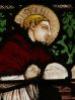
Events
| Birth | 2 Oct 1538 | Arona | |||
| Death | 3 Nov 1584 | Milano | |||
| Canonised | 1610 | Canonized in 1610 by Pope Paul V |
Families
| Father | Count Gilberto Borromeo de Arona et Angera (1515 - 1558) |
| Mother | Countess Margherita de' Medici (1510 - 1547) |