Individual Details
St. Andrew "Andrea" Corsini
(30 Nov 1301 - 1373)
THE CORSINI FAMILY
(Article by John Salvi)
http://www.tastedonline.com/wine-magazine/edition-4/le-corti-and-the-corsini-family_436.html
The Corsini family history, as recounted by themselves, dates back to the beginning of the 13th century.
Certainly it goes back further still, but records become hard to trace and unreliable.
This prodigious family arrived in Florence, at the end of the 1100s, from the town of Poggibonsi (today unfortunately rather an ugly little town between Florence and Siena).
They already reached prominence as early as the 12th century, when they opened one of the very first Florentine banks in London. They prospered.
Like other successful families, in wealthy 14th and 15th century Florence, being merchants and bankers was the road to fame and fortune. We know that, as was customary in the early fourteenth century, the head of the family, Tommaso Corsini (son of Duccio) (?-1366), launched his sons and those of his brother Niccoló, into political and ecclesiastical careers and business.
They were successful in all three sectors. Filippo Corsini (son of Tommaso) distinguished himself in politics, Andrea Corsini (son of Niccoló), who died in 1373, became bishop of Fiesole and was made a saint in 1624 by Pope Urban VIII; Pietro di Tommaso became a cardinal and was close to Pope Urban V during his exile in Avignon and helped organise the return of the Papal See to Rome.
The Corsini Family's first acquisitions in the village of San Casciano in Val di Pesa date from 1427 and consisted of three farm buildings: the worker's house (hut), various outhouses and land suitable for planting vineyards and olive trees.
Two of the buildings also had an oil-mill.In the same year, Florence land-registry also recorded the purchase of half of "Palazzo delle Corti" together with the surrounding lands in the community of San Piero di Sotto (near San Casciano).
Further land and farms were acquired in later centuries and by the latter half of the nineteenth century the family owned 32 farm-estates.
But their road to financial and political success during the first two centuries, up to 1450, was also fraught with disasters and bankruptcies.
The most famous of these was the failure of the Florentine banking system following the political and military problems of Edward II, King of England, who failed to honour his commitments. Following this event, Matteo di Niccolň (1322-1402), while still a young man, went to England to stay with his cousins, the Stracciabende, who in those years were Maestri di Moneta, at the court of the King of England.
During the eighteen years he spent in England, Matteo built up a great fortune, trading in wool, silk and herrings. On his return to Florence he acquired much land, although he still continued trading, and this was to lay the foundations of the Corsini family's wealth up to the middle of the 1700s. He was made Count Palatine by the Emperor of the Holy Roman Empire, Charles IV.
During the war of the eight saints he was hard hit when his property was confiscated and he was obliged to honour the debts accumulated by his grandson (1380). Relations with the Medici family had their ups and downs. Harmony reigned between them in the years of the Medici princedom, but during the Republic, so-called even though power was already in the hands of the family of Cosimo the Elder, the Corsini showed their reluctance to surrender to the Medici's intrusiveness.
On 4 November 1494, Luca Corsini decided of his own accord to ring the bells to warn the people that the time had come to move against the weak Piero Medici, son of Lorenzo il Magnifico.
The fact that Corsini rang the church bells of Florence ahead of Pier Capponi was a sure sign of their dislike for each other.During the times of Cosimo the Elder, their relations improved to such an extent that a Corsini was called upon to represent the Banco Mediceo in Rome.
The Corsini remained on permanent good terms with the Medici after the siege of Florence, in 1530, with the establishment of the Medici princedom which continued until the latter half of the eighteenth century.
(Please see article on Coltibuono for full details about the Medici Family).
In the early seventeenth century, the Corsini acquired vast amounts of landed property and works of art throughout Tuscany, Umbria and Lazio. Their great wealth was due above all to the brothers, Filippo (1538-1601) and Bartolomeo (1545-1613) di Bernardo who, in 1567, set up an important firm of merchants in London which was linked to Florence by a fast postal service.
Besides being merchants and bankers, the Corsini brothers, 250 years ahead of Tommaso, successfully insured the merchant ships of the first Greek shipping companies. Most of the enormous fortunes made from their trading were invested in property in Umbria, Lazio and Tuscany and left in trusts (the precursor of the present-day Trusts still today used in the Anglo-Saxon world).
The Corsini bought farm-estates and had villas and palaces built and restored in Pisa, Florence, Viterbo and Rome.It is to three later members of the family, Filippo di Lorenzo, his son Bartolomeo and his grandson, that we owe the building of their two Florentine palaces: one in Lungarno Corsini and the other in Via del Prato, still today owned by the family. In 1621 they acquired the Casino degli Acciaioli and much of the surrounding land.
The Palace was built on a design by Buontalenti, around 1575, and completed by Gherardo Silvani, who also built the loggia and the Italian garden decorated with marble statuary by B. Bozzolini. In 1675, Filippo (1647-1706) commissioned Foggini to build a chapel in honour of St. Andrea Corsini in the Church of the Carmine in Florence. In 1690 the architects Silvani and Ferri began construction of the Palazzo in Lungarno Corsini, completed in 1698.
The Galleria Gentilizia, set up in the apartment overlooking the river on the first floor of the Palazzo, housed many important paintings acquired or commissioned by the Corsini. The Galleria Corsini still today belongs to the family and can be visited by appointment, as mentioned above.
In 1697, before completion of the Palazzo, work began on transforming and decorating Villa di Castello, on the outskirts of Florence. In 1730 Cardinal Lorenzo (1652-1740) was made Pope and took the name of Clement XII, at the end of a conclave that lasted four months.
Born in Florence, in 1652, he was 78 years old at the time of his election. While certainly not a young Pope, he was well versed in Church administration, having been the treasurer of a previous pope, Alexander VIII. He was an expert in financial affairs and this was important at a time when the papal coffers were almost empty.
A learned man and a great patron of the arts, he founded the Capitolini museums and commissioned important monumental works in Rome, including the Trevi Fountain and the façade of San Giovanni in Laterano (where he had a family chapel built dedicated to St. Andrea), the façade of Santa Maria Maggiore, the Consulta Palace and the ports of Anzio, Ravenna and Ancona.
I have to interject here that my own personal ancestor, Niccolň Salvi, was the architect and water engineer of the above-mentioned Trevi fountain, known the world over today for "Three coins in a fountain".
The Corsini family was almost certainly ennobled by the Grand Duke of Tuscany as the Florentine Republic did not distribute titles. On the other hand my own family title was attributed by the Pope - perhaps Duccio's ancestor !
Pope Clement XII's nephew, Neri (1685-1770), after being created cardinal, acquired Palazzo alla Lungara from the Riario family, in 1736, extended by Fuga.
In it he arranged a collection of prints and drawings, a well-stocked library (the Biblioteca Corsiniana), and an impressive collection of paintings. In 1883, Palazzo Corsini alla Lungara became part of the heritage of the Italian Kingdom, through Tommaso Corsini (1835-1919), who founded the Accademia dei Lincei in the Palace, donating the collection of prints and drawings (now known as the Corsini Collection) and the Biblioteca Corsiniana.
The first prince of Sismano was Bartolomeo (1683-1752), son of Filippo who had Palazzo Corsini built on the banks of the river Arno in Florence; the favourite nephew of Clement XII, he was commander of the Roman Cavalry, President of the Cabinet of King Charles III in Naples (then Viceroy of Sicily) and Grandee of Spain.
Most of the members of the Corsini family, who during the eighteenth century were more Roman than Florentine, found their way back to Florence in later centuries.The second prince of Sismano was Filippo (1706-1767). Neri, (1771-1845), son of Bartolomeo (third prince of Sismano 1729-92), held important offices throughout the Napoleonic period and after the Bourbon restoration (1815). Determined to maintain Tuscany's independence, he succeeded in obtaining a great deal for Tuscany from both regimes.
Minister of the Interior and envoy at the Congress of Vienna, he obtained, among other things, the restitution of many works of art confiscated during the French occupation of Tuscany; in the last year of his life he was prime minister and foreign minister. His brother, Tommaso (fourth prince of Sismano 1767-1856), spent most of his life in Rome, with the exception of diplomatic missions in Paris and later in Vienna during the Napoleonic period.
He returned to Rome after the restoration and was appointed senator several times; after the outbreaks of 1848-49 he endeavoured to form a moderate government, but failed by refusing to bow to the Republic of Rome and remained in Florence until Pius IX (1847-78) returned to the city.
Andrea (1804-1868) was the fifth prince of Sismano and was foreign minister of the Grand Duchy. His nephew Tommaso (sixth Prince of Sismano), like his uncle, was also foreign minister of the grand duchy.
Tommaso Corsini (1835-1919), directed the Corsini family and its patrimony towards Italy ruled by the House of Savoy; he donated important works of art and sold Palazzo Corsini in Rome to the State.
Although he was an important political figure (deputy of the Kingdom from 1865 to 1882, later a life senator and finally Mayor of Florence), he did not neglect his own patrimony: he founded the Fondiaria Assicurazioni insurance company, presided the Cassa di Risparmio di Firenze bank, was president of the Italian Southern Railway Company and played an important role in the Electricity companies of central Italy.
A Corsini was also the first Ambassador to London of the United Kingdom of Italy. We could probably say that, in the 19th century, the Corsini family were the First Family in Tuscany after the Grand Duke, at least in terms of economic influence and historic heritage.
Filippo (1873-1926) was the seventh prince of Sismano, followed by another Tommaso (1903-1980) as eighth prince. These two princes did not live at Le Corti. In fact, Duccio was the first one to do so after the sixth prince. From then on the Corsini family spent only short holidays in the splendid Renaissance Villa on Le Corti Estate, and never stayed for long periods.
On the death of the above Tommaso Corsini (1835-1919,) the Villa remained empty and was closed up, until 1992, when Duccio Corsini, son of Prince Filippo, and his wife, Clotilde Trentinaglia de Daverio, decided to make it their permanent home.
They opened up and refurbished the rooms and apartments and at the same time re-arranged the garden, by reintroducing its original Renaissance layout. Only by restoring economic activity could Villa Le Corti return to its ancient splendour.
In 1992 the Estate and its traditional productions were also affected by the winds of change. It was decided to abandon the traditional method of managing farm produce, whereby wine, oil and cereals were sold as "raw materials" to those who processed and sold them.
The idea, which was the driving force behind the estate's modernisation, was to cater direct for the end consumers, by providing them with oil, wine and country life.
Duccio Corsini's encounter in July 1992 with Wine maker, Carlo Ferrini, wrote the first chapter of this story with the beginning of wine growing and production; it has since become the core activity of Le Corti Estate and is held in high regard both in Italy and abroad.
The Estate's traditional production of extra virgin olive oil has remained unchanged, although the technology used to extract and preserve the oil has been improved. Duccio and Clotilde, who have a son and a daughter - Filippo and Elena Clarice - are proud of their relationship with end consumers and every year open the doors of their splendid Villa to host "Alla Corte del Vino". The wine fair, now at its sixth edition, has presented the finest Tuscan wines annually since 1997.
Duccio Corsini also promotes, with Oliva di Collobiano, Giardini in Fiera an interesting international exhibition of gardens and landscapes, which, since 1994, has been held in the third week of September at Villa Le Corti. But archaeology was Tommaso's real passion.
He undertook many excavations, the most important of which was at Marsiliana, where he discovered many Etruscan treasures which he donated to Florence Archaeological Museum. He married Anna Barberini Colonna who together with her sister, the wife of Pier Francesco Corsini, were the last descendants of that branch of the Barberini family.
He had eight children; one son, Prince Andrea (seventh Prince of Sismano (1866-1952), did not marry while the other, Don Filippo Marquis of Laiatico, became mayor of Florence.
Filippo's son, Prince Tommaso (eighth Prince of Sismano 1903-1980), had the difficult task of handing down Corsini tradition to a new world which produced two dramatic events for Italy; Fascist dictatorship and the second World War. Tommaso, too, was involved in Italian political life and contributed as a deputy of the Constituent Assembly to drawing up the Constitution, which still today regulates our republican life.
He was a great expert on agriculture and livestock and contributed widely to modernising the sector in Tuscany and Umbria. His wife, Donna Elena was successful in saving the Galleria Corsini and many other art treasures from bombing and the ravages of war.
Their son, Filippo (1937), the ninth and present Prince, is married to Giorgiana Avogadro di Valdengo e Collobiano. As I write, he is alive and well and still the owner of the "Le Corti" estate.
Wealth brings responsibilities on its shoulders and the Corsini family have always been acutely aware of those responsibilities. Their wealth gave rise to great works of art commissioned from skilled artists and created public and private buildings that gave the city a new countenance.
The Corsini placed their hopes in the future; after all, they lived in Florence, a city that firmly believed in tomorrow, and in tomorrow lay the foundation for their actions. It was indeed true that the Corsini believed in the future, but perhaps in those very early days not even they imagined rising to such heights of wealth and glory. The success they obtained in the political life of Florence, the city that had welcomed them in its midst, went hand in hand with their achievements in Rome, the seat of the Church, where they were protagonists on more than one occasion.
(Article by John Salvi)
http://www.tastedonline.com/wine-magazine/edition-4/le-corti-and-the-corsini-family_436.html
The Corsini family history, as recounted by themselves, dates back to the beginning of the 13th century.
Certainly it goes back further still, but records become hard to trace and unreliable.
This prodigious family arrived in Florence, at the end of the 1100s, from the town of Poggibonsi (today unfortunately rather an ugly little town between Florence and Siena).
They already reached prominence as early as the 12th century, when they opened one of the very first Florentine banks in London. They prospered.
Like other successful families, in wealthy 14th and 15th century Florence, being merchants and bankers was the road to fame and fortune. We know that, as was customary in the early fourteenth century, the head of the family, Tommaso Corsini (son of Duccio) (?-1366), launched his sons and those of his brother Niccoló, into political and ecclesiastical careers and business.
They were successful in all three sectors. Filippo Corsini (son of Tommaso) distinguished himself in politics, Andrea Corsini (son of Niccoló), who died in 1373, became bishop of Fiesole and was made a saint in 1624 by Pope Urban VIII; Pietro di Tommaso became a cardinal and was close to Pope Urban V during his exile in Avignon and helped organise the return of the Papal See to Rome.
The Corsini Family's first acquisitions in the village of San Casciano in Val di Pesa date from 1427 and consisted of three farm buildings: the worker's house (hut), various outhouses and land suitable for planting vineyards and olive trees.
Two of the buildings also had an oil-mill.In the same year, Florence land-registry also recorded the purchase of half of "Palazzo delle Corti" together with the surrounding lands in the community of San Piero di Sotto (near San Casciano).
Further land and farms were acquired in later centuries and by the latter half of the nineteenth century the family owned 32 farm-estates.
But their road to financial and political success during the first two centuries, up to 1450, was also fraught with disasters and bankruptcies.
The most famous of these was the failure of the Florentine banking system following the political and military problems of Edward II, King of England, who failed to honour his commitments. Following this event, Matteo di Niccolň (1322-1402), while still a young man, went to England to stay with his cousins, the Stracciabende, who in those years were Maestri di Moneta, at the court of the King of England.
During the eighteen years he spent in England, Matteo built up a great fortune, trading in wool, silk and herrings. On his return to Florence he acquired much land, although he still continued trading, and this was to lay the foundations of the Corsini family's wealth up to the middle of the 1700s. He was made Count Palatine by the Emperor of the Holy Roman Empire, Charles IV.
During the war of the eight saints he was hard hit when his property was confiscated and he was obliged to honour the debts accumulated by his grandson (1380). Relations with the Medici family had their ups and downs. Harmony reigned between them in the years of the Medici princedom, but during the Republic, so-called even though power was already in the hands of the family of Cosimo the Elder, the Corsini showed their reluctance to surrender to the Medici's intrusiveness.
On 4 November 1494, Luca Corsini decided of his own accord to ring the bells to warn the people that the time had come to move against the weak Piero Medici, son of Lorenzo il Magnifico.
The fact that Corsini rang the church bells of Florence ahead of Pier Capponi was a sure sign of their dislike for each other.During the times of Cosimo the Elder, their relations improved to such an extent that a Corsini was called upon to represent the Banco Mediceo in Rome.
The Corsini remained on permanent good terms with the Medici after the siege of Florence, in 1530, with the establishment of the Medici princedom which continued until the latter half of the eighteenth century.
(Please see article on Coltibuono for full details about the Medici Family).
In the early seventeenth century, the Corsini acquired vast amounts of landed property and works of art throughout Tuscany, Umbria and Lazio. Their great wealth was due above all to the brothers, Filippo (1538-1601) and Bartolomeo (1545-1613) di Bernardo who, in 1567, set up an important firm of merchants in London which was linked to Florence by a fast postal service.
Besides being merchants and bankers, the Corsini brothers, 250 years ahead of Tommaso, successfully insured the merchant ships of the first Greek shipping companies. Most of the enormous fortunes made from their trading were invested in property in Umbria, Lazio and Tuscany and left in trusts (the precursor of the present-day Trusts still today used in the Anglo-Saxon world).
The Corsini bought farm-estates and had villas and palaces built and restored in Pisa, Florence, Viterbo and Rome.It is to three later members of the family, Filippo di Lorenzo, his son Bartolomeo and his grandson, that we owe the building of their two Florentine palaces: one in Lungarno Corsini and the other in Via del Prato, still today owned by the family. In 1621 they acquired the Casino degli Acciaioli and much of the surrounding land.
The Palace was built on a design by Buontalenti, around 1575, and completed by Gherardo Silvani, who also built the loggia and the Italian garden decorated with marble statuary by B. Bozzolini. In 1675, Filippo (1647-1706) commissioned Foggini to build a chapel in honour of St. Andrea Corsini in the Church of the Carmine in Florence. In 1690 the architects Silvani and Ferri began construction of the Palazzo in Lungarno Corsini, completed in 1698.
The Galleria Gentilizia, set up in the apartment overlooking the river on the first floor of the Palazzo, housed many important paintings acquired or commissioned by the Corsini. The Galleria Corsini still today belongs to the family and can be visited by appointment, as mentioned above.
In 1697, before completion of the Palazzo, work began on transforming and decorating Villa di Castello, on the outskirts of Florence. In 1730 Cardinal Lorenzo (1652-1740) was made Pope and took the name of Clement XII, at the end of a conclave that lasted four months.
Born in Florence, in 1652, he was 78 years old at the time of his election. While certainly not a young Pope, he was well versed in Church administration, having been the treasurer of a previous pope, Alexander VIII. He was an expert in financial affairs and this was important at a time when the papal coffers were almost empty.
A learned man and a great patron of the arts, he founded the Capitolini museums and commissioned important monumental works in Rome, including the Trevi Fountain and the façade of San Giovanni in Laterano (where he had a family chapel built dedicated to St. Andrea), the façade of Santa Maria Maggiore, the Consulta Palace and the ports of Anzio, Ravenna and Ancona.
I have to interject here that my own personal ancestor, Niccolň Salvi, was the architect and water engineer of the above-mentioned Trevi fountain, known the world over today for "Three coins in a fountain".
The Corsini family was almost certainly ennobled by the Grand Duke of Tuscany as the Florentine Republic did not distribute titles. On the other hand my own family title was attributed by the Pope - perhaps Duccio's ancestor !
Pope Clement XII's nephew, Neri (1685-1770), after being created cardinal, acquired Palazzo alla Lungara from the Riario family, in 1736, extended by Fuga.
In it he arranged a collection of prints and drawings, a well-stocked library (the Biblioteca Corsiniana), and an impressive collection of paintings. In 1883, Palazzo Corsini alla Lungara became part of the heritage of the Italian Kingdom, through Tommaso Corsini (1835-1919), who founded the Accademia dei Lincei in the Palace, donating the collection of prints and drawings (now known as the Corsini Collection) and the Biblioteca Corsiniana.
The first prince of Sismano was Bartolomeo (1683-1752), son of Filippo who had Palazzo Corsini built on the banks of the river Arno in Florence; the favourite nephew of Clement XII, he was commander of the Roman Cavalry, President of the Cabinet of King Charles III in Naples (then Viceroy of Sicily) and Grandee of Spain.
Most of the members of the Corsini family, who during the eighteenth century were more Roman than Florentine, found their way back to Florence in later centuries.The second prince of Sismano was Filippo (1706-1767). Neri, (1771-1845), son of Bartolomeo (third prince of Sismano 1729-92), held important offices throughout the Napoleonic period and after the Bourbon restoration (1815). Determined to maintain Tuscany's independence, he succeeded in obtaining a great deal for Tuscany from both regimes.
Minister of the Interior and envoy at the Congress of Vienna, he obtained, among other things, the restitution of many works of art confiscated during the French occupation of Tuscany; in the last year of his life he was prime minister and foreign minister. His brother, Tommaso (fourth prince of Sismano 1767-1856), spent most of his life in Rome, with the exception of diplomatic missions in Paris and later in Vienna during the Napoleonic period.
He returned to Rome after the restoration and was appointed senator several times; after the outbreaks of 1848-49 he endeavoured to form a moderate government, but failed by refusing to bow to the Republic of Rome and remained in Florence until Pius IX (1847-78) returned to the city.
Andrea (1804-1868) was the fifth prince of Sismano and was foreign minister of the Grand Duchy. His nephew Tommaso (sixth Prince of Sismano), like his uncle, was also foreign minister of the grand duchy.
Tommaso Corsini (1835-1919), directed the Corsini family and its patrimony towards Italy ruled by the House of Savoy; he donated important works of art and sold Palazzo Corsini in Rome to the State.
Although he was an important political figure (deputy of the Kingdom from 1865 to 1882, later a life senator and finally Mayor of Florence), he did not neglect his own patrimony: he founded the Fondiaria Assicurazioni insurance company, presided the Cassa di Risparmio di Firenze bank, was president of the Italian Southern Railway Company and played an important role in the Electricity companies of central Italy.
A Corsini was also the first Ambassador to London of the United Kingdom of Italy. We could probably say that, in the 19th century, the Corsini family were the First Family in Tuscany after the Grand Duke, at least in terms of economic influence and historic heritage.
Filippo (1873-1926) was the seventh prince of Sismano, followed by another Tommaso (1903-1980) as eighth prince. These two princes did not live at Le Corti. In fact, Duccio was the first one to do so after the sixth prince. From then on the Corsini family spent only short holidays in the splendid Renaissance Villa on Le Corti Estate, and never stayed for long periods.
On the death of the above Tommaso Corsini (1835-1919,) the Villa remained empty and was closed up, until 1992, when Duccio Corsini, son of Prince Filippo, and his wife, Clotilde Trentinaglia de Daverio, decided to make it their permanent home.
They opened up and refurbished the rooms and apartments and at the same time re-arranged the garden, by reintroducing its original Renaissance layout. Only by restoring economic activity could Villa Le Corti return to its ancient splendour.
In 1992 the Estate and its traditional productions were also affected by the winds of change. It was decided to abandon the traditional method of managing farm produce, whereby wine, oil and cereals were sold as "raw materials" to those who processed and sold them.
The idea, which was the driving force behind the estate's modernisation, was to cater direct for the end consumers, by providing them with oil, wine and country life.
Duccio Corsini's encounter in July 1992 with Wine maker, Carlo Ferrini, wrote the first chapter of this story with the beginning of wine growing and production; it has since become the core activity of Le Corti Estate and is held in high regard both in Italy and abroad.
The Estate's traditional production of extra virgin olive oil has remained unchanged, although the technology used to extract and preserve the oil has been improved. Duccio and Clotilde, who have a son and a daughter - Filippo and Elena Clarice - are proud of their relationship with end consumers and every year open the doors of their splendid Villa to host "Alla Corte del Vino". The wine fair, now at its sixth edition, has presented the finest Tuscan wines annually since 1997.
Duccio Corsini also promotes, with Oliva di Collobiano, Giardini in Fiera an interesting international exhibition of gardens and landscapes, which, since 1994, has been held in the third week of September at Villa Le Corti. But archaeology was Tommaso's real passion.
He undertook many excavations, the most important of which was at Marsiliana, where he discovered many Etruscan treasures which he donated to Florence Archaeological Museum. He married Anna Barberini Colonna who together with her sister, the wife of Pier Francesco Corsini, were the last descendants of that branch of the Barberini family.
He had eight children; one son, Prince Andrea (seventh Prince of Sismano (1866-1952), did not marry while the other, Don Filippo Marquis of Laiatico, became mayor of Florence.
Filippo's son, Prince Tommaso (eighth Prince of Sismano 1903-1980), had the difficult task of handing down Corsini tradition to a new world which produced two dramatic events for Italy; Fascist dictatorship and the second World War. Tommaso, too, was involved in Italian political life and contributed as a deputy of the Constituent Assembly to drawing up the Constitution, which still today regulates our republican life.
He was a great expert on agriculture and livestock and contributed widely to modernising the sector in Tuscany and Umbria. His wife, Donna Elena was successful in saving the Galleria Corsini and many other art treasures from bombing and the ravages of war.
Their son, Filippo (1937), the ninth and present Prince, is married to Giorgiana Avogadro di Valdengo e Collobiano. As I write, he is alive and well and still the owner of the "Le Corti" estate.
Wealth brings responsibilities on its shoulders and the Corsini family have always been acutely aware of those responsibilities. Their wealth gave rise to great works of art commissioned from skilled artists and created public and private buildings that gave the city a new countenance.
The Corsini placed their hopes in the future; after all, they lived in Florence, a city that firmly believed in tomorrow, and in tomorrow lay the foundation for their actions. It was indeed true that the Corsini believed in the future, but perhaps in those very early days not even they imagined rising to such heights of wealth and glory. The success they obtained in the political life of Florence, the city that had welcomed them in its midst, went hand in hand with their achievements in Rome, the seat of the Church, where they were protagonists on more than one occasion.
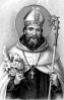
Events
| Birth | 30 Nov 1301 | ||||
| Ordination | 1328 | ||||
| Consacrated | 1360 | Bishop of Fiesole | |||
| Death | 1373 | ||||
| Blessing | 1374 | Roma, Italy by Pope Eugene IV | |||
| Canonised | 1629 | Roma, Italy by Pope Urban VIII | |||
| Biography | http://www.santitoscani.it/sant-andrea-corsini.html |  | |||
| Biography | http://www.magnificat.ca/cal/engl/02-04.htm | | |||
| Biography | http://www.newadvent.org/cathen/01472d.htm | |
Families
| Father | Niccoló Corsini ( - ) |
| Mother | Gemma Stracciabende ( - ) |
Notes
Biography
Santi Toscani:Sant'Andrea Corsini
http://www.santitoscani.it/sant-andrea-corsini.html
Quando il 13 ottobre 1349 Andrea Corsini - giŕ Provinciale dei Carmelitani in Toscana - fu nominato Vescovo di Fiesole da papa Clemente VI, la fama della sua caritŕ giŕ travalicava il territorio fiorentino, dove era nato nel palazzo di famiglia in via Maggio il 30 novembre 1301, primogenito del nobile Niccolň Corsini e di Gemma Stracciabende. A 15 anni aveva vestito l'abito religioso nel Convento del Carmine. Si era distinto per caritŕ e coraggio nella terribile peste del 1348, ponendosi con eroica dedicazione al servizio degli ammalati. Come vescovo volle vivere a Fiesole, rinunciando al comodo palazzo fiorentino che era stato sede dei suoi predecessori. Manifestň singolare zelo nella predicazione, nella preghiera, nell'austeritŕ, nella visita alle parrocchie, nella difesa della libertŕ della Chiesa contro soprusi e ingerenze, come pure nella caritŕ verso gli umili e i diseredati. Speciale cura dedicň ai suoi preti, precorrendo i dettami del Concilio di Trento, stabilendo precise norme circa il reclutamento e la preparazione culturale e spirituale dei candidai al presbiterato. Si dedicň anche con diligenza all'amministrazione dei beni ecclesiastici, disponendo ingenti somme per la costruzione e il restauro di chiese e monasteri e soprattutto della cattedrale e dell'episcopio, da secoli in stato di squallore. Ebbe difficili incarichi dalla Santa Sede, come quando fu inviato a Bologna nel 1368 per dirimere gravi contese. Morě la sera dell'Epifania del 1374. I suoi resti, dapprima tumulati nella cattedrale fiesolana, furono trafugati dai Confratelli del Carmine, dove sono tuttora custoditi in una cappella fattagli erigere dalla famiglia Corsini e miracolosamente scampata all'incendio che devastň la chiesa nel 1771. Papa Clemente XII, suo discendente, gli avrebbe poi dedicato nel 1734 un'altra splendida cappella in S. Giovanni in Laterano a Roma. Eugenio IV lo proclamň beato, e il fiorentino Urbano VIII lo santificň il 22 aprile 1629. La sua festa č celebrata a Firenze il 7 gennaio, dai Carmelitani il 9 gennaio e dalla Chiesa Universale il 4 febbraio. I fiorentini gli attribuiscono la vittoria nella battaglia di Anghiari del 29 giugno 1440.
Biography
St. Andrew Corsini 1302 1373Saint Andrew was born in Florence in 1302 of the illustrious Corsini family. A short time before the birth of Saint Andrew, his mother experienced a strange dream, in which she had given birth to a wolf which became a lamb upon entering a Carmelite church. After a dissolute youthful life Andrew repented, when one day in 1318 his desolate mother told him of her dream. He rose and went to the altar in the church where his parents had offered to God the child they hoped to obtain from His mercy; there he prayed to the Blessed Virgin with tears, then went to beg his admission to the Carmelite Order.
He began a life of great mortification. Ordained a priest in 1328, he studied in Paris and Avignon, and on his return became the Apostle of Florence, and Prior of his convent there. In 1360 he was consecrated Bishop of Fiesole, near Florence, and gained a great reputation as a peacemaker between rival political factions and for his love of the poor. He was also named papal nuncio to Bologna, where he pacified dissenting factions and won the hearts of the nobility with whom he was associating. He wrought many miracles of healing and conversion during his lifetime.
At the age of 71, while he was celebrating the midnight Mass of Christmas, the Blessed Virgin appeared to him and told him he would leave this world on the feast of the Epiphany, to meet the beloved Master he had served so faithfully. In effect, he died on that day in 1373, in the thirteenth year of his episcopacy. Miracles were so multiplied thereafter that Pope Eugenius IV permitted a public cult immediately. The city of Florence has always invoked him with confidence and happy results. He was canonized in 1629.
He is often represented holding his crosier, with a wolf and a lamb at his feet, or hovering over a battlefield on a cloud or a white steed - this in memory of his miraculous intervention in a battle the Florentine people won by his assistance.
Source: Editions Magnificat
http://www.magnificat.ca/cal/engl/02-04.htm
Biography
St. Andrew Corsini 1302 1373Of the illustrious Corsini family; born in Florence, in 1302; died 1373. Wild and dissolute in youth, he was startled by the words of his mother about what had happened to her before his birth, and, becoming a Carmelite monk in his native city, began a life of great mortification. He studied at Paris and Avignon, and, on his return, became the Apostle of Florence. He was regarded as a prophet and a thaumaturgus. Called to the See of Fiesoli, he fled, but was discovered by a child, and compelled to accept the honour. He redoubled his austerities as a bishop, was lavish in his care of the poor, and was sought for everywhere as a peacemaker, notably at Bologna, whither he was sent as papal legate to heal the breach between the nobility and the people. After twelve years in the episcopacy, he died at the age of seventy-one, and miracles were so multiplied at his death that Eugenius IV permitted a public cult immediately; but it was only in 1629 that Urban VIII canonized him. His feast is kept on 4 February.
Source: New Advent, The Catholic Enciclopedia
http://www.newadvent.org/cathen/01472d.htm