Individual Details
Pedro Álvarez de Toledo, marques de Villafranca et Zuniga
(13 Jul 1484 - 21 Feb 1553)
Viceroy of Neaples.
Pedro was born near Salamanca in Spain on 13 July 1484, the second son of Fadrique Alvarez de Toledo, 2.duque de Alba de Tormes, and Isabella de Zúńiga, condesa de Sarmiento. He was the first effective Spanish viceroy of Naples, responsible for considerable social, economic and urban change in the city and southern Italian kingdom in general. About 1520 Pedro married his relative Maria Osorio-Pimentel, 2.marquesa de Villafranca, daughter of Alfonso V (Luis) de Pimentel, marquis de Pimentel, and Juana/Beatriz Osorio, marquesa de Villafranca. They had three sons and four daughters of whom their son Garcia and two daughters, Ana and Eleonora, would have progeny.
Spain took over the kingdom of Naples in 1503 and solidified her grasp after the final, failed attempt by France in 1529 to retake the kingdom. For the first three decades of the century, a succession of inconsequential viceroys ruled the vicerealm. Pedro arrived as viceroy in September of 1532.
Pedro's rebuilding of the city went on for years. Old city walls were expanded and an entirely new wall was built along the sea front. Fortresses along those walls and further up and down the coast from the city were modernised, and the Arsenale - the naval shipyards - were expanded considerably. Pedro also built the viceregal palace as well as a dozen blocks of barracks nearby, a square grid of streets lined with multi-storied buildings - unique in Europe for its time. Today that section of Naples is still called the 'Spanish Quarter'. The goal was to make not just the city of Naples, but the Gulf of Naples and eventually the entire vice realm invulnerable - encompassing the entire southern Italian peninsula.
Pedro ruled harshly. He instituted summary execution for petty theft on public streets and made it a capital crime to go armed at night in the city. He was ruthless in dealing with feudal barons in the countryside and encouraged their move into the city within reach of a central authority. This breaking-up of land holdings began a trend to urbanisation as both the landed class and the landless peasant class poured into Naples. By 1550 the population of 200,000 was second only to Paris in all of Europe. Within the city he centralised administration, moving all courts onto the same premises, the Castel Capuano, also known as the 'Vicaria'.
Pedro is remembered as the viceroy who tried without success to institute the Spanish Inquisition in Naples in 1547. When the announcement finally came in May of that year, the protest was immediate, turning violent very quickly. It was not a 'popular' revolution, but rather a revolt by many of the landed nobility in and around Naples and Salerno, property owners who knew that the Inquisition had a reputation for confiscating the wealth and property of those whom it questioned.
On the order of Emperor Charles V, Pedro backed down and the Inquisition was called off. In 1552 Charles calmed the populace further by sending Pedro to Sienna to handle a local problem. Pedro died in Florence the following year, on 21 February 1553.
Pedro's reputation as a city-builder has stood the test of time. The city of Naples still bears his stamp in countless places. He is entombed in the church of San Giacomo degli Spagnoli.
Through the marriage of his youngest daughter Eleonora with the Grand Duke Cosimo I de'Medici in 1539, Pedro Alvarez de Toledo became an ancestor of the Bourbon kings of France and Spain, the Habsburg-Lorraine emperors of the Holy Roman Empire, Austria and Austria-Hungary, the grand dukes of Tuscany, several Stuart kings and queens of England and Scotland, and the kings of Italy from the House of Savoy.
Source: Leo van de Pas
Don Pedro Alvarez de Toledo was born in 1484 near Salamanca in what was not yet the modern nation state of Spain. By the time of his death in 1553, not only did Spain exist, but the New World was upon us and the Spanish Empire encompassed the globe. It was a time that saw Copernicus, Martin Luther, Leonardo da Vinci, Michelangelo, the Counter Reformation, warrior Popes, and the Sack of Rome. In Italy, it was also a time of massive French invasions of the peninsula as well as the constant fear of invasion by the Turks. In Naples, add Vesuvius and the plague, and you have yourself some breathtaking times, to say the least.
Spain came into possession of the kingdom of Naples in 1503 but did not solidify her grasp until the final, failed attempt by France in 1529 to take the kingdom. For the first three decades of the century, a succession of inconsequential viceroys ruled the kingdom of Naples. By 1530, petty disputes, power brokering and general infighting among the local barons in and around Naples—still lords of their own fiefdoms—caused Charles V, the king of Spain and now the Holy Roman Emperor to send a viceroy to Naples who could take charge.
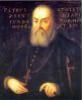
Don Pedro was such a person. (Portrait, above, is by an anonymous artist.) His arrival as viceroy in Naples in September of 1532 marked a fundamental change in the history of the kingdom and its capital city. The 20 years of his viceroyship were marked by political readjustment and social, economic and urban change. In spite of the intransigence of never-say-die feudalism, don Pedro converted the city from a medieval tangle into the largest and best-defended city in the Spanish Empire.
Naples had just been through the plague of 1529, which took, by some estimates, as many as 60,000 lives; thus, Don Pedro's immediate concern was for the decaying structure of the city. In 1534, he started paving roads and began the first expansion beyond the confines of the old city by building new and elegant residences at Santa Chiara, just west of the ancient Roman wall of historic Naples.
Source: http://faculty.ed.umuc.edu/~jmatthew/naples/toledo.html
Pedro was born near Salamanca in Spain on 13 July 1484, the second son of Fadrique Alvarez de Toledo, 2.duque de Alba de Tormes, and Isabella de Zúńiga, condesa de Sarmiento. He was the first effective Spanish viceroy of Naples, responsible for considerable social, economic and urban change in the city and southern Italian kingdom in general. About 1520 Pedro married his relative Maria Osorio-Pimentel, 2.marquesa de Villafranca, daughter of Alfonso V (Luis) de Pimentel, marquis de Pimentel, and Juana/Beatriz Osorio, marquesa de Villafranca. They had three sons and four daughters of whom their son Garcia and two daughters, Ana and Eleonora, would have progeny.
Spain took over the kingdom of Naples in 1503 and solidified her grasp after the final, failed attempt by France in 1529 to retake the kingdom. For the first three decades of the century, a succession of inconsequential viceroys ruled the vicerealm. Pedro arrived as viceroy in September of 1532.
Pedro's rebuilding of the city went on for years. Old city walls were expanded and an entirely new wall was built along the sea front. Fortresses along those walls and further up and down the coast from the city were modernised, and the Arsenale - the naval shipyards - were expanded considerably. Pedro also built the viceregal palace as well as a dozen blocks of barracks nearby, a square grid of streets lined with multi-storied buildings - unique in Europe for its time. Today that section of Naples is still called the 'Spanish Quarter'. The goal was to make not just the city of Naples, but the Gulf of Naples and eventually the entire vice realm invulnerable - encompassing the entire southern Italian peninsula.
Pedro ruled harshly. He instituted summary execution for petty theft on public streets and made it a capital crime to go armed at night in the city. He was ruthless in dealing with feudal barons in the countryside and encouraged their move into the city within reach of a central authority. This breaking-up of land holdings began a trend to urbanisation as both the landed class and the landless peasant class poured into Naples. By 1550 the population of 200,000 was second only to Paris in all of Europe. Within the city he centralised administration, moving all courts onto the same premises, the Castel Capuano, also known as the 'Vicaria'.
Pedro is remembered as the viceroy who tried without success to institute the Spanish Inquisition in Naples in 1547. When the announcement finally came in May of that year, the protest was immediate, turning violent very quickly. It was not a 'popular' revolution, but rather a revolt by many of the landed nobility in and around Naples and Salerno, property owners who knew that the Inquisition had a reputation for confiscating the wealth and property of those whom it questioned.
On the order of Emperor Charles V, Pedro backed down and the Inquisition was called off. In 1552 Charles calmed the populace further by sending Pedro to Sienna to handle a local problem. Pedro died in Florence the following year, on 21 February 1553.
Pedro's reputation as a city-builder has stood the test of time. The city of Naples still bears his stamp in countless places. He is entombed in the church of San Giacomo degli Spagnoli.
Through the marriage of his youngest daughter Eleonora with the Grand Duke Cosimo I de'Medici in 1539, Pedro Alvarez de Toledo became an ancestor of the Bourbon kings of France and Spain, the Habsburg-Lorraine emperors of the Holy Roman Empire, Austria and Austria-Hungary, the grand dukes of Tuscany, several Stuart kings and queens of England and Scotland, and the kings of Italy from the House of Savoy.
Source: Leo van de Pas
Don Pedro Alvarez de Toledo was born in 1484 near Salamanca in what was not yet the modern nation state of Spain. By the time of his death in 1553, not only did Spain exist, but the New World was upon us and the Spanish Empire encompassed the globe. It was a time that saw Copernicus, Martin Luther, Leonardo da Vinci, Michelangelo, the Counter Reformation, warrior Popes, and the Sack of Rome. In Italy, it was also a time of massive French invasions of the peninsula as well as the constant fear of invasion by the Turks. In Naples, add Vesuvius and the plague, and you have yourself some breathtaking times, to say the least.
Spain came into possession of the kingdom of Naples in 1503 but did not solidify her grasp until the final, failed attempt by France in 1529 to take the kingdom. For the first three decades of the century, a succession of inconsequential viceroys ruled the kingdom of Naples. By 1530, petty disputes, power brokering and general infighting among the local barons in and around Naples—still lords of their own fiefdoms—caused Charles V, the king of Spain and now the Holy Roman Emperor to send a viceroy to Naples who could take charge.
Don Pedro was such a person. (Portrait, above, is by an anonymous artist.) His arrival as viceroy in Naples in September of 1532 marked a fundamental change in the history of the kingdom and its capital city. The 20 years of his viceroyship were marked by political readjustment and social, economic and urban change. In spite of the intransigence of never-say-die feudalism, don Pedro converted the city from a medieval tangle into the largest and best-defended city in the Spanish Empire.
Naples had just been through the plague of 1529, which took, by some estimates, as many as 60,000 lives; thus, Don Pedro's immediate concern was for the decaying structure of the city. In 1534, he started paving roads and began the first expansion beyond the confines of the old city by building new and elegant residences at Santa Chiara, just west of the ancient Roman wall of historic Naples.
Source: http://faculty.ed.umuc.edu/~jmatthew/naples/toledo.html
Events
| Birth | 13 Jul 1484 | ||||
| Marriage | 1520 | María Osorio-Pimentel, 2. marquesa de Villafranca | |||
| Death | 21 Feb 1553 | Firenze | |||
| Burial | Neaples, San Giacomo degli Spagnoli |
Families
| Spouse | María Osorio-Pimentel, 2. marquesa de Villafranca (1495 - ) |
| Child | Eleonora Álvarez de Toledo Marquesa de Villafranca (1522 - 1562) |
| Father | Fadrique Álvarez de Toledo, II Duke of Alba et Tormes (1460 - 1531) |
| Mother | Isabel de Zuniga, Countess of Sarmiento (1470 - 1520) |