Individual Details
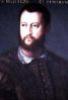
Cosimo I. de' Medici Grand Duke of Toscana
(12 Jun 1519 - 21 Apr 1574)
Cosimo was born on 12 June 1519, the only child of Giovanni delle Bande Nere de' Medici and Maria Salviati. He was the first grand duke of Tuscany, ruling from 1537 to 1574, during the waning days of the Renaissance.
Cosimo came to power when his second cousin once removed, Alessandro de' Medici, was assassinated in 1537. He succeeded because Alessandro's only male issue was illegitimate. He was from a different branch of the family, but many of the influential men in Florence favoured him, in some cases perhaps hoping to rule through him, since he was only 17. However he proved strong-willed and ambitious, and was immediately recognised by the Holy Roman Emperor Charles V. He restored the power of the Medici, who thereafter ruled Florence until the last of the Medici grand dukes, Gian Gastone de' Medici (1671-1737). The governmental structures Cosimo set up endured beyond that to the time when the grand duchy was absorbed into the Austro-Hungarian Empire.
When the Florentine exiles heard of the death of Alessandro, they marshalled their forces with support from France and from disgruntled neighbours of Florence. Toward the end of July 1537 they marched into Tuscany under the leadership of Bernardo Salviati and Piero Strozzi. When Cosimo heard of their approach he sent his best troops under Alessandro Vitelli to engage the enemy, which they did at Montemurlo, a fortress that belonged to the Nerli. After defeating the exile's army, Vitelli stormed the fortress, where Strozzi and a few of his companions had retreated to safety. It fell after only a few hours, and Cosimo celebrated his first victory. The prominent prisoners were subsequently beheaded on the Piazza or in the Bargello. Strozzi's body was found with a bloody sword next to it and a note quoting Virgil, but many believe that his suicide was faked.
Cosimo next turned on his neighbours of Lucca and Siena. With the support of Charles V he laid siege to Siena, even though it was occupied by Spanish troops. In 1557, after a 15-month siege, he finally took the city, although its population had by then been diminished from forty thousand to eight thousand.
In 1559 he added Mantalcino to his territories and formed the grand duchy of Tuscany, to which he was named Grand Duke by Pope Pius V, thereby raising him above all the other princes of Italy. He was a despotic ruler and also found it necessary to lay heavy tax burdens on his subjects, laying the groundwork for the future dissatisfaction and rebellion that eventually brought about the downfall of his successors. Despite his economic difficulties, he was a lavish patron of the arts and also developed the Florentine navy, which eventually took part in the Battle of Lepanto.
In 1539 Cosimo married Eleonora of Toledo, the daughter of Don Pedro Alvarez de Toledo, the Spanish viceroy of Naples, and Maria Osorio-Pimentel, 2.marquesa de Villafranca. Her face is familiar to many because of her solemn and distant portraits by Agnolo Bronzino. The most famous of them, with her son Giovanni, hangs in the Uffizi Gallery. She provided the Medici with the Pitti Palace, eight sons to ensure male succession and three daughters to connect the Medici with noble and ruling houses in Italy. She was a patron of the new Jesuit order, and her private chapel in the Palazzo della Signoria was decorated by Bronzino, who had originally arrived in Florence to provide festive decor for the wedding. She died with her sons Giovanni and Garzia in 1562, when she was only forty; all three were struck down by malaria while travelling to Pisa.
Cosimo took as mistress Camilla Martelli, and they had a daughter Virginia who married Caesare d'Este, duke of Modena, with whom she had ten children. At the age of 51, Cosimo married Camilla in 1570.
In the last decade of his reign Cosimo gave up the active rule to his son and successor Francesco I de' Medici. He died on 21 April 1574 at the Medici Villa di Castello near Florence.
Among Cosimo's many accomplishments was the creation of the Uffizi, originally intended to house the government, now one of the world's great art galleries. He also finished the Pitti Palace as a home for the Medici and created the magnificent Boboli Gardens behind the Pitti. He was a great patron of the arts, supporting, among others, Vasari and Cellini. A large bronze equestrian statue of Cosimo by Giambologna, erected in 1598, still stands today in the Piazza della Signoria, the main square of Florence.
Source: Leo van de Pas
Cosimo came to power when his second cousin once removed, Alessandro de' Medici, was assassinated in 1537. He succeeded because Alessandro's only male issue was illegitimate. He was from a different branch of the family, but many of the influential men in Florence favoured him, in some cases perhaps hoping to rule through him, since he was only 17. However he proved strong-willed and ambitious, and was immediately recognised by the Holy Roman Emperor Charles V. He restored the power of the Medici, who thereafter ruled Florence until the last of the Medici grand dukes, Gian Gastone de' Medici (1671-1737). The governmental structures Cosimo set up endured beyond that to the time when the grand duchy was absorbed into the Austro-Hungarian Empire.
When the Florentine exiles heard of the death of Alessandro, they marshalled their forces with support from France and from disgruntled neighbours of Florence. Toward the end of July 1537 they marched into Tuscany under the leadership of Bernardo Salviati and Piero Strozzi. When Cosimo heard of their approach he sent his best troops under Alessandro Vitelli to engage the enemy, which they did at Montemurlo, a fortress that belonged to the Nerli. After defeating the exile's army, Vitelli stormed the fortress, where Strozzi and a few of his companions had retreated to safety. It fell after only a few hours, and Cosimo celebrated his first victory. The prominent prisoners were subsequently beheaded on the Piazza or in the Bargello. Strozzi's body was found with a bloody sword next to it and a note quoting Virgil, but many believe that his suicide was faked.
Cosimo next turned on his neighbours of Lucca and Siena. With the support of Charles V he laid siege to Siena, even though it was occupied by Spanish troops. In 1557, after a 15-month siege, he finally took the city, although its population had by then been diminished from forty thousand to eight thousand.
In 1559 he added Mantalcino to his territories and formed the grand duchy of Tuscany, to which he was named Grand Duke by Pope Pius V, thereby raising him above all the other princes of Italy. He was a despotic ruler and also found it necessary to lay heavy tax burdens on his subjects, laying the groundwork for the future dissatisfaction and rebellion that eventually brought about the downfall of his successors. Despite his economic difficulties, he was a lavish patron of the arts and also developed the Florentine navy, which eventually took part in the Battle of Lepanto.
In 1539 Cosimo married Eleonora of Toledo, the daughter of Don Pedro Alvarez de Toledo, the Spanish viceroy of Naples, and Maria Osorio-Pimentel, 2.marquesa de Villafranca. Her face is familiar to many because of her solemn and distant portraits by Agnolo Bronzino. The most famous of them, with her son Giovanni, hangs in the Uffizi Gallery. She provided the Medici with the Pitti Palace, eight sons to ensure male succession and three daughters to connect the Medici with noble and ruling houses in Italy. She was a patron of the new Jesuit order, and her private chapel in the Palazzo della Signoria was decorated by Bronzino, who had originally arrived in Florence to provide festive decor for the wedding. She died with her sons Giovanni and Garzia in 1562, when she was only forty; all three were struck down by malaria while travelling to Pisa.
Cosimo took as mistress Camilla Martelli, and they had a daughter Virginia who married Caesare d'Este, duke of Modena, with whom she had ten children. At the age of 51, Cosimo married Camilla in 1570.
In the last decade of his reign Cosimo gave up the active rule to his son and successor Francesco I de' Medici. He died on 21 April 1574 at the Medici Villa di Castello near Florence.
Among Cosimo's many accomplishments was the creation of the Uffizi, originally intended to house the government, now one of the world's great art galleries. He also finished the Pitti Palace as a home for the Medici and created the magnificent Boboli Gardens behind the Pitti. He was a great patron of the arts, supporting, among others, Vasari and Cellini. A large bronze equestrian statue of Cosimo by Giambologna, erected in 1598, still stands today in the Piazza della Signoria, the main square of Florence.
Source: Leo van de Pas
Events
| Birth | 12 Jun 1519 | Firence | |||
| Marriage | 29 Mar 1539 | Firenze - Eleonora Álvarez de Toledo Marquesa de Villafranca | |||
| Death | 21 Apr 1574 | Villa di Castello, Firence | |||
| Burial | San Lorenzo, Firenze | ||||
| Biography |  |  |
Families
| Spouse | Eleonora Álvarez de Toledo Marquesa de Villafranca (1522 - 1562) |
| Child | Isabella de' Medici Princess of Toscana (1542 - 1576) |
| Father | Giovanni "delle Bande Nere" de' Medici (1498 - 1526) |
| Mother | Maria Salviati (1499 - 1543) |
Notes
Biography
Cosimo was born on 12 June 1519, the only child of Giovanni delle Bande Nere de' Medici and Maria Salviati. He was the first grand duke of Tuscany, ruling from 1537 to 1574, during the waning days of the Renaissance.Cosimo came to power when his second cousin once removed, Alessandro de' Medici, was assassinated in 1537. He succeeded because Alessandro's only male issue was illegitimate. He was from a different branch of the family, but many of the influential men in Florence favoured him, in some cases perhaps hoping to rule through him, since he was only 17. However he proved strong-willed and ambitious, and was immediately recognised by the Holy Roman Emperor Charles V. He restored the power of the Medici, who thereafter ruled Florence until the last of the Medici grand dukes, Gian Gastone de' Medici (1671-1737). The governmental structures Cosimo set up endured beyond that to the time when the grand duchy was absorbed into the Austro-Hungarian Empire.
When the Florentine exiles heard of the death of Alessandro, they marshalled their forces with support from France and from disgruntled neighbours of Florence. Toward the end of July 1537 they marched into Tuscany under the leadership of Bernardo Salviati and Piero Strozzi. When Cosimo heard of their approach he sent his best troops under Alessandro Vitelli to engage the enemy, which they did at Montemurlo, a fortress that belonged to the Nerli. After defeating the exile's army, Vitelli stormed the fortress, where Strozzi and a few of his companions had retreated to safety. It fell after only a few hours, and Cosimo celebrated his first victory. The prominent prisoners were subsequently beheaded on the Piazza or in the Bargello. Strozzi's body was found with a bloody sword next to it and a note quoting Virgil, but many believe that his suicide was faked.
Cosimo next turned on his neighbours of Lucca and Siena. With the support of Charles V he laid siege to Siena, even though it was occupied by Spanish troops. In 1557, after a 15-month siege, he finally took the city, although its population had by then been diminished from forty thousand to eight thousand.
In 1559 he added Mantalcino to his territories and formed the grand duchy of Tuscany, to which he was named Grand Duke by Pope Pius V, thereby raising him above all the other princes of Italy. He was a despotic ruler and also found it necessary to lay heavy tax burdens on his subjects, laying the groundwork for the future dissatisfaction and rebellion that eventually brought about the downfall of his successors. Despite his economic difficulties, he was a lavish patron of the arts and also developed the Florentine navy, which eventually took part in the Battle of Lepanto.
In 1539 Cosimo married Eleonora of Toledo, the daughter of Don Pedro Alvarez de Toledo, the Spanish viceroy of Naples, and Maria Osorio-Pimentel, 2.marquesa de Villafranca. Her face is familiar to many because of her solemn and distant portraits by Agnolo Bronzino. The most famous of them, with her son Giovanni, hangs in the Uffizi Gallery. She provided the Medici with the Pitti Palace, eight sons to ensure male succession and three daughters to connect the Medici with noble and ruling houses in Italy. She was a patron of the new Jesuit order, and her private chapel in the Palazzo della Signoria was decorated by Bronzino, who had originally arrived in Florence to provide festive decor for the wedding. She died with her sons Giovanni and Garzia in 1562, when she was only forty; all three were struck down by malaria while travelling to Pisa.
Cosimo took as mistress Camilla Martelli, and they had a daughter Virginia who married Caesare d'Este, duke of Modena, with whom she had ten children. At the age of 51, Cosimo married Camilla in 1570.
In the last decade of his reign Cosimo gave up the active rule to his son and successor Francesco I de' Medici. He died on 21 April 1574 at the Medici Villa di Castello near Florence.
Among Cosimo's many accomplishments was the creation of the Uffizi, originally intended to house the government, now one of the world's great art galleries. He also finished the Pitti Palace as a home for the Medici and created the magnificent Boboli Gardens behind the Pitti. He was a great patron of the arts, supporting, among others, Vasari and Cellini. A large bronze equestrian statue of Cosimo by Giambologna, erected in 1598, still stands today in the Piazza della Signoria, the main square of Florence.
Source: Leo van de Pas
Endnotes
1. Genealogics.org, Leo van de Pas online [http://www.genealogics.org/index.php], accessed 2008 on, http://www.genealogics.org/getperson.php?personID=I00000069&tree=LEO.