Individual Details
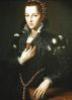
Lucrezia de' Medici
(4 Aug 1470 - 1550)
Lucrezia was born in Florence on 4 August 1470, the eldest daughter of Lorenzo I 'il Magnifico' de' Medici, ruler of Florence, and Clarice Orsini. She was the sister of Piero 'il Unfortunato' de' Medici who ruled Florence from 1492 to 1494, of Giovanni de' Medici (1475-1521), the future Pope Leo X, and of Giuliano de' Medici, the future duke of Nemours.
In 1474 the nephew of Pope Sixtus IV, Cardinal Giuliano della Rovere, the future Pope Julius II, demanded that Lorenzo 'il Magnifico' agree to the betrothal of his then four-year old daughter Lucrezia to Cardinal Giuliano's brother Giovanni della Rovere. The cardinal also expected the towns of Sansepolcro and Cittŕ di Castello to be handed over as Lucrezia's dowry. However Sansepolcro legally belonged to the papal state and had been left to Florence in 1441 as security for the pope's debts. Cardinal della Rovere succeeded with the help of the Florentines in expelling Niccolň Vitelli, the ruler of Cittŕ di Castello who was hostile to the Medici.
However Lorenzo had no intention of passing his favourite daughter to the house of della Rovere, and given the dubious politics of the cardinal, he decided against the betrothal of Lucrezia to the cardinal's brother Giovanni. Thereupon in June 1474 the cardinal invaded Umbria at the head of a papal army, and carried out the harsh punishment of insurgents in Todi and Spoleto and later attempted to conquer Cittŕ di Castello. Lorenzo decided to support his previous enemy Vitelli, and with the help of troops from Milan and Naples he expelled the papal army. In retaliation Sixtus IV took away the paid office of papal bailee from Lorenzo and Giuliano de' Medici and ordered the condottiere Federico da Montefeltro to conquer Cittŕ di Castelo, which Federico did. Some time later his daughter Giovanna would marry Giovanni della Rovere, who received a lordship consisting of the areas of Senigallia and Mondavia. From this time on Lorenzo de' Medici had to repel the irreconcilably hostile policy of the pope, which would culminate in the Pazzi conspiracy of 1478 in which Giuliano would be assassinated and Lorenzo severely wounded. To that end Florence strengthened its alliances with Milan and Naples, the latter manifested by Ferrante I of Aragón, king of Naples, becoming Lucrezia's godfather.
In spite of this difficult political situation Lucrezia and her siblings experienced a protected and happy childhood. Lorenzo provided a good education for his children. The humanist Angelo Poliziano (1454-1494) was among the tutors who taught Lorenzo's sons and daughters reading and writing as well as literature, poetry and philosophy. Lorenzo's mother Lucrezia Tornabuoni provided her granddaughters with basic knowledge in bookkeeping, accountancy and household budgeting. The girls also learned practical skills including sewing.
After the suppression of the Pazzi conspiracy Lorenzo feared further plots by sections of the oligarchy. He saw the political necessity of binding potential adversaries to himself, and he therefore decided to marry Lucrezia to Jacopo Salviati, the son of the recently deceased Giovanni Salviati and Maddalena Gondi. Jacopo and his guardian Averardo Salviati had up to then appeared as loyal followers of the Medici, but their relation Cardinal Francesco Salviati, the former archbishop of Pisa, had been one of the initiators of the Pazzi conspiracy, which had led to the social ostracism of the Salviati family. The wedding of Lucrezia and Jacopo was intended to help reconcile their families. On 13 September 1481 both families publicly announced the betrothal of their children in the Florence cathedral, in which Lorenzo's brother Giuliano had been murdered in 1478. The wedding date was delayed to 1486 as Lucrezia was only eleven, and her dowry was settled as 2,000 Fiorini.
The wedding of Lucrezia and Jacopo Salviati was celebrated in Florence on 10 September 1486. After she was married Lucrezia continued to live often in the home of her father, whom she revered all her life, and to whom she was especially close after the death of her mother in 1488; she was at his bedside when he died in 1492. Lucrezia's spouse Jacopo Salviati rose in the 1490s to become a powerful banker and politician in Florence. From 1499 to 1518 he acted as one of the priors of the Signoria and in 1514 he filled one of the most senior positions as a Gonfaloniere de Giustizia. Lucrezia respected her husband and dedicated her life above all to raising and educating her ten children, of whom three sons and three daughters would have progeny. She also saw it as her duty to support and hold together her brothers and sisters living in exile since 1494. She also attempted to reconcile the estranged members of the younger and older lines of the Medici.
In 1509 the Salviatis took in Giovanni de' Medici, the 11-year-old orphan son of Giovanni 'il Popolano' de' Medici and Caterina Sforza, countess of Forli. Lucrezia succeeded in positively influencing the wilful Giovanni, who would later become the last great condottiere of the Italian Renaissance, Giovanni delle Bande Nere. Giovanni was particularly attached to Maria, the Salviatis' daughter of almost the same age.
In 1515 Lucrezia initiated the engagement and in 1516 the wedding of her daughter Maria with Giovanni. She hoped that this marriage would produce a political union between the members of the younger and older lines of the Medici and a strengthening of the financial relationship of the banking house of Salviati with the wealthy younger Medici. In 1519 Maria and Giovanni became the parents of Cosimo, later the first grand duke of Tuscany.
In 1513 Lucrezia's brother Giovanni was elected pope, becoming Leo X. He saw his most important task as re-establishing the rule of the Medici in Florence, and materially favouring his sisters Lucrezia, Maddalena and Contessina and their families. During the papacy of her brother (1513-1521) Lucrezia lived mostly in Rome and arranged for Leo X to appoint her eldest son Giovanni a cardinal on 1 July 1517. Probably in 1520 her daughter Aloisia had married the Sicilian Sigismondo 'the Younger' de Luna Moncada Peralta Cardona e Aragona, 9.conte di Cataviddotta, signore di Bivona. Sigismondo continued his family's feud with the Perollo families ('the Case of Sciacca'). In 1529 Jacopo Perollo was killed by Sigismondo and his savagely mutilated body was dragged through the town of Sciacca at the end of a horse's tail - an act which raised such outrage that Sigismondo had to flee to Rome, to seek the protection of the pope, his wife's kinsman. Haunted by the horror, he ultimately committed suicide by leaping into the Tiber.
In 1530 Lucrezia and Jacopo Salviati left Florence for political reasons. After the death of her husband in 1533 Lucrezia lived in quiet seclusion, and she died about 1550. She did not influence the policies of her grandson Cosimo I.
Source: Leo van de Pas
In 1474 the nephew of Pope Sixtus IV, Cardinal Giuliano della Rovere, the future Pope Julius II, demanded that Lorenzo 'il Magnifico' agree to the betrothal of his then four-year old daughter Lucrezia to Cardinal Giuliano's brother Giovanni della Rovere. The cardinal also expected the towns of Sansepolcro and Cittŕ di Castello to be handed over as Lucrezia's dowry. However Sansepolcro legally belonged to the papal state and had been left to Florence in 1441 as security for the pope's debts. Cardinal della Rovere succeeded with the help of the Florentines in expelling Niccolň Vitelli, the ruler of Cittŕ di Castello who was hostile to the Medici.
However Lorenzo had no intention of passing his favourite daughter to the house of della Rovere, and given the dubious politics of the cardinal, he decided against the betrothal of Lucrezia to the cardinal's brother Giovanni. Thereupon in June 1474 the cardinal invaded Umbria at the head of a papal army, and carried out the harsh punishment of insurgents in Todi and Spoleto and later attempted to conquer Cittŕ di Castello. Lorenzo decided to support his previous enemy Vitelli, and with the help of troops from Milan and Naples he expelled the papal army. In retaliation Sixtus IV took away the paid office of papal bailee from Lorenzo and Giuliano de' Medici and ordered the condottiere Federico da Montefeltro to conquer Cittŕ di Castelo, which Federico did. Some time later his daughter Giovanna would marry Giovanni della Rovere, who received a lordship consisting of the areas of Senigallia and Mondavia. From this time on Lorenzo de' Medici had to repel the irreconcilably hostile policy of the pope, which would culminate in the Pazzi conspiracy of 1478 in which Giuliano would be assassinated and Lorenzo severely wounded. To that end Florence strengthened its alliances with Milan and Naples, the latter manifested by Ferrante I of Aragón, king of Naples, becoming Lucrezia's godfather.
In spite of this difficult political situation Lucrezia and her siblings experienced a protected and happy childhood. Lorenzo provided a good education for his children. The humanist Angelo Poliziano (1454-1494) was among the tutors who taught Lorenzo's sons and daughters reading and writing as well as literature, poetry and philosophy. Lorenzo's mother Lucrezia Tornabuoni provided her granddaughters with basic knowledge in bookkeeping, accountancy and household budgeting. The girls also learned practical skills including sewing.
After the suppression of the Pazzi conspiracy Lorenzo feared further plots by sections of the oligarchy. He saw the political necessity of binding potential adversaries to himself, and he therefore decided to marry Lucrezia to Jacopo Salviati, the son of the recently deceased Giovanni Salviati and Maddalena Gondi. Jacopo and his guardian Averardo Salviati had up to then appeared as loyal followers of the Medici, but their relation Cardinal Francesco Salviati, the former archbishop of Pisa, had been one of the initiators of the Pazzi conspiracy, which had led to the social ostracism of the Salviati family. The wedding of Lucrezia and Jacopo was intended to help reconcile their families. On 13 September 1481 both families publicly announced the betrothal of their children in the Florence cathedral, in which Lorenzo's brother Giuliano had been murdered in 1478. The wedding date was delayed to 1486 as Lucrezia was only eleven, and her dowry was settled as 2,000 Fiorini.
The wedding of Lucrezia and Jacopo Salviati was celebrated in Florence on 10 September 1486. After she was married Lucrezia continued to live often in the home of her father, whom she revered all her life, and to whom she was especially close after the death of her mother in 1488; she was at his bedside when he died in 1492. Lucrezia's spouse Jacopo Salviati rose in the 1490s to become a powerful banker and politician in Florence. From 1499 to 1518 he acted as one of the priors of the Signoria and in 1514 he filled one of the most senior positions as a Gonfaloniere de Giustizia. Lucrezia respected her husband and dedicated her life above all to raising and educating her ten children, of whom three sons and three daughters would have progeny. She also saw it as her duty to support and hold together her brothers and sisters living in exile since 1494. She also attempted to reconcile the estranged members of the younger and older lines of the Medici.
In 1509 the Salviatis took in Giovanni de' Medici, the 11-year-old orphan son of Giovanni 'il Popolano' de' Medici and Caterina Sforza, countess of Forli. Lucrezia succeeded in positively influencing the wilful Giovanni, who would later become the last great condottiere of the Italian Renaissance, Giovanni delle Bande Nere. Giovanni was particularly attached to Maria, the Salviatis' daughter of almost the same age.
In 1515 Lucrezia initiated the engagement and in 1516 the wedding of her daughter Maria with Giovanni. She hoped that this marriage would produce a political union between the members of the younger and older lines of the Medici and a strengthening of the financial relationship of the banking house of Salviati with the wealthy younger Medici. In 1519 Maria and Giovanni became the parents of Cosimo, later the first grand duke of Tuscany.
In 1513 Lucrezia's brother Giovanni was elected pope, becoming Leo X. He saw his most important task as re-establishing the rule of the Medici in Florence, and materially favouring his sisters Lucrezia, Maddalena and Contessina and their families. During the papacy of her brother (1513-1521) Lucrezia lived mostly in Rome and arranged for Leo X to appoint her eldest son Giovanni a cardinal on 1 July 1517. Probably in 1520 her daughter Aloisia had married the Sicilian Sigismondo 'the Younger' de Luna Moncada Peralta Cardona e Aragona, 9.conte di Cataviddotta, signore di Bivona. Sigismondo continued his family's feud with the Perollo families ('the Case of Sciacca'). In 1529 Jacopo Perollo was killed by Sigismondo and his savagely mutilated body was dragged through the town of Sciacca at the end of a horse's tail - an act which raised such outrage that Sigismondo had to flee to Rome, to seek the protection of the pope, his wife's kinsman. Haunted by the horror, he ultimately committed suicide by leaping into the Tiber.
In 1530 Lucrezia and Jacopo Salviati left Florence for political reasons. After the death of her husband in 1533 Lucrezia lived in quiet seclusion, and she died about 1550. She did not influence the policies of her grandson Cosimo I.
Source: Leo van de Pas
Events
| Birth | 4 Aug 1470 | Florence | |||
| Marriage | 10 Sep 1486 | Florence - Giacomo Salviati | |||
| Death | 1550 |
Families
| Spouse | Giacomo Salviati (1461 - 1533) |
| Child | Maria Salviati (1499 - 1543) |
| Child | Francesca Salviati ( - ) |
| Father | Lorenzo I de' Medici - il Magnifico (1449 - 1492) |
| Mother | Clarice Orsini (1453 - 1488) |
| Sibling | Piero de' Medici - il Unfortunato (1471 - 1503) |
| Sibling | Maddalena de' Medici (1473 - ) |
| Sibling | Pope Leo X (Giovanni de' Medici) (1475 - 1521) |
| Sibling | Luisa (Luigia) de' Medici (1477 - 1488) |
| Sibling | Contessina de' Medici (1478 - 1515) |
| Sibling | Giuliano de' Medici (1479 - 1516) |