Individual Details
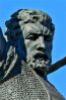
Rodrigo Díaz de Vivár - El Cid
(1043 - 10 Jul 1099)
Son of Diego Flainez, Rodrigo was born about 1043 at Vivar near Burgos and brought up at the court of King Fernando I of Castile. After distinguishing himself in the king's military campaigns, he was appointed standard-bearer by the next king Sancho. After Sancho fell at the battle of Zamora in 1072, Rodrigo remained at the court of Sancho's brother and heir Alfonso, and in 1074 he married Jimena, a relative of the king.
In 1079 Rodrigo was with the army of Mutamid of Seville to combat the invading Abd Allah of Granada. Among Abd Allah's followers captured by Rodrigo was Count Garcia Ordońez, a favourite of King Alfonso.
When Rodrigo returned to Burgos, he found that Garcia Ordońez was already there and had told Alfonso that Rodrigo had stayed down at Seville for longer than was necessary so that he could attack the Granadans and take booty from them. Alfonso did not wait to have a trial. Rodrigo was informed that he had broken his oath of fealty and homage by being faithless and seeking his own advantage at the expense of his lord's. Alfonso dissolved the contract between them and seized all of the property that Rodrigo held of him. As king, Alfonso declared that Rodrigo had defrauded the realm, seized all of the goods that he had won in battle against Count Garcia Ordońez and confiscated all of his private holdings and possessions. As punishment for Rodrigo's 'crimes', Alfonso declared that he must leave the realm within three days, taking nothing with him and receiving aid or assistance from no one.
Rodrigo left, was joined by several fighting men who preferred to remain loyal to him rather than obey King Alfonso, and sought employment as a mercenary. He was turned down by the count of Barcelona, and so took service under the Muslim king of Zaragoza in 1082 and defended the Muslim kingdom against Christian attacks. Alfonso broke with the system by which the Muslims paid him what amounted to tribute, and in 1085 he captured Toledo, the old Visigothic capital. All of Europe was electrified by the news of this victory and by tales of the fabulous wealth that had been taken along with the city. The rulers of the other Muslim states of Spain realised that they could no longer buy protection from the Christians, and called for help from North Africa.
A zealous movement had arisen among the Muslims of West Africa. Converts to the sect, known as _al-Murabitum_, or Almoravids in English, retired to live in a fortified army camp (_murabit_), practise austerity, and fight to spread Islam. Their leader, Yusuf ibn Tashufin, crossed over into Spain where he joined his forces with those of the Muslim states. Alfonso had become used to the idea that Muslims could not fight - it had been more than eighty years since the death of Almanzor and the disintegration of the Caliphate of Cordoba - and went out to attack the Muslims. In 1086 he met them at Zalaka, north of Badajoz, and they came very close to entirely wiping out the Christian army.
Alfonso was panic-stricken, calling for aid from the French and threatening to guide the Muslims through the Pyrenees to attack France if he did not get such help. He also took Rodrigo back as a vassal, and gave him permission to take and hold whatever Muslim territory he could. All of this was somewhat premature, since Yusuf ibn Tashufin took his army back to Africa. The Spanish Muslims were to able to hold the advantage that Yusuf had gained for them, and Rodrigo managed first to establish control of, and finally in 1094 to conquer the rich and beautiful Muslim city-kingdom of Valencia, with its fertile delta and its Mediterranean port. The Almoravids returned to Spain to try to liberate Valencia, but were badly defeated by Rodrigo, the first time they had ever been beaten in battle.
Rodrigo held Valencia until his death in 1099. Legend has it that the Christians tied his dead body on his horse and let it out of the main gate of the city. When the Muslims who were besieging the city saw him riding at them, they panicked and ran. Whatever the case, Rodrigo's wife Jimena held the city for three more years until Alfonso, convinced that the position could not be held forever, ordered her to withdraw. She left Valencia in 1102, burning the city behind her, and carried her husband's body back to Castile, to be re-buried at the monastery of San Pedro de Cardeńa.
Tales of Rodrigo's exploits began to circulate throughout Europe. Some time about 1150, his story was written down in an epic called the _Cantar de mio Cid,_ about one of the few Christian heroes of the Spanish Reconquest to be known familiarly by a Muslim title (_Cid=Sidi_ or 'lord').
Source: Leo van de Pas
In 1079 Rodrigo was with the army of Mutamid of Seville to combat the invading Abd Allah of Granada. Among Abd Allah's followers captured by Rodrigo was Count Garcia Ordońez, a favourite of King Alfonso.
When Rodrigo returned to Burgos, he found that Garcia Ordońez was already there and had told Alfonso that Rodrigo had stayed down at Seville for longer than was necessary so that he could attack the Granadans and take booty from them. Alfonso did not wait to have a trial. Rodrigo was informed that he had broken his oath of fealty and homage by being faithless and seeking his own advantage at the expense of his lord's. Alfonso dissolved the contract between them and seized all of the property that Rodrigo held of him. As king, Alfonso declared that Rodrigo had defrauded the realm, seized all of the goods that he had won in battle against Count Garcia Ordońez and confiscated all of his private holdings and possessions. As punishment for Rodrigo's 'crimes', Alfonso declared that he must leave the realm within three days, taking nothing with him and receiving aid or assistance from no one.
Rodrigo left, was joined by several fighting men who preferred to remain loyal to him rather than obey King Alfonso, and sought employment as a mercenary. He was turned down by the count of Barcelona, and so took service under the Muslim king of Zaragoza in 1082 and defended the Muslim kingdom against Christian attacks. Alfonso broke with the system by which the Muslims paid him what amounted to tribute, and in 1085 he captured Toledo, the old Visigothic capital. All of Europe was electrified by the news of this victory and by tales of the fabulous wealth that had been taken along with the city. The rulers of the other Muslim states of Spain realised that they could no longer buy protection from the Christians, and called for help from North Africa.
A zealous movement had arisen among the Muslims of West Africa. Converts to the sect, known as _al-Murabitum_, or Almoravids in English, retired to live in a fortified army camp (_murabit_), practise austerity, and fight to spread Islam. Their leader, Yusuf ibn Tashufin, crossed over into Spain where he joined his forces with those of the Muslim states. Alfonso had become used to the idea that Muslims could not fight - it had been more than eighty years since the death of Almanzor and the disintegration of the Caliphate of Cordoba - and went out to attack the Muslims. In 1086 he met them at Zalaka, north of Badajoz, and they came very close to entirely wiping out the Christian army.
Alfonso was panic-stricken, calling for aid from the French and threatening to guide the Muslims through the Pyrenees to attack France if he did not get such help. He also took Rodrigo back as a vassal, and gave him permission to take and hold whatever Muslim territory he could. All of this was somewhat premature, since Yusuf ibn Tashufin took his army back to Africa. The Spanish Muslims were to able to hold the advantage that Yusuf had gained for them, and Rodrigo managed first to establish control of, and finally in 1094 to conquer the rich and beautiful Muslim city-kingdom of Valencia, with its fertile delta and its Mediterranean port. The Almoravids returned to Spain to try to liberate Valencia, but were badly defeated by Rodrigo, the first time they had ever been beaten in battle.
Rodrigo held Valencia until his death in 1099. Legend has it that the Christians tied his dead body on his horse and let it out of the main gate of the city. When the Muslims who were besieging the city saw him riding at them, they panicked and ran. Whatever the case, Rodrigo's wife Jimena held the city for three more years until Alfonso, convinced that the position could not be held forever, ordered her to withdraw. She left Valencia in 1102, burning the city behind her, and carried her husband's body back to Castile, to be re-buried at the monastery of San Pedro de Cardeńa.
Tales of Rodrigo's exploits began to circulate throughout Europe. Some time about 1150, his story was written down in an epic called the _Cantar de mio Cid,_ about one of the few Christian heroes of the Spanish Reconquest to be known familiarly by a Muslim title (_Cid=Sidi_ or 'lord').
Source: Leo van de Pas
Events
| Birth | 1043 | Vivar, Burgos | |||
| Marriage | Abt 1074 | Jimena Díaz de Oviedo | |||
| Death | 10 Jul 1099 | Valencia | |||
| Biography | Biography |  |
Families
| Spouse | Jimena Díaz de Oviedo ( - ) |
| Child | Elvira Cristina Rodriguez de Vivár (1080 - ) |
Notes
Biography
Son of Diego Flainez, Rodrigo was born about 1043 at Vivar near Burgos and brought up at the court of King Fernando I of Castilla. After distinguishing himself in the king's military campaigns, he was appointed standard-bearer by the next king Sancho. After Sancho fell at the battle of Zamora in 1072, Rodrigo remained at the court of Sancho's brother and heir Alfonso, and in 1074 he married Jimena, a relative of the king.In 1079 Rodrigo was with the army of Mutamid of Seville to combat the invading Abd Allah of Granada. Among Abd Allah's followers captured by Rodrigo was Count Garcia Ordoñez, a favourite of King Alfonso.
When Rodrigo returned to Burgos, he found that Garcia Ordoñez was already there and had told Alfonso that Rodrigo had stayed down at Seville for longer than was necessary so that he could attack the Granadans and take booty from them. Alfonso did not wait to have a trial. Rodrigo was informed that he had broken his oath of fealty and homage by being faithless and seeking his own advantage at the expense of his lord's. Alfonso dissolved the contract between them and seized all of the property that Rodrigo held of him. As king, Alfonso declared that Rodrigo had defrauded the realm, seized all of the goods that he had won in battle against Count Garcia Ordoñez and confiscated all of his private holdings and possessions. As punishment for Rodrigo's 'crimes', Alfonso declared that he must leave the realm within three days, taking nothing with him and receiving aid or assistance from no one.
Rodrigo left, was joined by several fighting men who preferred to remain loyal to him rather than obey King Alfonso, and sought employment as a mercenary. He was turned down by the count of Barcelona, and so took service under the Muslim king of Zaragoza in 1082 and defended the Muslim kingdom against Christian attacks. Alfonso broke with the system by which the Muslims paid him what amounted to tribute, and in 1085 he captured Toledo, the old Visigothic capital. All of Europe was electrified by the news of this victory and by tales of the fabulous wealth that had been taken along with the city. The rulers of the other Muslim states of Spain realised that they could no longer buy protection from the Christians, and called for help from North Africa.
A zealous movement had arisen among the Muslims of West Africa. Converts to the sect, known as _al-Murabitum_, or Almoravids in English, retired to live in a fortified army camp (_murabit_), practise austerity, and fight to spread Islam. Their leader, Yusuf ibn Tashufin, crossed over into Spain where he joined his forces with those of the Muslim states. Alfonso had become used to the idea that Muslims could not fight - it had been more than eighty years since the death of Almanzor and the disintegration of the Caliphate of Cordoba - and went out to attack the Muslims. In 1086 he met them at Zalaka, north of Badajoz, and they came very close to entirely wiping out the Christian army.
Alfonso was panic-stricken, calling for aid from the French and threatening to guide the Muslims through the Pyrenees to attack France if he did not get such help. He also took Rodrigo back as a vassal, and gave him permission to take and hold whatever Muslim territory he could. All of this was somewhat premature, since Yusuf ibn Tashufin took his army back to Africa. The Spanish Muslims were to able to hold the advantage that Yusuf had gained for them, and Rodrigo managed first to establish control of, and finally in 1094 to conquer the rich and beautiful Muslim city-kingdom of Valencia, with its fertile delta and its Mediterranean port. The Almoravids returned to Spain to try to liberate Valencia, but were badly defeated by Rodrigo, the first time they had ever been beaten in battle.
Rodrigo held Valencia until his death in 1099. Legend has it that the Christians tied his dead body on his horse and let it out of the main gate of the city. When the Muslims who were besieging the city saw him riding at them, they panicked and ran. Whatever the case, Rodrigo's wife Jimena held the city for three more years until Alfonso, convinced that the position could not be held forever, ordered her to withdraw. She left Valencia in 1102, burning the city behind her, and carried her husband's body back to Castile, to be re-buried at the monastery of San Pedro de Cardeña.
Tales of Rodrigo's exploits began to circulate throughout Europe. Some time about 1150, his story was written down in an epic called the _Cantar del mio Cid,_ about one of the few Christian heroes of the Spanish Reconquest to be known familiarly by a Muslim title (_Cid=Sidi_ or 'lord').