Individual Details
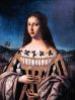
Lucrezia Borgia, Duchess of Spoletto
(18 Apr 1480 - )
Lucrezia Borgia
One of history's most maligned women, Lucrezia was born in Rome on 18 April 1480, an illegitimate daughter of the Spanish Pope Alexander VI (Rodrigo Borgia). She was first brought up by her mother Vanozza dei Catanei, but was later entrusted to the care of her father's cousin Adriana de Mila, who was married to Ludovico Orsini, lord of Bassanello. With a rich dowry left to her by her elder brother Pedro Luis Borgia, 1.duque de Gandia, when Lucrezia was eleven she was betrothed to Juan de Centelles, a Spaniard. In 1492 Don Gasparo, count of Aversa, was considered, but to keep her in Rome she was married, at only thirteen, to the middle-aged Giovanni Sforza, lord of Pesaro. This marriage was a grand occasion at the Vatican; Lucrezia was attended by Battistina, granddaughter of Pope Innocent VIII, and 150 other girls from the greater Roman families.
For a year she lived with her husband in Rome, and it was not until mid-1494 when she paid her first visit to Pesaro. Lucrezia became bored with the provincial life of Pesaro, and Giovanni Sforza lost favour with her father, who in 1497 annulled the marriage. Lucrezia was far from the lurid and shameless courtesan she was reputed to be, but she was a gay and pleasure-loving girl who enjoyed presiding over the court of the Renaissance papacy a good deal more than being married to a middle-aged soldier and being hostess in an unimportant social backwater.
Giovanni denied non-consummation of their marriage, as he wanted to protect the dowry of 31,000 ducats. However Ludovico Sforza, duke of Milan, wanted to retain his good relations with the pope and threatened to withdraw his protection from Pesaro; and so Lucrezia was free, by which time she was one of the official hostesses of Vatican society.
At this time there were rumours that she had had an affaire with the Spaniard Pedro Calderon, and had given birth to his child in the spring of 1498, at which time Calderon was mysteriously murdered. However, her divorce had been forced upon her by her father, as Lucrezia was too weak a character to have transformed her undoubted discontent with her husband into a demand to be released from him, especially with Giovanni Sforza anxious to preserve the marriage. The reason for their divorce seems to have been the diplomatic overtures of Alfonso II of Aragón, king of Naples.
Lucrezia next married Alfonso, duke of Bisceglia, an illegitimate son of Alfonso II of Naples. This marriage took place in June 1498. This time her dowry was 41,000 ducats and it was stipulated that she should not be compelled to go to Naples during her father's lifetime. Again the marriage took place at the Vatican, but this time with much less pomp. Lucrezia and Alfonso had a son Rodrigo.
Alfonso's younger brother Federigo IV, who succeeded him as king of Naples, attempted to gain support from the Turks. This caused the abandonment of the royal family by the pope and other western powers. The presence of Alfonso, duke of Bisceglia, and his sister Sancia (wife of Jofre, another of Lucrezia's brothers) at the papal court had become an increasing embarrassment and, in the summer of 1499, Alfonso fled from Rome fearing for his safety. Lucrezia was sent to Spoleto as its governor and there she spent several months with her brother Jofre. In August 1500 Alfonso was murdered on the orders of Lucrezia's brother Cesare Borgia, after an earlier assassination attempt had failed. In November 1500 the treaty of Granada was signed, effecting the partitioning of the kingdom of Naples. Shortly afterwards, Pope Alexander VI went to inspect the castle of Genazzano, leaving Lucrezia in charge of the Vatican. This choice astonished and shocked contemporaries but in itself is adequate testimony of Alexander's completely secular view of the papal administration.
In 1501 Cesare Borgia gave a party as part in the celebrations for Lucrezia's approaching third wedding. The description of this party was given by the master of ceremonies, Johann Burchard (c.1450-1506). According to him, fifty Roman courtesans were invited to the private supper party, danced naked with the servants, competed to pick up chestnuts off the floor with their naked thighs, and were then themselves competed for by the men present. All this took place in the presence of Pope Alexander VI, Lucrezia and Cesare Borgia.
On 2 February 1502 she married Alfonso d'Este, the future duke of Modena and Ferrara, and had to part with her son Rodrigo, who was brought up by Francesco Borgia. The proxy wedding ceremony, which took place on 30 December 1501, was spectacular and costly, again taking place in Rome. On 6 January 1502, Lucrezia set out on her journey to her third husband accompanied by Cardinal Francesco Borgia and a large retinue of Roman nobles. Everywhere homage was paid to the pope's daughter and it took nearly a month before she finally arrived at Ferrara after an exhausting but spectacular journey. Her dowry of 100,000 ducats had been paid for by the Apostolic Camera.
When Lucrezia went to Ferrara, escaping the shadow of her father and brother, she came into limelight of her own. However, the Este family watched her like hawks, noting every indiscretion and commenting on her every action. Her father-in-law, Duke Ercole, outwardly friendly and genuinely surprised and pleased with his new daughter-in-law, was mean over her settlement and suspicious of her extravagant Spanish and Roman attendants whom he gradually drove away from his court. Alfonso, at first non-committal and persistently inattentive towards his wife, gradually warmed to her to some extent. The death of Pope Alexander VI and the collapse of the Borgia fortunes in 1503 left her isolated. However between 1507 and 1519 she and Ercole had seven children of whom three sons would have progeny.
Louis XII of France suggested a divorce for Alfonso and Lucrezia; but Lucrezia survived, not so much because she had already won her way into the heart of Alfonso and the Ferrarese as because divorce was a humiliating business and also the considerable dowry would have to be repaid. Early in 1505 her father-in-law died, and Alfonso and Lucrezia took over the rule of Ferrara.
In 1512 her eldest son Rodrigo died. Lucrezia, who had never seen her son after her departure for Ferrara, was deeply upset by his death. In 1518 Vanozza dei Catanei, the mother of four of Pope Alexander VI's children, died much respected by the Augustinian monks of Santa Maria del Popolo, to whom she left considerable endowments in her will. Masses were still being said for her soul in Santa Maria del Popolo 150 years later.
Lucrezia died in Ferrara on 25 June 1519, aged thirty-nine, enjoying the respect of her subjects, a generous patroness of learning and of art, celebrated by Ariosto and other poets. Alfonso wrote movingly and with obvious sincerity in a letter to his nephew, Federico Gonzaga, of 'the illustrious lady, the duchess, my dearest wife', stating that: 'I cannot write this without tears, knowing myself to be deprived of such a dear and sweet companion. For such her exemplary conduct and the tender love which existed between us made her to me'.
Source: Leo van de Pas
One of history's most maligned women, Lucrezia was born in Rome on 18 April 1480, an illegitimate daughter of the Spanish Pope Alexander VI (Rodrigo Borgia). She was first brought up by her mother Vanozza dei Catanei, but was later entrusted to the care of her father's cousin Adriana de Mila, who was married to Ludovico Orsini, lord of Bassanello. With a rich dowry left to her by her elder brother Pedro Luis Borgia, 1.duque de Gandia, when Lucrezia was eleven she was betrothed to Juan de Centelles, a Spaniard. In 1492 Don Gasparo, count of Aversa, was considered, but to keep her in Rome she was married, at only thirteen, to the middle-aged Giovanni Sforza, lord of Pesaro. This marriage was a grand occasion at the Vatican; Lucrezia was attended by Battistina, granddaughter of Pope Innocent VIII, and 150 other girls from the greater Roman families.
For a year she lived with her husband in Rome, and it was not until mid-1494 when she paid her first visit to Pesaro. Lucrezia became bored with the provincial life of Pesaro, and Giovanni Sforza lost favour with her father, who in 1497 annulled the marriage. Lucrezia was far from the lurid and shameless courtesan she was reputed to be, but she was a gay and pleasure-loving girl who enjoyed presiding over the court of the Renaissance papacy a good deal more than being married to a middle-aged soldier and being hostess in an unimportant social backwater.
Giovanni denied non-consummation of their marriage, as he wanted to protect the dowry of 31,000 ducats. However Ludovico Sforza, duke of Milan, wanted to retain his good relations with the pope and threatened to withdraw his protection from Pesaro; and so Lucrezia was free, by which time she was one of the official hostesses of Vatican society.
At this time there were rumours that she had had an affaire with the Spaniard Pedro Calderon, and had given birth to his child in the spring of 1498, at which time Calderon was mysteriously murdered. However, her divorce had been forced upon her by her father, as Lucrezia was too weak a character to have transformed her undoubted discontent with her husband into a demand to be released from him, especially with Giovanni Sforza anxious to preserve the marriage. The reason for their divorce seems to have been the diplomatic overtures of Alfonso II of Aragón, king of Naples.
Lucrezia next married Alfonso, duke of Bisceglia, an illegitimate son of Alfonso II of Naples. This marriage took place in June 1498. This time her dowry was 41,000 ducats and it was stipulated that she should not be compelled to go to Naples during her father's lifetime. Again the marriage took place at the Vatican, but this time with much less pomp. Lucrezia and Alfonso had a son Rodrigo.
Alfonso's younger brother Federigo IV, who succeeded him as king of Naples, attempted to gain support from the Turks. This caused the abandonment of the royal family by the pope and other western powers. The presence of Alfonso, duke of Bisceglia, and his sister Sancia (wife of Jofre, another of Lucrezia's brothers) at the papal court had become an increasing embarrassment and, in the summer of 1499, Alfonso fled from Rome fearing for his safety. Lucrezia was sent to Spoleto as its governor and there she spent several months with her brother Jofre. In August 1500 Alfonso was murdered on the orders of Lucrezia's brother Cesare Borgia, after an earlier assassination attempt had failed. In November 1500 the treaty of Granada was signed, effecting the partitioning of the kingdom of Naples. Shortly afterwards, Pope Alexander VI went to inspect the castle of Genazzano, leaving Lucrezia in charge of the Vatican. This choice astonished and shocked contemporaries but in itself is adequate testimony of Alexander's completely secular view of the papal administration.
In 1501 Cesare Borgia gave a party as part in the celebrations for Lucrezia's approaching third wedding. The description of this party was given by the master of ceremonies, Johann Burchard (c.1450-1506). According to him, fifty Roman courtesans were invited to the private supper party, danced naked with the servants, competed to pick up chestnuts off the floor with their naked thighs, and were then themselves competed for by the men present. All this took place in the presence of Pope Alexander VI, Lucrezia and Cesare Borgia.
On 2 February 1502 she married Alfonso d'Este, the future duke of Modena and Ferrara, and had to part with her son Rodrigo, who was brought up by Francesco Borgia. The proxy wedding ceremony, which took place on 30 December 1501, was spectacular and costly, again taking place in Rome. On 6 January 1502, Lucrezia set out on her journey to her third husband accompanied by Cardinal Francesco Borgia and a large retinue of Roman nobles. Everywhere homage was paid to the pope's daughter and it took nearly a month before she finally arrived at Ferrara after an exhausting but spectacular journey. Her dowry of 100,000 ducats had been paid for by the Apostolic Camera.
When Lucrezia went to Ferrara, escaping the shadow of her father and brother, she came into limelight of her own. However, the Este family watched her like hawks, noting every indiscretion and commenting on her every action. Her father-in-law, Duke Ercole, outwardly friendly and genuinely surprised and pleased with his new daughter-in-law, was mean over her settlement and suspicious of her extravagant Spanish and Roman attendants whom he gradually drove away from his court. Alfonso, at first non-committal and persistently inattentive towards his wife, gradually warmed to her to some extent. The death of Pope Alexander VI and the collapse of the Borgia fortunes in 1503 left her isolated. However between 1507 and 1519 she and Ercole had seven children of whom three sons would have progeny.
Louis XII of France suggested a divorce for Alfonso and Lucrezia; but Lucrezia survived, not so much because she had already won her way into the heart of Alfonso and the Ferrarese as because divorce was a humiliating business and also the considerable dowry would have to be repaid. Early in 1505 her father-in-law died, and Alfonso and Lucrezia took over the rule of Ferrara.
In 1512 her eldest son Rodrigo died. Lucrezia, who had never seen her son after her departure for Ferrara, was deeply upset by his death. In 1518 Vanozza dei Catanei, the mother of four of Pope Alexander VI's children, died much respected by the Augustinian monks of Santa Maria del Popolo, to whom she left considerable endowments in her will. Masses were still being said for her soul in Santa Maria del Popolo 150 years later.
Lucrezia died in Ferrara on 25 June 1519, aged thirty-nine, enjoying the respect of her subjects, a generous patroness of learning and of art, celebrated by Ariosto and other poets. Alfonso wrote movingly and with obvious sincerity in a letter to his nephew, Federico Gonzaga, of 'the illustrious lady, the duchess, my dearest wife', stating that: 'I cannot write this without tears, knowing myself to be deprived of such a dear and sweet companion. For such her exemplary conduct and the tender love which existed between us made her to me'.
Source: Leo van de Pas
Events
| Birth | 18 Apr 1480 | ||||
| Marriage | 12 Jun 1493 | Giovanni Sforza, Prince of Pesaro | |||
| Divorce | 1497 | Giovanni Sforza, Prince of Pesaro | |||
| Marriage | 21 Jul 1498 | Alfonso de Aragón, Prince of Salerno | |||
| Marriage | 2 Feb 1502 | Alfonso I d'Este, Duke of Modena and Ferrara |
Families
| Spouse | Giovanni Sforza, Prince of Pesaro ( - ) |
| Spouse | Alfonso de Aragón, Prince of Salerno ( - 1500) |
| Spouse | Alfonso I d'Este, Duke of Modena and Ferrara (1476 - 1534) |
| Father | Pope Alexander VI (Rodrigo Borgia) (1431 - 1503) |
| Mother | Giovanna Cattanei (1442 - 1518) |
| Sibling | Cesare Borgia, Duke of Valentinois (1475 - ) |
| Sibling | Giovanni Borgia, 2. Duke of Gandia (1474 - 1497) |
| Sibling | Jofré Borgia, Prince of Squillace (1481 - ) |