Individual Details
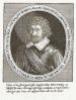
Count Charles Bonaventura de Longueval et Buquoy
(9 Jan 1571 - 10 Jul 1621)
Charles Bonaventure de Longueval, Count of Bucquoy
(Czech Karel Bonaventura Buquoy, full name in French Charles Bonaventure de Longueval comte de Bucquoy, German: Karl Bonaventura Graf von Buquoy) (Arras, January 9, 1571 – Nové Zámky, July 10, 1621) was a military commander who fought for the Holy Roman Empire during the Thirty Years' War.
Bucquoy was born in Arras on 9 January 1571. He began serving in Habsburg forces in Flanders as a teenager, and was a colonel at the age of 26. He fought in the Battle of Nieuwpoort (1600) and the Siege of Ostend (1601-1604). In 1613 he became a knight of the Order of the Golden Fleece and governor of the County of Hainaut.
In 1618 Emperor Matthias placed him in command of the imperial forces being raised to put down the Bohemian Revolt. He was victorious in a number of important battles in the Bohemian lands - the turning point being the Battle of Záblatí near Prachatice on 10 June 1619. He also commanded the imperial forces during the Battle of White Mountain on 8 November 1620. As a result of his successes, Emperor Ferdinand II gave him estates at Nové Hrady, Rožmberk and Libejovice; the estates remained in the Bucquoy family until 1945.
He married Maria Maddalena Biglia in 1606 and had a son named Charles Albert. Bucquoy died during the siege of Érsekújvár (Neuhäusel) (Nové Zámky) on 10 July 1621.
Source: http://en.wikipedia.org/wiki/Charles_Bonaventure_de_Longueval,_Count_of_Bucquoy
(Czech Karel Bonaventura Buquoy, full name in French Charles Bonaventure de Longueval comte de Bucquoy, German: Karl Bonaventura Graf von Buquoy) (Arras, January 9, 1571 – Nové Zámky, July 10, 1621) was a military commander who fought for the Holy Roman Empire during the Thirty Years' War.
Bucquoy was born in Arras on 9 January 1571. He began serving in Habsburg forces in Flanders as a teenager, and was a colonel at the age of 26. He fought in the Battle of Nieuwpoort (1600) and the Siege of Ostend (1601-1604). In 1613 he became a knight of the Order of the Golden Fleece and governor of the County of Hainaut.
In 1618 Emperor Matthias placed him in command of the imperial forces being raised to put down the Bohemian Revolt. He was victorious in a number of important battles in the Bohemian lands - the turning point being the Battle of Záblatí near Prachatice on 10 June 1619. He also commanded the imperial forces during the Battle of White Mountain on 8 November 1620. As a result of his successes, Emperor Ferdinand II gave him estates at Nové Hrady, Rožmberk and Libejovice; the estates remained in the Bucquoy family until 1945.
He married Maria Maddalena Biglia in 1606 and had a son named Charles Albert. Bucquoy died during the siege of Érsekújvár (Neuhäusel) (Nové Zámky) on 10 July 1621.
Source: http://en.wikipedia.org/wiki/Charles_Bonaventure_de_Longueval,_Count_of_Bucquoy
Events
| Birth | 9 Jan 1571 | ||||
| Marriage | 15 Jun 1606 | Countess Maria Maddalena Biglia de Sarona | |||
| Death | 10 Jul 1621 | Neuhausel, Hungary (in battle) |
Families
| Spouse | Countess Maria Maddalena Biglia de Sarona (1573 - 1654) |
| Child | Count Charles Albert de Longueval et Buquoy (1607 - 1663) |
| Father | Count Maximilien de Longueval et Buquoy Baron de Vaux (1537 - 1581) |
| Mother | Marguerite de Lille ( - 1612) |