Individual Details
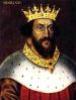
Henry I King of England
(1068 - 1 Dec 1135)
Henry was born in 1068 in Selby, Yorkshire, the only child of William the Conqueror to be born in England. He was also the only son to be born in 'purple' as only two years previously William had become king of England. As the youngest child he was his mother's favourite and when she died she left him her English estates.
He had a good education, learning to read and write Latin as well as English and Law. In 1086 he was knighted by his father. When his father died in 1087 his brother Robert received the duchy of Normandy while William II Rufus became king of England. Henry, having estates in both territories like so many other Norman barons, had to maintain his relations with two overlords.
When in 1100 William Rufus mysteriously died, Henry was elected to succeed as king of England and on 6 August he was crowned in Westminster Abbey. His first act as king was to restore Anselm as archbishop of Canterbury, then he started to look for a bride. For his queen he selected Edith of Scotland, daughter of King Malcolm Canmore and, more importantly, of St. Margaret of Wessex who was a descendant of the kings of England prior to the Conquest. In honour of the king's mother, Matilda of Flanders, Edith changed her name to Matilda. Restoring Anselm did not ensure peace in the kingdom as he refused to do homage to the king, claiming to hold the church estates in the name of the pope. Anselm was then forced into exile, and peace was restored only in 1107 when the king's sister Adela, countess of Blois, found a solution acceptable to both: bishops would pay homage to the king and the king would allow clerical investiture.
When Henry's brother Robert Curthose, duke of Normandy returned from Crusade he proved such a bad ruler that the barons in Normandy revolted and asked for Henry's support. Henry was also motivated by a wish to eliminate the continuing threat from Robert and the drain on his fiscal resources from the annual payment to him, so in 1105 he led an expeditionary force across the English Channel. On the morning of 28 September 1106, exactly 40 years after their father had landed in England, the decisive battle between his two sons took place in the small village of Tinchebray. Robert's army was defeated and he was captured. Robert was imprisoned and Henry became duke of Normandy.
Henry was a good diplomat; even though troubles within Normandy and with France continued, he made a successful alliance when his only daughter Matilda married the Emperor Heinrich V in 1114. In 1119 his only son William went to the continent and married a daughter of the count of Anjou. On the journey home the 'White Ship' was wrecked and William with his entourage drowned. Henry's wife had died in 1118, but he waited until 1122 before taking a second wife, Adeliza of Louvain. He had fathered two legitimate and probably nineteen illegitimate children, but his second marriage remained childless.
In 1126 Henry designated his daughter, the widowed Empress Matilda, as his successor; and in 1127 he selected Geoffrey, count of Anjou, as her second husband even though he was ten years younger than Matilda. Henry travelled a great deal between England and Normandy, and on 1 August 1135 he left England for the last time. He died 1 December 1135 at St. Denis-le-Fermont near Gisors. His body was taken back to England and buried at Reading Abbey.
Source: Leo van de Pas
He had a good education, learning to read and write Latin as well as English and Law. In 1086 he was knighted by his father. When his father died in 1087 his brother Robert received the duchy of Normandy while William II Rufus became king of England. Henry, having estates in both territories like so many other Norman barons, had to maintain his relations with two overlords.
When in 1100 William Rufus mysteriously died, Henry was elected to succeed as king of England and on 6 August he was crowned in Westminster Abbey. His first act as king was to restore Anselm as archbishop of Canterbury, then he started to look for a bride. For his queen he selected Edith of Scotland, daughter of King Malcolm Canmore and, more importantly, of St. Margaret of Wessex who was a descendant of the kings of England prior to the Conquest. In honour of the king's mother, Matilda of Flanders, Edith changed her name to Matilda. Restoring Anselm did not ensure peace in the kingdom as he refused to do homage to the king, claiming to hold the church estates in the name of the pope. Anselm was then forced into exile, and peace was restored only in 1107 when the king's sister Adela, countess of Blois, found a solution acceptable to both: bishops would pay homage to the king and the king would allow clerical investiture.
When Henry's brother Robert Curthose, duke of Normandy returned from Crusade he proved such a bad ruler that the barons in Normandy revolted and asked for Henry's support. Henry was also motivated by a wish to eliminate the continuing threat from Robert and the drain on his fiscal resources from the annual payment to him, so in 1105 he led an expeditionary force across the English Channel. On the morning of 28 September 1106, exactly 40 years after their father had landed in England, the decisive battle between his two sons took place in the small village of Tinchebray. Robert's army was defeated and he was captured. Robert was imprisoned and Henry became duke of Normandy.
Henry was a good diplomat; even though troubles within Normandy and with France continued, he made a successful alliance when his only daughter Matilda married the Emperor Heinrich V in 1114. In 1119 his only son William went to the continent and married a daughter of the count of Anjou. On the journey home the 'White Ship' was wrecked and William with his entourage drowned. Henry's wife had died in 1118, but he waited until 1122 before taking a second wife, Adeliza of Louvain. He had fathered two legitimate and probably nineteen illegitimate children, but his second marriage remained childless.
In 1126 Henry designated his daughter, the widowed Empress Matilda, as his successor; and in 1127 he selected Geoffrey, count of Anjou, as her second husband even though he was ten years younger than Matilda. Henry travelled a great deal between England and Normandy, and on 1 August 1135 he left England for the last time. He died 1 December 1135 at St. Denis-le-Fermont near Gisors. His body was taken back to England and buried at Reading Abbey.
Source: Leo van de Pas
Events
| Birth | 1068 | ||||
| Marriage | 11 Nov 1100 | Westminster Abbey - Princess Mathilda of Scotland | |||
| Death | 1 Dec 1135 |
Families
| Spouse | Princess Mathilda of Scotland (1079 - 1118) |
| Child | Matilda Queen of England (1102 - 1167) |
| Father | William I "the Conqueror" King of England (1025 - 1087) |
| Mother | Mathilde de Flandre (1030 - 1083) |