Individual Details
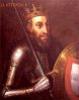
Alfonso I (Henriques) King of Portugal
(25 Jul 1109 - 6 Dec 1185)
Afonso was born on 25 July 1110, the son of Henri of Burgundy, count of Portugal, and Teresa of Castile and León, the illegitimate daughter of Alfonso VI 'the Brave', king of Castile and León.
At the end of the 11th century, the political agenda on the Iberian Peninsula was mostly concerned with the _Reconquista,_ the driving out of the Muslim successor-states to the caliphate of Cordoba after its collapse. With European military aristocracies focused on the Crusades, Alfonso VI called for the help of the French nobility to deal with the Moors. In exchange, he was to give the hands of his daughters in wedlock to the leaders of the expedition and bestow royal privileges to the others. Thus the royal heiress Urraca of Castile and León wedded Raymond of Burgundy, younger son of the count of Burgundy, and her half-sister, Teresa of Castile and León, wedded his cousin, another French crusader, Henri of Burgundy, younger brother of the duke of Burgundy, whose mother was daughter of the count of Barcelona. Henri was made count of Portugal, a burdensome county south of Galicia, where Moorish incursions and attacks were to be expected. With his wife Teresa as co-ruler of Portugal, Henri withstood the ordeal and held the lands for his father-in-law.
From this wedlock several sons were born, but only one, Afonso Henriques (meaning 'Afonso, son of Henri') thrived. Born at Guimaraes on 25 July 1110, Afonso followed his father as count of Portugal in 1112, under the tutelage of his mother. The relations between Teresa and her son Afonso proved difficult. Only eleven years old, Afonso already had his own political ideas, greatly different from his mother's. In 1120 the young prince took the side of the archbishop of Braga, a political foe of Teresa, and both were exiled by her orders. Afonso spent the next years away from his own county, under the watch of the bishop. In 1122 Afonso became fourteen, the adult age in the 12th century. He made himself a knight on his own account in the cathedral of Zamora, raised an army, and proceeded to take control of his lands. Near Guimaraes, at the Battle of Sao Mamede in 1128 he overcame the troops under his mother's lover and ally Count Fernando Peres de Trava of Galicia, making her his prisoner and exiling her forever to a monastery in León. Thus the possibility of incorporating Portugal into a kingdom of Galicia was eliminated and Afonso became sole ruler (Dux of Portugal) after the demands for independence from the county's people, church and nobles. He also vanquished Alfonso VII of Castile and León, another of his mother's allies, and thus freed the county from political dependence on the crown of León and Castile. On 6 April 1129 Afonso Henriques dictated the writ in which he proclaimed himself prince of Portugal.
Afonso then turned his arms against the everlasting problem of the Moors in the south. His campaigns were successful, and on 26 July 1139 he obtained an overwhelming victory in the Battle of Ourique, and straight after was unanimously proclaimed king of Portugal by his soldiers. This meant that Portugal was no longer a vassal county of León-Castile, but an independent kingdom in its own right. Next, he assembled the first assembly of the estates-general at Lamego, where he was given the crown from the archbishop of Braga, to confirm the independence.
Independence, however, was not a thing a land could choose on its own. Portugal still had to be acknowledged by the neighbouring lands and, most importantly, by the Church and the pope. Afonso wedded Matilde de Savoie, daughter of Amadeo III, comte de Savoie, and sent ambassadors to Rome to negotiate with the pope. In Portugal he built several monasteries and convents and bestowed important privileges to religious orders. In 1143 he wrote to Pope Innocent II to declare himself and the kingdom servants of the Church, swearing to pursue driving the Moors out of the Iberian Peninsula. Bypassing any king of Castile and León, Afonso declared himself the direct liegeman of the papacy. Thus Afonso continued to distinguish himself by his exploits against the Moors, from whom he wrested Santarém and Lisbon in 1147. He also conquered an important part of the land south of the Tagus River, although this was lost again to the Moors in the following years.
Meanwhile, King Alfonso VII of Castile (Afonso's cousin) regarded the independent ruler of Portugal as nothing but a rebel. Conflict between the two was constant and bitter in the following years. Afonso became involved in a war, taking the side of the Aragónese king, an enemy of Castile. To ensure the alliance, his son Sancho was engaged to Dulce Berenguer, sister of the count of Barcelona, and princess of Aragón. Finally in 1143 the Treaty of Zamora established peace between the cousins and the recognition by the kingdom of Castile and León that Portugal was an independent kingdom.
In 1169 Afonso was disabled in an engagement near Badajoz by a fall from his horse, and made prisoner by the soldiers of the king of León. Portugal was obliged to surrender as his ransom almost all the conquests Afonso had made in Galicia in the previous years.
In 1179 the privileges and favours given to the Church were compensated. In the papal bull _Manifestis Probatum,_ Pope Alexander III acknowledged Afonso as king and Portugal as an independent land with the right to conquer lands from the Moors. With this papal blessing, Portugal was at last secured as a country and safe from any Castilian attempts of annexation.
In 1184, in spite of his great age, Afonso still had sufficient energy to relieve his son Sancho, who was besieged in Santarém by the Moors. He died shortly after, on 6 December 1185 in Coimbra, and was succeeded by Sancho.
Source: Leo van de Pas
At the end of the 11th century, the political agenda on the Iberian Peninsula was mostly concerned with the _Reconquista,_ the driving out of the Muslim successor-states to the caliphate of Cordoba after its collapse. With European military aristocracies focused on the Crusades, Alfonso VI called for the help of the French nobility to deal with the Moors. In exchange, he was to give the hands of his daughters in wedlock to the leaders of the expedition and bestow royal privileges to the others. Thus the royal heiress Urraca of Castile and León wedded Raymond of Burgundy, younger son of the count of Burgundy, and her half-sister, Teresa of Castile and León, wedded his cousin, another French crusader, Henri of Burgundy, younger brother of the duke of Burgundy, whose mother was daughter of the count of Barcelona. Henri was made count of Portugal, a burdensome county south of Galicia, where Moorish incursions and attacks were to be expected. With his wife Teresa as co-ruler of Portugal, Henri withstood the ordeal and held the lands for his father-in-law.
From this wedlock several sons were born, but only one, Afonso Henriques (meaning 'Afonso, son of Henri') thrived. Born at Guimaraes on 25 July 1110, Afonso followed his father as count of Portugal in 1112, under the tutelage of his mother. The relations between Teresa and her son Afonso proved difficult. Only eleven years old, Afonso already had his own political ideas, greatly different from his mother's. In 1120 the young prince took the side of the archbishop of Braga, a political foe of Teresa, and both were exiled by her orders. Afonso spent the next years away from his own county, under the watch of the bishop. In 1122 Afonso became fourteen, the adult age in the 12th century. He made himself a knight on his own account in the cathedral of Zamora, raised an army, and proceeded to take control of his lands. Near Guimaraes, at the Battle of Sao Mamede in 1128 he overcame the troops under his mother's lover and ally Count Fernando Peres de Trava of Galicia, making her his prisoner and exiling her forever to a monastery in León. Thus the possibility of incorporating Portugal into a kingdom of Galicia was eliminated and Afonso became sole ruler (Dux of Portugal) after the demands for independence from the county's people, church and nobles. He also vanquished Alfonso VII of Castile and León, another of his mother's allies, and thus freed the county from political dependence on the crown of León and Castile. On 6 April 1129 Afonso Henriques dictated the writ in which he proclaimed himself prince of Portugal.
Afonso then turned his arms against the everlasting problem of the Moors in the south. His campaigns were successful, and on 26 July 1139 he obtained an overwhelming victory in the Battle of Ourique, and straight after was unanimously proclaimed king of Portugal by his soldiers. This meant that Portugal was no longer a vassal county of León-Castile, but an independent kingdom in its own right. Next, he assembled the first assembly of the estates-general at Lamego, where he was given the crown from the archbishop of Braga, to confirm the independence.
Independence, however, was not a thing a land could choose on its own. Portugal still had to be acknowledged by the neighbouring lands and, most importantly, by the Church and the pope. Afonso wedded Matilde de Savoie, daughter of Amadeo III, comte de Savoie, and sent ambassadors to Rome to negotiate with the pope. In Portugal he built several monasteries and convents and bestowed important privileges to religious orders. In 1143 he wrote to Pope Innocent II to declare himself and the kingdom servants of the Church, swearing to pursue driving the Moors out of the Iberian Peninsula. Bypassing any king of Castile and León, Afonso declared himself the direct liegeman of the papacy. Thus Afonso continued to distinguish himself by his exploits against the Moors, from whom he wrested Santarém and Lisbon in 1147. He also conquered an important part of the land south of the Tagus River, although this was lost again to the Moors in the following years.
Meanwhile, King Alfonso VII of Castile (Afonso's cousin) regarded the independent ruler of Portugal as nothing but a rebel. Conflict between the two was constant and bitter in the following years. Afonso became involved in a war, taking the side of the Aragónese king, an enemy of Castile. To ensure the alliance, his son Sancho was engaged to Dulce Berenguer, sister of the count of Barcelona, and princess of Aragón. Finally in 1143 the Treaty of Zamora established peace between the cousins and the recognition by the kingdom of Castile and León that Portugal was an independent kingdom.
In 1169 Afonso was disabled in an engagement near Badajoz by a fall from his horse, and made prisoner by the soldiers of the king of León. Portugal was obliged to surrender as his ransom almost all the conquests Afonso had made in Galicia in the previous years.
In 1179 the privileges and favours given to the Church were compensated. In the papal bull _Manifestis Probatum,_ Pope Alexander III acknowledged Afonso as king and Portugal as an independent land with the right to conquer lands from the Moors. With this papal blessing, Portugal was at last secured as a country and safe from any Castilian attempts of annexation.
In 1184, in spite of his great age, Afonso still had sufficient energy to relieve his son Sancho, who was besieged in Santarém by the Moors. He died shortly after, on 6 December 1185 in Coimbra, and was succeeded by Sancho.
Source: Leo van de Pas
Events
| Birth | 25 Jul 1109 | Braga, Guimaraes | |||
| Marriage | 1146 | Mahaut (Matilde) de Savoia | |||
| Death | 6 Dec 1185 | Coimbra |
Families
| Spouse | Mahaut (Matilde) de Savoia (1125 - 1157) |
| Child | Urraca Infanta of Portugal (1151 - 1188) |
| Child | Sancho I King of Portugal (1154 - 1211) |
| Father | Henri de Bourgogne, Count of Portugal (1069 - 1112) |
| Mother | Teresa of Castilla and León (1080 - 1130) |