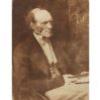
Individual Details
(14 Nov 1797 - 22 Feb 1875)
English Lawyer and Geologist. He is best remembered as the author of "Principles of Geology," which popularized the idea that the earth was shaped by the same processes still in operation today. It was probably the most influential geological work in the middle of the 19th century and contributed greatly to put geology on a modern footing. Born in Kinnordy, Scotland, he was the oldest of ten children whose father was a lawyer and had an interest in botany. He spent much of his childhood at Bartley Lodge of the New Forest National Park, near Cadnam in Hampshire, England. He entered Exeter College, Oxford, England, in 1816 and graduated with a Bachelor of Arts Degree in December 1819 and a Master of Arts Degree in 1821. After graduation, he took up law as a profession and entered Lincoln's Inn at Holborn, in the London Borough of Camden. While on circuit throughout rural England, he became interested in geology and geological formations. He often attended lectures by naturalist Robert Jameson at the University of Edinburgh in Scotland and would visit with Gideon Mantell, the noted geologist and paleontologist, at his home in Lewes, Sussex, England. In 1823 he was elected to the Geological Society as joint secretary. With his eyesight deteriorating, he left the law practice and devoted himself to geology as a full-time profession. Sometime after 1830 be became Professor of Geology at King's College in London and he published his first book, "Principles of Geology" in three volumes, which established his credentials as an important geological theorist and propounded the doctrine of uniformitarianism (i.e., the earth was shaped by the same processes still in operation today), his artificial creation that was supported by his own personal observations on his many travels. This publication had a great influence on the renowned English naturalist Charles Darwin, who began working on his own theory of evolution at that time. During the 1840s Lyell traveled to the United States and Canada, writing two popular travel/geology books, "Travels in North America" (1845) and "A Second Visit to the United States" (1849). He was knighted in 1849 for his contributions on the study of geology and in 1864 he was made a baronet. In 1863 he published "Geological Evidences of the Antiquity of Man," which was widely regarded as a disappointment due to his rejection, as he was a devout Christian, of Charles Darwin's theory of evolution and the natural selection process. In 1866 he was elected a foreign member of the Royal Swedish Academy of Sciences. He was awarded the Copley Medal of the Royal Society in 1858 and the Wollaston Medal of the Geological Society in 1866. After the initial publication of his "Principles of Geology," he wrote eleven more editions of it and was finalizing the twelfth edition when he died.
Events
| Birth | 14 Nov 1797 | Kinnordy, Angus | | | |
| Marriage | 22 Jun 1832 | Kirriemuir, Angus - Mary Elizabeth Horner | | | |
| Census (family) | 1841 | St George, Bloomsbury, London - Mary Elizabeth Horner | | | |
| Title (Nobility) | 1848 | Knight | | | |
| Census (family) | 1851 | 11 Halsey Street, Marylebone, London - Mary Elizabeth Horner | | | |
| Census | 1851 | Cavendish Square, Marylebone, London | | | |
| Title (Nobility) | 1864 | Baronet | | | |
| Census (family) | 1871 | Cavendish Square, Marylebone, London - Mary Elizabeth Horner | | | |
| Death | 22 Feb 1875 | | | | |
| Occupation | | Geologist | | | |
| Burial | | Westminster Abbey, London, Middlesex | | | |
| Occupation | | Lawyer | | | |
Families