Individual Details
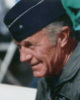
Charles Elwood "Chuck" Yeager
(13 Feb 1923 - 7 Dec 2020)
Chuck Yeager is unquestionably the most famous test pilot of all time. He won a permanent place in the history of aviation as the first pilot ever to fly faster than the speed of sound, but that is only one of the remarkable feats this pilot performed in service to his country.
Charles Elwood Yeager was born in 1923 in Myra, West Virginia and grew up in the nearby village of Hamlin. Immediately upon graduation from High School he enlisted in the United States Army Air Corps to serve in World War II.
Shot down over enemy territory only one day after his first kill in 1943, Yeager evaded capture and, with the aid of the French resistance, made his way across the Pyrenees to neutral Spain. Although army policy prohibited his return to combat flight, Yeager personally appealed to General Dwight D. Eisenhower and was allowed to fly combat missions again.
He flew 64 combat missions in World War II. On one occasion he shot down a German jet from a prop plane. By war's end he had downed 13 enemy aircraft, five in a single day.
After the war, Yeager continued to serve the newly constituted United States Air Force as a flight instructor and test pilot. In 1947, he was assigned to test the rocket-powered X-1 fighter plane. At the time, no one knew if a fixed-wing aircraft could fly faster than sound, or if a human pilot could survive the experience. Chuck Yeager broke the sound barrier on October 14, 1947, only days after cracking several ribs in a horseback riding accident.
In 1952, he set a new air speed record of 1650 mph, more than twice the speed of sound. He flew test flights in Korea, and commanded a fighter squadron in Europe.
After the onset of the space race in 1956, Yeager commanded the Air Force Aerospace Research Pilots School to train pilots for the space program. In this capacity, Yeager supervised development of the space simulator and the introduction of advanced computers to Air force pilots. Although Yeager himself was passed over for service in space, nearly half of the astronauts who served in the Gemini, Mercury and Apollo programs were graduates of Yeager's school.
In 1963, Yeager was flying the experimental Lockheed Starfighter at over twice the speed of sound when the engine shut off and he was forced to abandon the spinning aircraft. Yeager's compression suit was set on fire by the burning debris from the ejector seat, which became entangled in his parachute. He survived the fall, but required extensive skin grafts for his burns.
The Air Force space school was closed in 1966, as NASA took over the training of astronauts. During the Vietnam War, Yeager -- now a full colonel -- commanded the 405th fighter wing out of the Philippines, flying 127 air-support missions, and training bomber pilots.
In 1968, Yeager was promoted to brigadier general. He is one of a very few who have risen from enlisted man to general in the Air Force. In 1970, General Yeager served as U.S Defense Representative to Pakistan and supervised Pakistan's air defense in its war with India. He retired from the Air Force in 1975, but continued to serve as a consulting test pilot for many years.
In 1976, Chuck Yeager was awarded the Congressional Medal of Honor for bravery. He is the only American to be awarded the Medal for service in peacetime. His other decorations include the Purple Heart, the Bronze Star with V device, the Air Force Commendation medal, the Silver Star with oak leaf cluster, the Legion of Merit with oak leaf cluster, the Distinguished Service Medal, the Distinguished Flying Cross with two clusters, and the Air Medal with ten clusters. His civilian awards include the Harmon International Trophy (1954) and the Collier and Mackay trophies (1948). He was the first and the youngest military pilot to be inducted into the Aviation Hall of Fame (1973).
A bestselling nonfiction book The Right Stuff (1979) by Tom Wolfe, and the popular film of the same title (1983) made Yeager's name a household word among Americans too young to remember Yeager's exploits of the 1950s. Yeager's autobiography enjoyed phenomenal success and he remains much in demand on the lecture circuit and as a corporate spokesman. Chuck Yeager made his last flight as a military consultant on October 14, 1997, the 50th anniversary of his history-making flight in the X-1. He observed the occasion by once again breaking the sound barrier, this time in an F-15 fighter. A sonic boom reverberated around Edwards Air Force Base in the California desert as the retired World War II ace re-enacted his flight -- this time in a modern F-15 jet. At precisely 10:34 a.m. PDT, he once again piloted a plane through the sound barrier at more than 30,000 feet above the base. When he did it the first time Oct. 14, 1947, as a 24-year-old test pilot, the sonic boom reverberated from Southern California around the world, opening up a future of supersonic flight and space travel. The speed of sound -- Mach 1 -- is roughly 660 mph at 40,000 feet and many experts feared his plane would disintegrate when he did what no aircraft had ever done before 50 years ago. The 50th anniversary of Yeager's feat came a day after a British pilot broke break the sound barrier on land -- in a jet-powered car in the Nevada desert. On Tuesday Yeager, now an Air Force brigadier general, was at the controls of a modern fighter instead of the orange X-1 rocket plane nicknamed "Glamorous Glennis" after his wife in which he became the first man to fly at the speed of sound. This time, he was again accompanied by Bob Hoover, who was his backup in 1947 and who photographed the X-1 hurtling past with characteristic diamond-shaped shock waves blasting from its four rockets. Hoover flew an F-16 this time. Another difference this time was that the world heard about his flight. In 1947, the Air Force and the National Advisory Committee for Aeronautics (the forerunner of NASA) kept his feat secret until June 15 the following year.
Unlike John Glenn, Gus Grissom and the others, Yeager did not go on to join the exclusive club of America's astronauts. Yeager, 74, is a man of few words. In a recent Los Angeles Times interview, he played down breaking the sound barrier. "I didn't do it for personal benefit. I didn't look at it that way, it was duty," said the man who also flew missions in the Vietnam War. "Although it was a major milestone, I didn't look at it as an accomplishment. I look at it as another part of the (test flying) program," he said.
Charles Elwood Yeager was born in 1923 in Myra, West Virginia and grew up in the nearby village of Hamlin. Immediately upon graduation from High School he enlisted in the United States Army Air Corps to serve in World War II.
Shot down over enemy territory only one day after his first kill in 1943, Yeager evaded capture and, with the aid of the French resistance, made his way across the Pyrenees to neutral Spain. Although army policy prohibited his return to combat flight, Yeager personally appealed to General Dwight D. Eisenhower and was allowed to fly combat missions again.
He flew 64 combat missions in World War II. On one occasion he shot down a German jet from a prop plane. By war's end he had downed 13 enemy aircraft, five in a single day.
After the war, Yeager continued to serve the newly constituted United States Air Force as a flight instructor and test pilot. In 1947, he was assigned to test the rocket-powered X-1 fighter plane. At the time, no one knew if a fixed-wing aircraft could fly faster than sound, or if a human pilot could survive the experience. Chuck Yeager broke the sound barrier on October 14, 1947, only days after cracking several ribs in a horseback riding accident.
In 1952, he set a new air speed record of 1650 mph, more than twice the speed of sound. He flew test flights in Korea, and commanded a fighter squadron in Europe.
After the onset of the space race in 1956, Yeager commanded the Air Force Aerospace Research Pilots School to train pilots for the space program. In this capacity, Yeager supervised development of the space simulator and the introduction of advanced computers to Air force pilots. Although Yeager himself was passed over for service in space, nearly half of the astronauts who served in the Gemini, Mercury and Apollo programs were graduates of Yeager's school.
In 1963, Yeager was flying the experimental Lockheed Starfighter at over twice the speed of sound when the engine shut off and he was forced to abandon the spinning aircraft. Yeager's compression suit was set on fire by the burning debris from the ejector seat, which became entangled in his parachute. He survived the fall, but required extensive skin grafts for his burns.
The Air Force space school was closed in 1966, as NASA took over the training of astronauts. During the Vietnam War, Yeager -- now a full colonel -- commanded the 405th fighter wing out of the Philippines, flying 127 air-support missions, and training bomber pilots.
In 1968, Yeager was promoted to brigadier general. He is one of a very few who have risen from enlisted man to general in the Air Force. In 1970, General Yeager served as U.S Defense Representative to Pakistan and supervised Pakistan's air defense in its war with India. He retired from the Air Force in 1975, but continued to serve as a consulting test pilot for many years.
In 1976, Chuck Yeager was awarded the Congressional Medal of Honor for bravery. He is the only American to be awarded the Medal for service in peacetime. His other decorations include the Purple Heart, the Bronze Star with V device, the Air Force Commendation medal, the Silver Star with oak leaf cluster, the Legion of Merit with oak leaf cluster, the Distinguished Service Medal, the Distinguished Flying Cross with two clusters, and the Air Medal with ten clusters. His civilian awards include the Harmon International Trophy (1954) and the Collier and Mackay trophies (1948). He was the first and the youngest military pilot to be inducted into the Aviation Hall of Fame (1973).
A bestselling nonfiction book The Right Stuff (1979) by Tom Wolfe, and the popular film of the same title (1983) made Yeager's name a household word among Americans too young to remember Yeager's exploits of the 1950s. Yeager's autobiography enjoyed phenomenal success and he remains much in demand on the lecture circuit and as a corporate spokesman. Chuck Yeager made his last flight as a military consultant on October 14, 1997, the 50th anniversary of his history-making flight in the X-1. He observed the occasion by once again breaking the sound barrier, this time in an F-15 fighter. A sonic boom reverberated around Edwards Air Force Base in the California desert as the retired World War II ace re-enacted his flight -- this time in a modern F-15 jet. At precisely 10:34 a.m. PDT, he once again piloted a plane through the sound barrier at more than 30,000 feet above the base. When he did it the first time Oct. 14, 1947, as a 24-year-old test pilot, the sonic boom reverberated from Southern California around the world, opening up a future of supersonic flight and space travel. The speed of sound -- Mach 1 -- is roughly 660 mph at 40,000 feet and many experts feared his plane would disintegrate when he did what no aircraft had ever done before 50 years ago. The 50th anniversary of Yeager's feat came a day after a British pilot broke break the sound barrier on land -- in a jet-powered car in the Nevada desert. On Tuesday Yeager, now an Air Force brigadier general, was at the controls of a modern fighter instead of the orange X-1 rocket plane nicknamed "Glamorous Glennis" after his wife in which he became the first man to fly at the speed of sound. This time, he was again accompanied by Bob Hoover, who was his backup in 1947 and who photographed the X-1 hurtling past with characteristic diamond-shaped shock waves blasting from its four rockets. Hoover flew an F-16 this time. Another difference this time was that the world heard about his flight. In 1947, the Air Force and the National Advisory Committee for Aeronautics (the forerunner of NASA) kept his feat secret until June 15 the following year.
Unlike John Glenn, Gus Grissom and the others, Yeager did not go on to join the exclusive club of America's astronauts. Yeager, 74, is a man of few words. In a recent Los Angeles Times interview, he played down breaking the sound barrier. "I didn't do it for personal benefit. I didn't look at it that way, it was duty," said the man who also flew missions in the Vietnam War. "Although it was a major milestone, I didn't look at it as an accomplishment. I look at it as another part of the (test flying) program," he said.
Events
| Birth | 13 Feb 1923 | Myra, Lincoln County, West Virginia |  | ||
| Graduation | 1941 | Hamlin High School, Hamlin, West Virginia | | ||
| Marriage | 26 Feb 1945 | Glennis Faye Dickhouse | | ||
| Death | 7 Dec 2020 | ||||
| Military |  | | |||
| Degree | Dayton, Montgomery County, Ohio | | |
Families
| Spouse | Glennis Faye Dickhouse ( - ) |
| Father | Albert Hal Yeager Sr. (1896 - 1963) |
| Mother | Susie Mae Sizemore (1898 - 1987) |
| Sibling | Roy Harding Yeager |
| Sibling | Pansy Lee Yeager |
| Sibling | Doris Ann Yeager (1929 - 1930) |
| Sibling | Albert Hal Yeager Jr. |
Notes
Military
Enlisted Army Air Corps September 1941. Received Pilot's Wings March1943. World War II 64 Combat Missions. Destroyed 13 Enemy Aircraft.
Degree
Wright Patterson Air Force Institute of TechnologyEndnotes
1. General Chuck Yeager Statue (West Hamlin, West Virginia).
2. General Chuck Yeager Statue (West Hamlin, West Virginia).
3. General Chuck Yeager Statue (West Hamlin, West Virginia).
4. General Chuck Yeager Statue (West Hamlin, West Virginia).
5. Clifton Yeager (4965 Timberview Drive, Huber Heights, OH 45424; (513)233-3229; Cygen1@aol.com).